Categories
2010 Crime

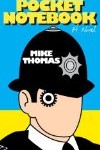
Pocket Notebook – Mike Thomas

Pocket Notebook is written by a serving policeman and describes the life of Jacob Smith, a tactical firearms officer, who begins to loose control of his life. He abuses steroids, has relationship problems and can no longer cope with his demanding job.

It doesn’t sound like my sort of book at all and I have to admit that I would never have picked it up. It arrived unsolicited from the publisher and I was quite prepared to leave it on the shelf unread. One day I decided to sort out my book shelf and started to read the first page of this book – I couldn’t put it down!

It gives a fascinating insight into the life of a police officer. I loved learning about the detail of their job – the little things that they do in order to get through the day. Of course we will never really know how much of it is true, but I suspect that most of the events described in this book have happened to some extent. I assume that many in the police force will be upset by the release of this book – they won’t want the controversial behaviour to become public knowledge, but I was reassured by what I read. They have an incredibly difficult job and if “black dogging”* makes their life easier then I’m all for it!

The plot of this book isn’t that earth shattering, but that just reflects the mundane life of the average police officer:

I’m neither surprised nor exhilarated by anything I’ve done or any call I’ve been to in the last week. Just constantly shocked by the pettiness of it all, how the people I’m supposedly serving are so inept as to be virtually  incapable of looking after themselves. I’m society’s garbage man, just here to take out the trash, to spoonfeed these spastic sink-estate dwellers, the trolls and inbreds in their shellsuits with their state-funded cinema-sized surround-sound tellies, these women – these girls – who think spewing out babies by different and now absent fathers qualifies as an occupation.

The characters are well drawn and there are some really emotional scenes in there. I’m not sure how interesting this book will be to people in other countries as it is very British, but perhaps those from overseas will enjoy reading about dysfunctional people living in the UK!

Recommended to anyone who’d like to find out what police officers really get up to!

*Black dogging is when a police officer ‘sees’ a black dog crossing the road and so brakes sharply, throwing anyone in the back of the police van against the wall. It is pure coincidence that dogs tend to cross the road when the detainees in the back of the van are being disorderly and abusive.
Categories
2009

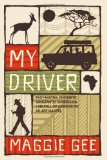
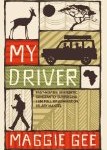
My Driver – Maggie Gee

My Driver follows Vanessa Henman, an English author, who flies out to Uganda for an African Writer’s conference. Whilst there she seeks out Mary Tendo, a Ugandan who used to clean her London home. Mary now has a good job, but her son has gone missing and in the first of a string of coincidences Mary has recruited Vanessa’s ex-husband Trevor to build a well for her village.

This is my first Maggie Gee novel and I think I may have been disadvantaged by not reading My Cleaner first, as all the other reviews I’ve seen emphasise the role reversal which takes place from one novel to the next (in My Cleaner Vanessa is the dominant one, in her home country). I don’t think I missed out on understanding anything in the book, but think the symbolic importance of this sequel is one of its main positives.

The writing was rich and beautiful, the plot holding my attention and flowing smoothly. Unfortunately much of the novel seemed to rely on satire and gentle humor, which I do not enjoy.

It’s still slightly strange for small land-based mammals to be shot through the air, thirty thousand feet up, with a skin of metal and two fallible engines between them and death, at five hundred miles per hour, which is seven times faster than they drive on motorways. But they have to look calm, for every one’s sake; you can’t have constant hysteria at airports.

All the usual African themes are here, including poverty and war, but life in Kampala is particularly well described. Perhaps because I have been to this city I found these sections especially vivid.

There were powerful events in this novel, but they were written in such a light way that their impact was reduced. I ended the book feeling as though I’d been taken on a pleasant journey, but nothing outstanding or unique had occurred and so I don’t think the experience will be very memorable. 

Recommended to anyone you enjoys gentle, satirical humor. 

Gee’s pen flows with knowing satiric glee… Lizzy’s Literary Life

Maggie Gee’s writing is superb and nearly flawless. Wing’s World Web

Have you read any of Maggie Gee’s books?

Categories
1960s Classics

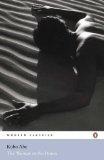
The Woman in the Dunes – Kobo Abe

 Translated from the Japanese by E. Dale Saunders
The Woman in the Dunes is a classic of Japanese literature. It was first published in 1962 and immediately received critical acclaim. It is said to have influenced Murakami and the new Penguin classics version has an introduction written by David Mitchell, so perhaps you can see why I had to read a copy!

The book focuses on Niki Jumpei, an insect enthusiast, who heads to the sand dunes in the hope of finding a new species of beetle. At the end of a long, fruitless search he looks for somewhere to shelter for the night. He finds a strange village on the dunes and agrees to spend the night in the home of a young widow. In the morning he wakes to find that the rope ladder he climbed down has been removed and he is trapped in the steep-sided sandpit. The villagers force him to shovel the ever-encroaching sand that threatens to bury the village and he wonders if there is any possibility of escape from this nightmare.

This house was already half dead. Its insides were half eaten away by tentacles of ceaselessly flowing sand.

The Woman in the Dunes is a very accessible novel, making it the perfect introduction to Japanese literature. I loved the simple, yet powerful themes present in this book, as we witness one man’s struggle for survival against man and nature. The tone of the book is quite bleak and the scenes are described so vividly that you can almost feel the sand getting into every crevice and crease of your body.

There are many elements of Japanese mythology in this book, but unlike some Murakami it stays grounded in reality (if you consider it realistic to trap people in giant sandpits!). The book is quite short and the suspenseful nature of the plot means that it is a quick read. The simplicity of the story line is the only reason I haven’t rated this book higher. It should become a classic every language, but its fleeting time in my life means that I probably won’t give it much thought in the coming months.

Recommended – especially to those who want to try Japanese literature for the first time.


…a very powerful and intriguing book  Tony’s reading List

Extremely provocative, mind-bending, but most of all the uncomfortable. Paper Foxes Run Run

….a bleakly beautiful rendering of nature’s ultimate authority. Incurable Logophilia

Kobe Abe has written several books and I am keen to read more of his work.

Have you read any of Kobo Abe’s books?

Categories
1980s Nobel Prize

July’s People – Nadine Gordimer

 Nadine Gordimer won the Nobel Prize for Literature in 1991

July’s People was our latest book group choice. Unfortunately I was unable to make the discussion, which is a shame as I think this is a book which benefits from being discussed.

July’s People is set in South Africa. The book follows the Smales, a white couple and their three children, as they are rescued from the violence taking place in their city. Their servant, July, takes the family back to his native village where they have to learn to cope in a world very different to the one they have left. The small rural community uses little money, finding everything they need in the forest. The Smales have to adjust to the reversal of power, relying on the black community to both  protect and provide for them. The book gives a fascinating insight into the difference between the black and white communities of South Africa and the delicate relationship between the two.

Unfortunately July’s People wasn’t an easy read. The prose was confusing and this meant that I often has to re-read entire sections in order to work out what was happening. There were no speech marks so it was difficult to tell who was speaking – sometimes the speaker even switched mid-line. This meant that I found myself concentrating on the words rather than what was happening. The effort it took to understand each page meant that any emotion that might have been present was removed. I felt very detached from all the characters and because I often didn’t know who was talking they lacked a unique voice, all seeming to merge into one. I found myself having to invent their feelings based on the situation, but this felt fake as I don’t really know how things must have been for them.

The premise for this book is fantastic, but the complexity of the prose ruined it for me.

Recommended to anyone who enjoys studying books rather than reading them.

The other members of the book group seemed to enjoy this book much more than me and they also found out more about the background of this book. I recommend you read their insightful reviews:

Kim’s Review, Simon’s review, Claire’s review, Polly’s Review

Have you read anything by Nadine Gordimer?

Are all her books difficult to understand?

Categories
2010

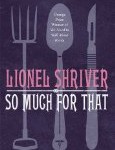
So Much For That – Lionel Shriver

We Need to Talk About Kevin is one of my all-time favourite books and although I was less impressed with The Post-Birthday World I still found it to be an enjoyable read. I was excited to discover that Lionel Shriver had a new book out and was lucky enough to win a proof copy of the book via a competition on Twitter.

So Much For That is a novel that takes a close look at the American healthcare system. The book follows Shep, a handyman from New York,  who sells his business for $1 million. He is looking forward to a comfortable retirement, preferably on a remote island off the cost of Tanzania. Unfortunately he discovers that his wife has cancer and so the plans are put to one side while she receives treatment. When the bills for her medical care start to appear Shep suddenly discovers that his retirement nest egg isn’t going to stretch very far.

Unfortunately I wasn’t a fan of this book – it felt like one long rant about the state of the US healthcare system.

Thirty percent of the money spent on medical care in this country goes to so-called ‘administration.’ Fact is, there’s a wholly fatty layer of for-profit insurance companies larded between Glynis and her doctors, a bunch of bloodsucking greedy fucks making money off her being sick. Kick those assholes out of the picture, and for the same cost the whole country would be covered, without fifty different bills a week arriving in your mailbox.”

The book was packed with facts and figures about various clauses within the system and the way Shep just happened to have friends with different medical problems (perfect for showing other ways in which the healthcare system was failing)  just made me cringe – it was all so contrived.

The whole tone of the book felt depressing and defeatist and I struggled to make it to the end. Lionel Shriver makes a fantastic argument for reforming the US healthcare system, but I’m afraid that in the UK she will mainly be preaching to the converted. I’m sure this book will have much more relevance in America and probably cause some controversy, but as a UK reader I found discussing the small print of insurance policies very dull.

I look forward to seeing how this book is received in America, but I think readers outside the US will be disappointed.

Are you planning to read this book?

Have you read any of her earlier books?

Categories
2010 Recommended books

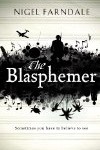
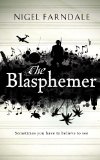
The Blasphemer – Nigel Farndale

I’d describe The Blasphemer as a solidly good read. It begins by following a couple, Daniel and Nancy, as they travel to the Galapagos Islands. Their plane crashes into the sea and Daniel’s instincts take over – he rescues himself without stopping to think about saving Nancy. Nancy survives the crash too but becomes resentful of Daniel. She questions how much he loves her, thinking that if he had any real feelings for her then he would have put her life above his own.

In a parallel narrative we find out about the equally difficult decisions Daniel’s great grandfather made during the First World War. The scenes of the battlefield were particularly vivid and packed with emotion.

Blood is roaring in his ears. He needs to urinate. A feeling of inertia is creeping over him. He’s no longer sure he’ll be able to climb the ladder. All his fears, he knows, lie over these sandbags – fears not of pain but of annihilation, of ceasing to exist, of unimaginable emptiness.

Back in the present day, Daniel begins to investigate letters that his great grandfather wrote and we slowly learn the truth about what happened all those years ago.

I loved this book! It was written simply, but effectively and I was gripped throughout. There were plenty of twists and turns to satisfy my craving for a complex plot and the characters all came to life for me.

The book analyses whether you have time to weigh up all your choices when your life is in danger and whether your responsibility should be to look after yourself or everyone around you.

There were a few sections where I thought the book went too deep into religious discussions, but I’m not a fan of these at the best of times, so most people would probably be OK with it.

I recommend this book to anyone who enjoys a good story with emotional depth.

Have you read The Blasphemer?

Did you enjoy the religious discussions in it?

Would you be upset if your partner saved themselves first?