Categories
2009 Orange Prize

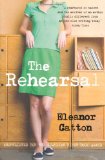
The Rehearsal – Eleanor Catton


Long listed for Orange Prize 2010, Short listed for Guardian First book Award, Winner of the Betty Trask Award

I had heard The Rehearsal mentioned a few times in 2009, but when it was included on the Orange long list this year everyone started talking about it. The Rehearsal seems to divide opinion, with a roughly equal split between those who love the book and those who hate it. I must admit that the premise didn’t appeal to me, but I don’t like being unable to join a heated book discussion and so I reserved a copy from my library.

The book centres on a sex scandal involving a teacher and his pupil. The narrative travels forwards and backwards in time, following a group of pupils who gossip about the event and members of a drama school who decide to put on a play about the sex scandal.

The book is quite confusing to read, as you are never really sure which scenes are part of the play and which are ‘real’. I’d read about 50 pages of the book when I re-read Claire’s review in which she pointed out that chapters starting with a day of the week were about the school pupils and ones titled with a month were set in the drama school, but although this information helped a lot I was still confused about many things.

The book realistically portrays teenagers, managing to capture that uncertainty and awkwardness. I was particularly impressed by the insecurites of a younger sibling:

No, Isolde says, ‘I will make the same mistakes, but by the time I do they won’t seem interesting because you’ll already have done it, and I’ll only be a copy.’

The teenage banter was witty and insightful, but the plot was almost non-existent. I was particularly disappointed by the ending, as the book just stopped without reaching any real conclusion.

I am still trying to decide if I liked The Rehearsal or not.  I can’t work out whether this book is genius, or just trying too hard to be clever. If The Rehearsal  had been written in chronological order I suspect it might have been a fairly average read. Does confusing your readers make a book incredibly good, or does it just hide any flaws in a cloak of confusion?  Despite my uncertainty The Rehearsal is the most impressive book I’ve found on the Orange long list so far and I’d be happy to see it win. 

Overall I enjoyed reading this book for the individual passages, but it was too clever to work as a novel for me.

Did you enjoy The Rehearsal?

Can a book be too clever?
Categories
2000 - 2007 Thriller

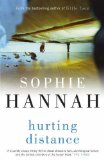
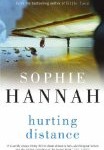
Hurting Distance – Sophie Hannah


Long listed for the 2008 Theakston’s Old Peculier Crime Novel of the Year Award.

Little Face was one of the best thrillers I’ve ever read, so I was very keen to try another one of Sophie Hannah’s books. Hurting Distance is the second book in series. I think you can understand it without having read the first, but you would miss out on a few of the small plot lines that continue from one book to the next. If you want to follow the lives of the police officers then I recommend that you read them in order.

Hurting Distance is much darker than Little Face. The whole book revolves around a serial rapist, so it is quite disturbing in places. The story is told through the eyes of Naomi who was raped three years ago and didn’t report the crime. Robert, her lover, vanishes but the police don’t believe it is worth investigating. In a desperate attempt to get them to take her seriously Naomi accuses Robert of rape, using the details of the crime that was committed against her all those years ago.

The book then became a fast paced investigation, packed with unexpected twists and turns. There were a few too many unlikely coincidences for my liking, but on the whole it was an enjoyable read.

I don’t think it was quite as good as Little Face, but I remain a big fan of Sophie Hannah and look forward to reading the rest of her books.

I was totally gripped. Novel Insights

Despite its plot implausibilities, HURTING DISTANCE is a gripping tale.  Euro Crime

There is suspense and a lot of twists without it being over complicated….. Savidge Reads

Sophie Hannah’s new book A Room Swept White was released earlier this year and she has recently announced that her books are being adapted for television – I can’t wait!
Have you read any of Sophie Hannah’s books?

Which one did you enjoy the most?

Categories
2009 Historical Fiction Orange Prize

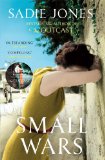
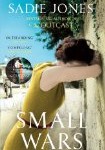
Small Wars – Sadie Jones

 Long listed for the Orange Prize 2010

I enjoyed Sadie Jones’ last novel, The Outcast, to some extent, but found the ending to be a bit of an anti-climax. When I saw her latest book had made the Orange long list I decided to give her another try.

Small Wars is set on Cyprus during the 1950s Emergency, a time when the British defended Cyprus against a colony of Cypriots determined to form a union with Greece. The book follows Hal, a young British soldier who is posted to Cyprus. He brings his wife and daughters with him, but their relationship is put under pressure by the fear of violence.

I’m afraid I wasn’t a big fan of Small Wars. The pace of the book was quite slow and there were several long, meandering sections where I began to lose interest. The writing was simple and easy to read, but this simplicity meant that the real horror of some situations wasn’t adequately described:

The people were made to lie down on the floor of the trucks, because there were so many of them, and if the soldiers made them lie down, they could be layered to make room. There were reports of suffocation from this stacking of live bodies, but later, the British, investigating, found no bodies.

In the hands of a different author that same scene could have been very hard to read. I can imagine the fear of those poor people, but reading the above passage provoked no emotion in me. The same is true for much of the book – there were some terrible events, but they were rushed over and so the horror could be largely ignored.

The main theme of Small Wars was the way war can affect relationships. The book concentrated on characterisation rather than plot; this gentle observation of the feelings will be of interest to some, but I’m afraid it was all too quiet for me.

Recommended to those who want to read about war in a quiet, gentle way.

What others had to say:

It’s a complex study, yet it’s easy to read and progresses very quickly!  S Krishna’s Books

 ….notable for its psychological depth and characterizations. California Literary Review

 ….this follow-up shows that she is no one-hit wonder. Times Online

Have you read The Outcast or Small Wars?

Do you think this book has a chance at making the Orange short list?

Categories
2009 2010

The Great Perhaps – Joe Meno

The Great Perhaps has one of the best first lines I’ve read:

Anything resembling a cloud will cause Jonathan Casper to faint.

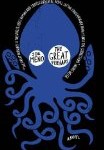
The premise of this book is fantastically original. The central character, Jonathan, suffers from a rare form of epilepsy which causes him to have a seizure if he sees a cloud. To avoid clouds Jonathan becomes a palaeontologist, searching for prehistoric squid in the depths of the ocean.

Jonathan’s wife, Madeline, is studying the violence of pigeons; his daughter Amelia is making bombs in her bedroom and Thisbe, the youngest member of the family, is discovering Christianity. The book also follows their grandfather, Henry, who is dying and decides to utter one word less each day.

This book is a fantastic study of an American family. I was impressed by the way each person had their own unique voice, realistically capturing the thoughts and behaviour of their age group. The book is narrated by each character in turn, with a different writing style being used for each person. Some people may think the styles are gimmicky, especially Madeline’s which consists of 26 different thoughts each ordered by the letters of the alphabet, but I loved it! The continual change of pace and style kept me gripped and allowed there to be humor as well as deeper moments in which the complex relationships within a family could be observed.

The plot itself is quite simple, but I was desperate to know whether one of Amelia’s bombs would go off or if Jonathan would ever find his squid. It was easy to read, yet covered many important themes. 

I don’t think I’ve read a better book about an American family – I’d vote for it to win the Pulitzer prize this year.

Highly recommended.

Categories
2010

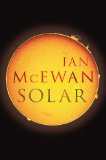
Solar – Ian McEwan

Solar is one of the big contenders for the Booker Prize this year so I decided to see if it is good enough to beat The Thousand Autumns of Jacob De Zoet.

I have to admit that I haven’t had much success with Ian McEwan so far. I wasn’t a fan of The Comfort of Strangers or Amsterdam, but have heard that his books are very different from each other and so was prepared to give him another try.

Solar centres on Michael Beard, a physicist who has won the Nobel Prize. He is an unlikable man who has had numerous affairs and seems to enjoy manipulating people more than engaging with them. Beard travels the world talking at conferences and reluctantly leads a government-backed initiative tackling global warming.

Solar is the best McEwan I’ve read so far, but I had a lot of problems with it. The book is packed with physics:

Quantum mechanics. What a repository, a dump, of human aspiration it was, the borderland where mathematical rigour defeated common sense, and reason and fantasy irrationally merged.

I did a course on quantum mechanics at university so understood the ridiculously long scientific passages (as much as anyone can claim to really understand quantum mechanics!) but I’m not sure why the science was needed – it wasn’t an integral part of the plot and I don’t think it added anything. It will go over the heads of most readers and the fact that everything needed explanation meant that the passages weren’t realistic portrayals of scientists. To illustrate this point I’ve invented two conversations.

Which conversation do you think is more likely to occur?

Baker 1: I’m just putting 20 loaves of bread into the oven.

Baker 2: I hope that you added some yeast to make them all rise.

Baker 1: Yes, it amazing to think that it was only in 1857 that Louis Pasteur discovered that yeast was a living organism whose activity caused fermentation.

Baker 2: Did you add some sugar for the yeast to feed on?

Baker 1: Yes, the yeast and the sugar produced carbon dioxide that will make the bread light and fluffy.


Baker 1: I’m just putting 20 loaves of bread into the oven.

Baker 2: Thanks. I’ll have my lot ready to go in soon.

This over-explanation of everything annoyed me and some of the science felt stilted; there were also a few sections that didn’t quite ring true. If we ignore the physics then there is a reasonable story buried in this book. I actually enjoyed reading the middle section, the small glimpses of plot in other areas and I thought the ending was very appropriate too.

Several sections were quite amusing, but I’m not a big fan of satire and so the ridicule was wasted on me.

I think that fans of McEwan will love this new one, but I’m hoping the Booker judges decide that The Thousand Autumns of Jacob De Zoet is the better book.

Which is your favourite McEwan book?

Have you read Solar? What did you think of it?

Opinions appear to be very mixed:

…dull as dishwater. BookNAround

…one of my very favourite books of the year so far.  Savidge Reads

Categories
2009 Orange Prize

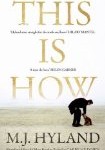
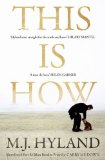
This is How – M.J. Hyland

 Long listed for the Orange Prize 2010

I first heard about this book last year when several people were surprised that it didn’t appear on the Booker long list. I hadn’t read any of her books and was intrigued by the praise she was getting. Unfortunately I forgot all about her until the book appeared on the Orange long list last week. I immediately reserved a copy from my local library and eagerly awaited its arrival.

This is How follows Patrick, a young man who moves into a boarding house after his fiancee breaks off their engagement. Depressed and alone he struggles to connect with the other occupations of the house and finds himself wandering around the small British sea-side town, trying to come to terms with his situation.

I read This is How in a single sitting. The clarity of the words was amazing – the descriptions so vivid that I could almost imagine I was there. I was immediately sucked into Patrick’s world, feeling all of his intense emotions. The plot flowed along at a steady pace and I was never tempted to put it down.

What could possibly go wrong with a book so well written? I find it hard to explain without giving things away, but this book made me see why Orange judge Daisy Goodwin might have had reason to complain about the misery present in books. The second half of this book was very depressing. I don’t mind a bit of tragedy, but I do like there to be at least a shred of hope at the end of a book and this one just slipped further and further into misery.

This leaves me with a problem. Can I recommend a book that is beautifully written, but bleak and without hope? I’m not sure.

I’ll let you decide whether or not you want to read it, but don’t say I didn’t warn you!

Have you read This is How?

Do you think it will make it onto the Orange short list?