Categories
2010 Booker Prize

February – Lisa Moore

 Long listed for 2010 Booker Prize

On the 15th February 1982, an offshore oil drilling platform sank off the coast of Newfoundland, killing all 84 people on board. February is a fictional account of how one woman, Helen, grieved the loss of her husband, Cal, and how her family learned to cope with his death.

As you can tell from the synopsis this isn’t a happy book. In fact February was so laden with grief that I struggled to read it.  The book flips forwards and backwards through time, showing us Cal as a happy, family man and then the family struggling after his death.

Helen was in a panic as if something very bad was going to happen, but it had already happened. It was hard to take in that it had already happened. Why was she in a panic? It was as if she were split in half. Something bad was going to happen to her; and then there was the other her, the one who knew it had already happened. It was a mounting and useless panic and she didn’t want to faint. But she was being flooded with the truth. It wasn’t going to happen; it had already happened.

This book had very little plot, but for once that wasn’t a problem for me. I’m afraid that my main complaint is that February is just too depressing. It wasn’t shocking or thought provoking – it just slowly dragged my mood down. By the end of the book I was so depressed I had to watch a good hour of comedy on TV in order to recover.

Another problem I had was with the sentence structure. The majority of the book was made up of very short sentences and this meant that the writing didn’t flow very well – it made me feel quite jumpy. I’m sure this was intended for some reason, but I’m afraid it just irritated me.

Overall, this book was just too depressing for me to be able to recommend it, but other people seem to be inspired by Helen’s strength of character.

Opinion seems to be divided:

You really feel Helen’s pain… Monniblog

Moore’s writing is strong and poetic, but parts still fell flat for me. Nomadreader

Lisa Moore achieved something quite beautiful and completely perfect in the final pages….   Dovegreyreader

I’ll just have to acknowledge that writing which disturbs some readers like me is attractive to others. Kevin From Canada
Categories
2010 Booker Prize

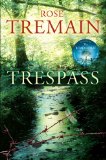
The Trespass – Rose Tremain

 Long listed for 2010 Booker Prize

I enjoyed The Road Home and had heard wonderful things about many of Tremain’s other books, so was looking forward to reading her new one. Unfortunately it didn’t live up to my expectations and it left me feeling a little disappointed.

Trespass focuses on an isolated French farmhouse. The building belongs to Aramon, a man struggling with alcoholism. His estranged sister, Audrun, lives in a small house in the grounds, but he threatens to ruin her life by selling the farmhouse to Anthony, an English antique dealer. The main theme of the book is sibling rivalry and the boundaries that exist between people, both emotionally and physically.

Unfortunately none of the characters were particularly endearing and so I failed to connect with any of them. It was such a passive reading experience that I often found my mind wandering from the page.

The French countryside was vividly described, but the plot was very slow moving.

Audrun drew her old and frayed cardigan round her body and walked on through the wood, her face lifted to the warmth of the sun. In another month, there would be swallows,  In the hour before dusk they’d circle, not over her bungalow with its low, corrugated iron roof, but over the Mas Lunel, where Aramon still lived. They’d be looking for nesting sites under the tiles, against the cracked stone walls, and she would stand at the window of her flimsy home, or in her little potager, hoeing beans, watching them, watching the sun go down on another day. 

I can’t fault the quality of the writing, but I found the subject matter quite dull. I don’t dream about moving to the French countryside and find the issues with selling property quite tedious, so much of the book held little interest for me.

I was looking forward to the “violent crime” mentioned in the blurb, but although the plot picked up a bit when it occurred, my lack of empathy with the characters meant that I wasn’t as involved as I should have been.

Recommended to those who enjoy quiet books, especially if you are considering a move to France.

Opinions seem quite mixed:

I’d find myself getting lost in it and being mildly surprised that I wasn’t somewhere in the French countryside, but in the cafeteria at work. Just Add Books

The style and the themes hit, but for me, the emotional side of the story didn’t. Fleur Fisher Reads

….hardly goes beyond the ordinary. Kevin from Canada

Categories
1950s Classics Science Fiction

The Day of the Triffids – John Wyndham

I hadn’t read any Wyndham before, but everyone seems to talk about him fondly and so I decided that it was time I tried one of his classic science fiction books.

The Day of The Triffids begins with the central character, Bill, waking up in hospital to discover that everyone around him has gone blind. Bill was recovering from an eye operation and so had his eyes covered the previous night when a beautiful green meteor shower appeared in the sky. He had been upset that he’d missed out on the spectacle, but now realises that this is the reason he managed to retain his sight.

Bill heads out into the world and begins the difficult task of trying to survive now that almost everyone is blind. The basic infrastructure has collapsed so even basic things are difficult to achieve. On top of the blindness people also have to deal with large plants that have learnt to walk. These triffids are beginning to hunt people down. I was aware of the killer plants in The Day of the Triffids, but I hadn’t realised that people went blind too. The moment I read this I began to compare the book to Blindness by Jose Saramago (one of my all time favourites), but I think this initially put The Day of the Triffids at a disadvantage. They are very different books and the light, entertaining tone of The Day of the Triffids didn’t have the same impact on me as the darker Saramago novel.

As the book progressed the oppressive nature of the triffids began to creep in. I had initially thought they were quite comical, but I was impressed by the way Wyndham began to make me fear these mythical plants. By the end I was totally convinced by the events of the book: loving the plot, the characters and the many important observations of our society.

It must be, I thought, one of the race’s most persistent and comforting hallucinations to trust that “it can’t happen here” – that one’s own time and place is beyond cataclysm.

This book showed a realistic vision of a society struggling to survive, but all the darker, more gory elements were removed. I can see why it is a classic and why people love reading Wyndham. It is a perfect, cozy disaster story!

Highly recommended.

Which is your favourite John Wyndham book?

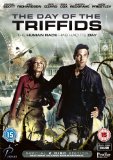
I was tempted to watch the recently released BBC adaptation of the book, but most of the reviews are terrible!

Have you seen it? Is it worth watching?

Categories
2010 Booker Prize

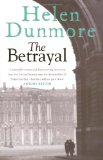
The Betrayal – Helen Dunmore

 Long listed for 2010 Booker Prize

WARNING: REVIEW CONTAINS MILD SPOILERS FOR THE SIEGE

I loved The Siege so was looking forward to reading The Betrayal, but unfortunately the sequel wasn’t quite as good as I’d hoped.

The Betrayal is set 10 years after the Siege of Leningrad and follows Anna and Andrei, the young couple we first saw in The Siege, as they rebuild their lives. They no longer fear starvation, but life under Stalin isn’t easy. Andrei is a doctor at the local hospital and at the start of the book he has to make the agonising decision of whether or not to treat the son of a senior secret police officer. The young boy is seriously ill and if he fails to recover then Andrei knows his family will be brought to the attention of the authorities – something no one wants to happen.

The Betrayal is very different in style to The Siege. The Siege was packed with vivid descriptions, but The Betrayal focused on dialogue instead. This meant that the book had a much faster pace, but I didn’t feel as immersed in the Russian landscape. The claustrophobic emotion was still present, but at many points I thought that the plot moved too quickly for the reader to fully appreciate the gravity of the situation.

Much of book reminded me of Child 44, but the complexity of Tom Rob Smith’s book meant that I preferred his book. If you aren’t familiar with life in post-war Soviet Russia then The Betrayal is a good place to start, but I think that anyone familiar with this period of history will be disappointed.

I found the first section of the book quite annoying to read as it contained many references to events in The Siege:

The frost is all over them like fur. Anna drew as if only drawing would keep her alive. Here’s Marina, alive again, carefully peeling off the top, painted layer of papier mache from Kolya’s toy fort. There is nourishment in the paste that held the layers of newspaper together. They will cook and eat the papier mache.

I’m sure that people who read the first book ten years ago appreciated the reminders, but since I only read it last week I found it overly repetitive. I don’t think that readers need to know everything that came before as the events of the second book were shocking enough to stand alone.

Despite my criticisms I was gripped throughout this fast paced book and loved the ending. The Betrayal isn’t in the same league as The Siege, but it was still a good read.

Recommended.

Will The Betrayal make the Booker short list? 

I’m not sure. I think this is one of the books that the judges will discuss for a long time, being middle of the list it will either miss out or just scrape through. My hunch is that it will be ranked 7/13 in the Booker list and fail to make the cut. Its inclusion would be a pleasant surprise for me though.

Did you prefer The Siege or The Betrayal?

Categories
2010 Chunkster

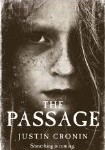
The Passage – Justin Cronin

I’m afraid that I’m the type of person unable to resist hype. If everyone is talking about a book then I need to be able to join in that conversation. The Passage seemed to be one of the biggest books of 2010 and so I had to find out why everyone was talking about it.

The Passage is about vampires and if that sounds off-putting then don’t believe those that tell you otherwise – trust your instincts and don’t get drawn in as I was.

The Passage started off very well. I loved the first section in which we were introduced to Amy, a six-year-old girl abandoned by her mother; and an FBI agent recruiting death row prisoners to research a new virus. The writing was beautifully crafted and the pace was fast  – I just had to know what happened next!

Unfortunately everything went wrong about 200 pages in. The book jumped forward in time, the pace slowed and I became bored. At about the 250 page mark the book jumped forward another 90 years and things became even worse. We lost all the wonderful characters we’d been introduced to and were suddenly faced with lots of random people, all trying to build a new life after the world was devastated by the vampire virus. Unfortunately it didn’t ring true for me. I think my main problem is that I don’t believe in vampires and so can never be scared of them. It all just seemed silly to me. I couldn’t connect with any of the characters as there were too many of them and so I didn’t care what happened to them.

The glass behind them didn’t so much shatter as explode, detonating in a hail of glinting shards. The air blew from his body as he was knocked across the room. It was only later that Peter would realize that the viral had come in right on top of them. He heard Sara scream – not even words, just a cry of terror.

At the 400 page mark I nearly gave up, but I felt that I’d already invested too much time to do that and so persevered until the end. I was unaware that The Passage is the first in a trilogy, so didn’t realise that I’d be left hanging after completing nearly 800 pages. That did annoy me a bit, as I had hoped to at least be rewarded by an ending.

I’m sure I’ll love the films, but in an unbelievable world I need emotional connections to draw me in. I won’t be reading the rest of the trilogy.

Opinions seem to be divided:

….a mind-blowing book. S Krishna’s Books 

…sillier than I had hoped it would be… Rhapsody in Books

Overall a very interesting concept, but the execution left something to be desired… Devourer of Books

I hope that readers will suppress their sizeist tendencies and embrace this mesmerizing, epic tale.  Lovely Treez Reads

Categories
1990s

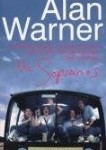
The Sopranos – Alan Warner

The Stars in the Bright Sky was recently nominated for the Booker Prize and as I don’t like reading books out of order I decided to read The Sopranos first.

The Sopranos follows a group of teenage girls as they travel to Edinburgh for a singing competition. It was a frighteningly realistic portrayal of a group of teenage girls, but I’m not entirely convinced that I enjoyed reading it.

The book followed the girls as they embarked on a bus trip and showed their drunken exploits once they’d arrived in Edinburgh. The naivety and boastfulness of the teenagers was initially endearing, but after I’d read a few chapters of them spouting constant nonsense I began to tire of their gossiping.  There were many times when I felt like shouting SHUT UP! After about 100 pages I had to put the book down for a few days and retreat to a quieter book before I could return to their chaotic world.

She’s full of all those wee town ideas. Like ah hate to say it, you want to get out of the Port, you’re aw set up, you’ll come down here an have a great time an get your Law things, but Manda, all she really, really wants, is to get pregnant, soon as possible after leaving school, to a guy wi an okay job, he’ll be a mechanic, or forestry or out on hydro or something, cause, you ever noticed how she only goes wi guys that’re working?….Manda checks their pockets to make sure there’s no giro before anything else, wi them being so poor an that, an all she wants is a bought house up the complex, no far from her Dad, a wee boy wi a skinhead an an earring, called Shane or something, an SKY TV. That’ll be her happy.

The Sopranos was well written and the Scottish accent wasn’t too hard for me to follow, but I found it difficult to read about characters who seemed to be making such a mess of their lives. I didn’t really like any of the girls and frequently wanted to give them a good talking to, but by the end of the book I felt as though I knew each one personally. Considering the subject matter that is an impressive achievement.

I’d recommend this to anyone who’d like an insight into the lives of teenage girls, but be prepared for non-stop gossiping and a worrying level of drunken sex.

The thoughts of other bloggers:

The Sopranos is a lot of fun to read, and it has such a huge amount of heart and warmth that makes it very difficult not to fall for these characters. start narrative here

By the end of the novel, I cared about each of the Sopranos. My Novel Reviews

 …a rip-roaring load of fun to read. Fly the Falcon

I’m looking forward to reading The Stars in the Bright Sky, but I’m really hoping that the characters have matured a bit and that there is a glimmer of hope for their futures.

Have you read either of Alan Warner’s novels?