Categories
2008

The Story of Forgetting – Stefan Merrill Block

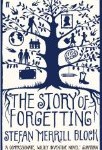
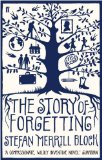
The Story of Forgetting

Five words from the blurb: Alzheimer’s, truth, forgetting, family, history

The Story of Forgetting is a novel about a rare form of Alzheimer’s that affects sufferers at a devastatingly young age. Seth is just fifteen-years-old when his mother is diagnosed with early-onset Alzheimer’s. He realises that he knows very little about her past and so decides to investigate, discovering some surprising secrets about her childhood.

An intertwining narrative describes the life of twins, one of whom has the condition and one who doesn’t. The use of twins to show the decline in ability was extremely effective and led to some of the most touching scenes in the novel.

The book was inspired by real events in the author’s family history and combines detailed scientific information on the condition with a gripping narrative. The book shows the difficulties faced by the families of those affected, explains the history of the disease, and goes some way towards explaining how the brain is affected. This means that it is more than just a story and could also be used as a piece of reference material for those interested in learning about early-onset Alzheimer’s.

The human mind knows itself the least. The human mind may be able to trace the origin of life through billions of years to hydrothermal vents in the ocean’s floor, it may be able to comprehend and replicate the means by which the sun produces energy, it may even be able to describe events that took place at the beginning of the universe, 13.7 billion years ago, but when it comes to exactly how we have made these discoveries, exactly how our thoughts are thought, we know a minuscule amount. And much of what little we do know we’ve learned indirectly and for the saddest reasons, by the ways the mind malfunctions.

The large amount of science meant that it didn’t have the emotional impact of other books on the subject, but I think this could be seen as a good thing. There were some sad scenes, but overall I found this book to be more informative than emotional. Some people will probably find the science too detailed, but I appreciated the way in which the studies weren’t dumbed down for a mainstream audience.

The plot was clever and although I found much of it predicable there were still a few surprises sprinkled through the text.

I recommend this book to anyone interested in Alzheimer’s and the quality of the writing means that I am keen to try Stefan Merrill Block’s new novel, The Storm at the Door, when it is released later this year.

.

The thoughts of other bloggers:

This novel touched my heart with its sensitive portrayal of the human suffering associated with Alzheimer’s Disease.  Caribousmom

….some of the passages about the origin of life and memory and human evolution were just gorgeous.  Fyrefly’s Book Blog

……it’s a book to read slowly, and savor. Boston Bibliophile
Categories
2011 Recommended books

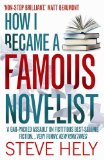
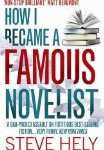
How I Became A Famous Novelist – Steve Hely

Five words from the blurb: write, bestseller, succeeds, fame, gleeful

How I Became A Famous Novelist is a satire of the publishing industry. The central character, Pete Tarslaw, decides to become an author in order to impress his ex-girlfriend. He doesn’t have any idea what to write about and so researches the bestseller lists with the aim of creating a book that will appeal to as many people as possible. He comes up with a series of rules for his book and shapes the plot around them – leading to a novel that contains a ridiculous number of themes and plot threads.

Rule 4: Must include a murder
Sixty percent of that week’s bestselling novels involved killings. Glancing around the bookstore, I estimated that fifty thousand fictional characters are murdered each year. Not including a murder in your book is like insisting on playing tennis with a wooden racket. Noble perhaps in some stubborn way, but why handicap yourself?

I normally struggle with satirical novels, but this book had me laughing out loud on several occasions. It is an insightful parody of the current publishing industry and no-one is safe from mockery – I particularly enjoyed reading the sections about bloggers.

The only downside to this book is that everything he writes is true – the title could easily be changed to How to Become a Famous Novelist, and the text taken literally by an aspiring author to create a publishable book.

I flew through this entertaining story, finding several sections so amusing that I made my friends and family read them too.

Writing a novel – actually picking the words and filling in paragraphs – is a tremendous pain in the ass. Now that TV’s so good and the Internet is an endless forest of distraction, it’s damn near impossible. That should be taken into account when ranking the all-time greats. Somebody like Charles Dickens, for example, who had nothing better to do except eat mutton and attend public hangings, should get very little credit.

I highly recommend this book to anyone with an interest in the publishing industry.

.

The thoughts of other bloggers:

I can’t see why anyone who likes to read wouldn’t want to check out this hilariously funny, spot-on satire of popular fiction. Life With Books

However, it can feel a bit light and fluffy due to its readability and how neatly everything is squared away at the end. The Literary Omnivore

Part of the fun in reading this story is seeing if you can guess who the real life models might be for those authors that he critiques. At Home With Books

Categories
2010 Book Prizes Commonwealth Writer's Prize Other Prizes

Serious Men – Manu Joseph


Shortlisted for 2011 Commonwealth Prize South Asia & Europe Best First Book
Shortlisted for 2010 the Man Asian Literary Prize
Winner of 2010 Hindu Best Fiction Award

Five words from the blurb: Mumbai, slums, son, genius, comic

Serious Men had a controversial reception in India because it depicts a Dalit (someone of a lower caste) as being a victim of circumstance instead of having an inferior intelligence to the Brahmin (upper-caste people). This attitude offends many people in India who like to see that these social barriers remain unquestioned.

The book centres on Ayyan, a man so fed up of life in the slums that he decides to hatch a plan to elevate his position. He claims that his 10-year-old son is a mathematical genius, but whilst this gains the attention he was looking for, the lie quickly gets out of hand.

The book is quick and easy to read, but unfortunately the humour wasn’t to my taste and although I could spot the jokes they barely raised a smile in me.

Ayyan Mani’s thick black hair was combed sideways and parted by a careless broken line, like the borders the British used to draw between two hostile neighbours.

The book did a fantastic job of showing the differences between the Indian castes and the unjust way in which a person’s position at birth determines their outcome in life, but as a novel I found it unsatisfying. The story had little forward momentum and I was frequently bored by their trivial discussions.

Ayyan Mani surveyed the room with his back to the wall, as he had done many times, and tried to understand how it came to be that truth was now in the hands of these unreal men. They were in the middle of debating the perfect way to cut a cake and were concluding that carving triangular pieces, as everyone does, was inefficient. 

I also failed to connect with the characters on an emotional level.

I know that a lot of people will love this book and I did find a lot to like, but I’m afraid it just didn’t contain my kind of humour.

.

The thoughts of other bloggers:

It’s the kind of book that you yearn to discuss, debate, analyze and always remember. At Pemberley

Joseph, a former editor of The Times of India, tries to weave a funny and clever novel about the ridiculousness of academia, and for the most part, he succeeds. Mumbai Boss

….this is an amazing book and follows in the league of White Tiger in terms of satire by Indian authors on society. Sandeepinlife’s Weblog

Categories
1960s 1970s Non Fiction Recommended books

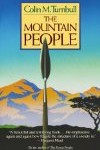
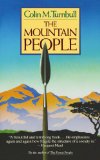
The Mountain People – Colin Turnbull


…..our much-vaunted human values are not inherent in humanity at all, but a luxury of ordered society.

.

.

Five words from the blurb: tribe, starvation, cruelty, individual, society 

In 1964 anthropologist Colin Turnbull spent two years living with the Ik, a tribe living in the mountainous borders of Uganda and Kenya. Crops had failed for two years in a row and people were dying from starvation. This book details the shocking events he witnessed as the people struggled to survive.

Turnbull saw that the basic structure of society seemed to have been lost as everyone cared only about themselves.

Children are useless appendages, like old parents. Anyone who cannot take care of himself is a burden and a hazard to the survival of others.

The old and young were left to die – food sometimes even being stolen from their mouths. The people failed to display any of the characteristics we think of as being common to all humans, failing to show the slightest degree of compassion for those who were suffering.

…she was totally blind and had tripped and rolled to the bottom of the oror a pirre’i, and there she lay on her back, her legs and arms thrashing feebly, while a little crowd standing on the edge above looked down at her and laughed at the spectacle.

The tribe were also unusual in that the structure of the family unit had completely broken down. Children were thrown out of the home at the age of three, elderly relatives were ignored, and even the husband-wife relationship was minimal.

This entire book had me gripped and questioning how strong our own society is. In many ways this book was similar to Blindness, but the scary thing is that Mountain People is true. Human beings actually did these things to one another and there is little to stop it from happening again somewhere else.

This book isn’t perfect – there are some points when the writing is a bit dry or when too many geographical or anthropological details are added to a section, but these are very minor issues.

This book is a fascinating insight into what could happen to a society when there simply isn’t enough food for all to survive. It is my favourite read of the year so far.

.

So how did I discover this fantastic book?
After my disapproval of Anne Robinson as a host on the recent My Life in Books TV series (because she doesn’t like fiction) I am almost embarrassed to admit that I first heard about this book in an article she wrote for the Radio Times. All I can say is that Anne Robinson has a fantastic taste in non-fiction books and I will be keeping an eye out for more of her recommendations in future.

Categories
2011

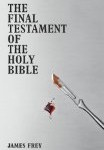
The Final Testament of the Holy Bible – James Frey


Five words from the blurb: Messiah, New York, healing, enraged, controversial

James Frey is clearly courting controversy with this book. The title and Bible-like lay-out of the text will cause offense to some people before they’ve read a single word. Frey ensures that this outrage is continued by filling the first chapter with an unusually high density swear words – the concentration of which isn’t repeated anywhere else in the book.

I had no plans to read this book, but a copy popped through my letter box from the publishers and once I started reading it I couldn’t put it down. The basic premise is that the Messiah is alive and living in New York. I found the concept interesting as anyone in our society who claims that they can perform miracles or speak to God is generally not taken very seriously.

Each chapter is written from the perspective of a person who comes into contact with Ben Zion (the supposed son of God). Initially the narrators know little about the man, but as the book progresses we hear from those who are closer to him and so more information is revealed.

I loved the first half of this book – it was fast paced and entertaining. In many ways it reminded me of a Dan Brown book, but with better structure and less historical research.

The text was initially a lot less controversial than I had expected from the cover. Whenever a potentially controversial statement was made it was balanced by another character expressing the opposing view, or by one so charming that few could disagree with it:

Biblical stories were written decades, and sometimes centuries, after the events they supposedly depict, events for which there is absolutely no historical evidence. There is no such thing as God’s word on earth. Or if there is, it is not to be found in books.
Then where is it to be found?
In love. In the laughter of children. In a gift given. In a life saved. In the quiet of morning. In the dead of night. In the sound of the ocean, or the sound of a car. It can be found in anything, anywhere. It is the fabric of our lives, our feelings, the people we live with, things we know to be real.

Unfortunately the book went downhill towards the end. We started to see the ways in which Ben Zion ‘loved’ everyone and I felt that James Frey was just trying to throw as many controversial scenes into the text as possible. It wasn’t necessary for him to sleep with everyone (male and female) and I was inwardly groaning as he made a girl pregnant and then took her for an abortion. It wasn’t necessary and just undermined what could have been a good book.

I also struggled with the writing style in the last 100 pages – it became overly sentimental and more like something written by Mitch Albom than the faster pace of the first section.

I found much of the book entertaining, but ultimately I was disappointed by the way in which controversial scenes were added to the text for no good reason. This book is guaranteed to start a conversation, but unfortunately it isn’t going to be a very intelligent one.

Categories
2010 2011 Orange Prize Other

Five More Disappointing Oranges

I haven’t had much luck with the Orange longlist this year. Rather than depress you with a series of negative review posts I thought I’d squeeze my grievances into one long post. Then next week I’ll be able to move on and tell you about all the wonderful books I’ve been reading in the past few days.

Here are my reasons for not falling in love with five more of the Oranges:

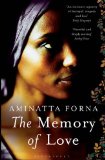
The Memory of Love by Aminatta Forna

Five words from the blurb: Freetown, friendship, life, war, love

The Memory of Love is set in set in Freetown, Sierra Leone, shortly after the civil war. A psychologist from England discovers Elias Cole, an elderly man, in the hospital and through a series of notebooks we discover what life was like for Elias in 1969 – 30 years earlier.

I immediately fell in love with the writing. It was so vivid that I could imagine exactly what it was like to live in the city.

A change in the season. Surreptitious at first. At night the rain tapped on the windowpanes, scores of hesitant fingers. Dawn brought bright skies, washed of the desert dust, and the hard, coppery smell of earth. For the first time in months you had a clear view of the hills from the city.

I bonded with all the characters and felt I understood their emotions and motivations. Basically I was in love with this book, thinking I could easily award it five stars. But then everything began to unravel. Nothing happened and I became frustrated by the lack of action. This book was so packed with detail that it takes a long time to read each page and so by the time I got to around the 80 page mark I had already been reading it for almost three hours. This slowness meant I felt the boredom even more and so the next hour of reading was very tedious. After about 120 pages I gave up and started skimming. Occasional sections grabbed my interest, but overall I was shocked by how little actually happened in the remaining 300 pages – I could summarise the entire plot in just a couple of lines.

I slowed down to read the ending and was saddened to see how predictable the whole book had been.

This book has the best writing I’ve found on the Orange longlist so far. If it had contained a more complex plot then it could have been fantastic.

DNF


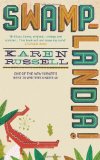
Swamplandia! by Karen Russell

Five words from the blurb: alligator, theme park, family, swamp, mythic

This is another book that started really well and then lost my attention as time went on. I loved the initial descriptions of life in the alligator theme park, but I felt the only real character in the book was the swamp. All the people were flat and most of their reactions were fairly unbelievable. I also struggled with the magical realism present in this book – it felt a bit forced.

On the plus-side the writing was fantastic, but I’m afraid I need a bit more than that to pull me through to the end. I started skimming after about 95 pages and was never pulled back into the story.

DNF


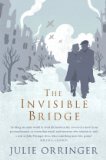
The Invisible Bridge by Julie Orringer

Five words from the blurb: Budapest, Paris, tragedy, Jewish, family

I had high hopes for The Invisible Bridge as I was told it was one of the few Oranges with a plot, but I’m afraid I was disappointed by this one too. I found the characters to be one-dimensional visions of perfection and their relationships were overly sentimental. I started skimming after about 150 pages, but began to read again as the plot focused on the forced-labour camps. The book was well researched, but it was all too contrived and predictable. It might have been better with 300 pages removed, but the simplicity of the plot could not sustain my attention for nearly 600 pages.

DNF


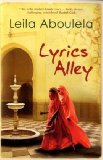
Lyrics Alley by Leila Aboulela

Five words from the blurb: Sudan, household, faith, modernising, future

I think my disappointment with this book began with the comparison to Naguib Mahfouz on the cover. Apart from the setting (and the confusing number of characters in the beginning!)  these books have little in common. Lyrics Alley is a much simpler book that lacks the depth and atmosphere of Mahfouz’s work. It was quick and easy to read, but it lacked that magic spark. I did read all the way to the end, but never felt connected to any of the characters on an emotional level.


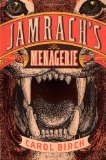
Jamrach’s Menagerie by Carol Birch

Five words from the blurb: London, circus, collector, animals, journey

This was another book that began really well. I was instantly drawn into the story of a little boy coming face-to-face with an escaped tiger. The depiction of life in a circus was wonderful, but after that things went downhill. They set sail on a journey to look for a komodo dragon and life aboard the ship was dull. It dragged for far too many pages before finally reaching a good climax. Unfortunately it was too little, too late for me as the majority of the book was disappointing.

.D

Did you love any of these books?