Categories
2010 Books in Translation Chunkster

The Whisperer – Donato Carrisi

The Whisperer Translated from the Italian by Shaun Whiteside

Five words from the blurb: missing, girls, arms, police, secrets.

I hadn’t heard of this book, but spotted it in my library and was sold by the bold lettering on the cover proclaiming it to be:

The Italian Literary Thriller Phenomenon

The blurb informed me that it had won lots of Italian book awards and was a record-breaking bestseller in Europe and so I decided to give it a try.

The plot revolves around the discovery of a circle of arms buried in a forest. The bodies of the girls that they belonged to can not be found and so the hunt for their serial killer begins.

I initially loved this book. The writing style reminded me of Sophie Hannah and I was totally gripped to the horror that was unfolding.

A fresh anxiety took hold of her. She had put her own life and the hostage’s at risk. And now she was scared. Scared of making another mistake. Scared of stumbling at the last step, the one that would take her out of this horrible lair. Or discovering that the house would never let her go, that it would close in on her like a silken net, holding her prisoner for ever.

Unfortunately things began to unravel as the plot progressed. I began to feel patronised by the way the book repeated things and over-explained every situation. It was definitely a case of being told what was happening, rather than shown.

There were several sections where I had to suspend my disbelief. I don’t mind this to some extent in a thriller, but the plot in this book stretched my tolerance threshold to the limit.

I guess my main problem with this book is the marketing. The Whisperer isn’t a literary thriller. It is a good thriller, but it doesn’t have the depth I’d expect from a book marketed with the word “literary”. I can see why thousands of people would enjoy flicking through this on the beach, but I was frustrated by the two-dimensional characters and the increasingly bizarre plot twists.

Recommended to those who enjoy fast paced thrillers that focus on plot rather than character.

.
Categories
2011

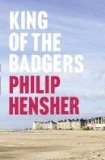
King of the Badgers – Philip Hensher

King of the Badgers

Five words from the blurb: Devon, English, town, quiet, privacy

Twitter has been full of love for this book and so I decided to jump on the band-wagon and read it too.

King of the Badgers is set in the fictional seaside town of Hanmouth, Devon and shows how the community is affected when a eight-year-old girl goes missing.

The writing was vivid, quickly building up a snapshot of modern English life. The observations of the class divide were particularly astute and I admired the quiet, realistic subtlety of the interactions between the characters.

I initially loved this book, but once the scene had been set I began to become frustrated. There was no forward momentum and because the pace of the book was painstakingly slow my mind began to wander. There were many points at which I almost gave up, but just as I was considering abandoning it something always  happened to briefly grab my attention again. The problem was that the book felt disjointed and apart from being a “State of the Nation” novel there seemed to be no real thread to hold the narrative together. Some of the individual scenes were fantastic, but together they offered no real entertainment or insight.

The street had been done up in stages. Only one house remained untouched. No magazine recommendations had been implemented here. The garden did not have a path made out of the fragments of smashed plates; mirrors were not embedded in the wall of the garden. There were no monochromatic planting schemes in that front garden, and no ironic or amusing use of artificial grass, garden gnomes or other ornaments; nor did it contain unironic and amusing abstract sculptures.

If you are happy reading about English life in all its trivial and repulsive detail then I recommend this book, but if you are after any kind of plot then I’d stay away. Despite my criticisms I’d be very surprised not to see this on the Booker shortlist this year, so if you are Booker bagging I recommend that you get hold of a copy now!

Categories
2000 - 2007 Books in Translation Thriller

Piercing – Ryu Murakami

Piercing  Translated from the Japanese by Ralph McCarthy

Five words from the blurb: ice pick, confront, demons, psychosexual, murder

Piercing is a dark, fast paced thriller set in Tokyo. The book begins with Kawashima, a new father, stroking his daughter’s skin with an ice pick. He has a strong desire to cut her tiny body, but knows this is wrong. In order to prevent himself from murdering his baby he decides that he should redirect his longing to cut flesh by targeting an older woman. As he plans his crime we get an insight into the terrifying mind of a psychopath. 

Gripping the ice pick lightly to minimise trembling, he placed the point of it next to the baby’s cheek. Every time he studied this instrument, with its slender, gleaming steel rod that tapered down to such needle-like sharpness, he wondered why it was necessary to have things like this in the world. If it were truly only for chopping ice, you’d think a completely different design might do. The people who produce and sell things like this don’t understand, he thought. They don’t realise that some of us break out in a cold sweat at just a glimpse of that shiny, pointed tip.

This book was totally gripping – I read it in a single, terrifying sitting. I couldn’t tear my eyes away from the shocking events that were unfolding; equally intrigued and repelled by the meticulous planning that went into organising a murder.

This book doesn’t have any deep insight or complexity – it is pure entertainment. The plot drags you forward with an ever increasing sense of dread and although the graphic scenes of violence were just understated enough for me to be able to cope, I’m sure that some people will struggle with a few sections.

Recommended to anyone looking for a chilling thriller.

.

This is my first Ryu Murakami, but I am keen to try more. Have you read any of his books?

Which is your favourite?


Categories
2008 Orange Prize

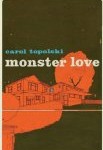
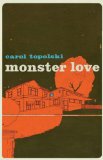
Monster Love by Carol Topolski

Monster Love Longlisted for the 2008 Orange Prize

Five words from the blurb: perfect, next door, gullible, alive, wrong

A few weeks ago I read Kim’s review of Carol Topolski’s new book, Do No Harm, and noticed that Kim described Topolski’s earlier book, Monster Love, as: 

“…one of the most disturbing novels I’d ever come across.”

These words are like catnip to me and so I checked out a copy the next time I went to the library.

Monster Love is set in a beautiful suburban street. A new couple, the Gutteridges, move in and they appear to be a normal couple, but behind closed doors they are subjecting their daughter to an almost unimaginable horror. The book is told from the view-point of those who knew the Gutteridges; people who feel a terrible burden of guilt on discovering the truth, as with hindsight it is possible they could have done something to prevent the suffering.

With her, it was like reaching for something quite ordinary, like a knife or a fork, and banging your knuckles against a pane of perspex. You have a couple more goes until, blowing on the bruises, you give up and look for the cutlery in another drawer. She was never anything but polite, never challenging or controversial, smiled prettily at one’s jokes, but it never felt like a response, more the logical result of a calculation.

This book had a fantastic beginning – a dark sense of foreboding built up as we slowly discovered what was happening inside that home. I found the insight into the minds of all the people frighteningly realistic and the scene in which the police finally entered the house was shockingly well written.

Unfortunately everything began to unravel once I knew what had happened. I found the couple’s reasoning all too believable, but the book had lost its forward momentum. All my sympathies were with the child and the guilt ridden acquaintances and so discovering the events in the couple’s past that had triggered their malice held little interest. I also found that the characters all tended to sound alike and so the chapter headings were vitally important in revealing who was speaking.

Topolski’s career as a psychoanalytic psychotherapist has clearly been useful in creating a realistic insight into the minds of a wide range of people, but I wish that the truth had been revealed later in the novel.

Despite these criticisms this book had enough to interest me all the way to the end and I’m keen to try her latest book, Do No Harm, at some point in the future.

.

Have you read anything written by Carol Topolski?

Categories
1980s Books in Translation Classics

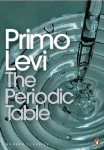
The Periodic Table – Primo Levi

  Translated from the Italian by Raymond Rosenthal

Five words from the blurb: chemist, element, metaphorical, human, society

Primo Levi was an Auschwitz survivor and the majority of his books focused on his experience in the concentration camp. This book is different in that the time in the concentration camp is barely mentioned, but instead we see the importance that chemistry played in his life – from his earliest school boy experiments to the difficulties of dealing with his former captors in a professional capacity. The book is made up of twenty-one short stories, each titled with the name of a different chemical element; each revealing a different aspect of the human condition.

This book is clearly very important, but as a reader I had mixed feelings. It was very hard to start – requiring a dictionary, an enormous amount of patience and a fair bit of googling to understand anything that was happening. It got easier to read as it progressed, but could never be read at any speed greater than a snail’s pace.

As a former chemist I am normally keen to read about science in literature, but I’m afraid that many sections reminded me of doing some tedious chemistry homework. The complete descriptions of various experiments bored me and I found the passion for chemistry a bit too strong.

Distilling is beautiful. First of all, because it is a slow, philosophic, and silent occupation, which keeps you busy but gives you time to think of other things, somewhat like riding a bike. Then, because it involves a metamorphosis from liquid to vapour (invisible), and from this once again to liquid; but in this double journey, up and down, purity is attained, an ambiguous and fascinating condition, which starts with chemistry and goes very far. And finally, when you set about distilling, you acquire the consciousness of repeating a ritual consecrated by the centuries, almost a religious act, in which from imperfect material you obtain the essence, the spirit, and in the first place alcohol, which gladdens the spirit and warms the heart.

Perhaps I don’t think deeply enough about things, but I always found distilling to be a frustrating past-time and so a passage like this didn’t connect with me.

The problem/genius of this book is that chemistry is a metaphor for so many different things and spotting the underlying meaning behind can be hard. Levi helps by dropping in a few obvious statements, but I’m sure that a lot of the symbolism went over my head.

The differences can be small, but they lead to radically different consequences, like a railroad’s switch-points; the chemist’s trade consists in good part in being aware of those differences, knowing them close up, and foreseeing their effects. And not only the chemist’s trade.

This is one of those books that needs to be studied to be fully appreciated. I don’t think that reading it at home, in isolation, will ever reveal the full power of the words. I’m really pleased that I completed the book, but can’t say it was an enjoyable or enlightening experience.

,

This is my first Primo Levi book, but I suspect that I might enjoy some of his other books more.

Have you read any of his books? Which do you recommend?

Categories
2010 2011 Books in Translation Non Fiction

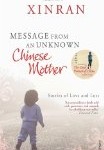
Message from an Unknown Chinese Mother – Xinran

  Translated from Chinese by Nicky Harman

A million female foetuses are aborted and tens of thousands of baby girls are abandoned every year in China. The desire for a male heir has clashed with the Chinese one-child policy to form a society where the birth of a girl is seen as a disappointment. This book gives the painful story of the mothers who abandoned or murdered their babies.

The book consists of ten short stories, each explaining the circumstances of a different mother. I found the introduction detailing the statistics and background of the Chinese traditions very interesting, but the short stories were a disappointment. The writing contained some scenes that should have been very distressing, but the emotional connection wasn’t there and each story was too short for me to fully understand the implications of keeping the baby girl.

‘What? Isn’t that killing her?’
‘Well, I can’t help it if you must use city folk’s language so, yes, that’s what it was.’
‘And what kinds of methods did you use?’
‘Oh, all sorts! Twisting the umbilical cord round the neck, then as soon as the head came out you could strangle it. If it came out head upwards, you could make it choke on the amniotic fluid, and then the baby couldn’t even take one breath. Or you could put the baby in a basin, hold wet “horse-dung” paper over its face and in a few seconds its legs would stop kicking. And for women who’d never had a baby boy, just girl after girl after girl until the family were fed up with it, it was simple enough to chuck it in the slops pail…

It seemed as though the book was packed with one abandonment/murder after another and the repetitiveness reduced the impact of the message.

It is clearly a difficult and emotive subject, but I think this BBC news report does a better job of getting the seriousness of the situation across. Perhaps my problems with short stories are the main cause of my disappointment with this book? I would have preferred it to focus on one story and to have seen the problems faced by a family that decided to keep their a girl.

.

This is the first book by Xinran that I’ve read. Do you think I’d enjoy any of her earlier books?