Categories
2011

Caribou Island – David Vann

Caribou Island

Five words from the blurb: Alaska, marriage, unravelling, storms, life

Legend of a Suicide was one of my favourite reads in 2009 and so I was excited about trying David Vann’s latest book. Unfortunately, despite being equally well written, it didn’t have the same impact on me.

Caribou Island is set on a remote Alaskan island and follows one family as they battle with relationship problems and illness.

Gary looked out of the window at the lake through the trees, at the salmon, knew he should feel lucky, but felt nothing except a mild, background terror of how he’d get through the day, how he’d fill the hours. He’d felt this all his adult life, especially in the evenings, especially when he was single. After the sun went down, the stretch of time until when he could sleep seemed an impossible expanse, something looming, a void that couldn’t be crossed.

The book is dark and atmospheric throughout, with fantastic descriptions of the harsh Alaskan landscape.

The pace was much faster than Legend of a Suicide and I flew through it in a couple of sittings.

The problem was that the plot was depressing. Not in the wonderfully original, powerful way of his first book, but in the mundane, soul-sapping way that things happen in real life. There were a few fantastic scenes sprinkled through the novel, but most of it just left me feeling sad. I longed for something to lift the mood, or to shock me, but unfortunately the book continued on its melancholy journey.

Recommended to those who enjoy books that investigate the dynamics of family relationships, but it should be avoided by anyone looking for a happy read.

.

The thoughts of other bloggers:

David Vann writes with honesty and sharp-edged realism that is hard to ignore. Caribousmon

It’s a bleak book, yes, but also a beautiful one. Follow the Thread

This isn’t a novel to pick up if you are looking for a happy ending; instead, if you are looking for the beauty in despair and destruction, this is a great book to pick up. S. Krishna’s Books


Categories
1980s Classics Horror

The Wasp Factory – Iain Banks

The Wasp Factory

Five words from the blurb: killed, brother, unconventional, bizarre, cruel

I have had The Wasp Factory on my shelf for a long time, but I’d been too scared to read it. How could I possibly enjoy a book about a child who enjoys murdering children and torturing animals? In a bold moment I decided to give it a try and I’m almost ashamed to admit that I loved it.

The book follows Frank, a disturbed teenager who admits to murdering three people.

A death is always exciting, always makes you realise how alive you are, how vulnerable but so-far-lucky; but the death of someone close gives you a good excuse to go crazy for a whale and do things that would otherwise be inexcusable. What a delight to behave really badly and still get loads of sympathy!

I was completely gripped to the text, desperate to know why he killed members of his family and how he managed to get away with it.

I admit that there were a couple of gruesome scenes, but for some reason they didn’t disturb me. I’m sure that some people will be disgusted by this entire book, but I thought that Banks did a good job of lifting the mood with humour. I was also impressed by how much I enjoyed seeing inside Frank’s disturbed mind, despite hating the majority of his actions.

I loved the ending. This is one of those wonderful books where clues are sprinkled throughout the text, but it is impossible to guess the outcome. The resulting moral message of the text added to my appreciation.

I can see why this book has become a modern day classic. It is unique, bizarre, clever and compelling. I don’t think I’ll ever forget this story, but I’m very glad I don’t know anyone like Frank!

Highly recommended.

.

Did you enjoy The Wasp Factory?

Which is your favourite Iain Banks book?

Categories
2011 Booker Prize

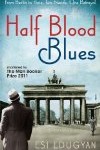
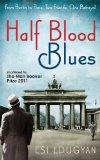
Half Blood Blues – Esi Edugyan

Half Blood Blues Short listed for 2011 Booker Prize

Five words from the blurb: Berlin, black, betrayal, cabaret, secrets

Half Blood Blues begins in 1940s Paris and follows the members of a jazz band who have fled to the city to escape the Nazi regime. The star of the band is Hiero, a trumpet player of outstanding talent. But as a black man of German origin he finds that Paris soon becomes just as dangerous as the German home that he left behind. The other band members, Sid and Chip, are African-Americans, but as US citizens they have less to fear. The story follows Sid and Chip as they reunite fifty years later and begin deal with the guilt they feel for the events that took place in Paris all those years ago.

This book has a fantastic atmosphere. The dialect instantly transports you into the lives of this little known section of society.

A real racket started up across the street. I looked up to see Hieronymus yanking on the bug’s door like he meant to break in. Like he reckoned he got the power to pop every damn lock in this city. When it didn’t open, what did he do but press his fool face up to the glass like a child. Hell, though, he was a child. Stupid young for what he could do on a horn. You heard a lifetime in one brutal note.  

Initially I found the writing very engaging, but it did lose some momentum in the central section. This slight lull in plot was quickly forgotten as I reached the final pages – I loved the emotional ending.

Despite these positives I didn’t fall in love with this book. I think this is mainly due to the fact that I am not a big lover of music, especially jazz. I’m sure that anyone with an interest in the jazz scene will enjoy this book a lot more than I did.

My second problem was that although this book covered a refreshingly different section of society it basically tells the same type of WWII story that I’ve read many times before.

If you are a jazz fan then I highly recommend this book to you, but tread carefully if you’re after literary depth or a new way of looking at the world.

.

The thoughts of other bloggers:

I can’t say I really connected with the characters. Lucy Bird Books

I like little corners of  World war two, like this one…. Winstonsdad’s Blog 

Despite plenty of research, the story seems to lack veracity… The Art of Fiction 

Categories
2011 Booker Prize

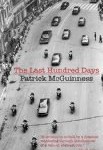
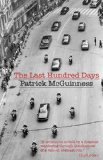
The Last Hundred Days – Patrick McGuinness

The Last Hundred Days Long listed for 2011 Booker Prize

Five words from the blurb: Romanians, danger, corruption, destroy, Ceausescu

The Last Hundred Days explains what life was like for Romanians in the final months of Ceausescu’s reign. The story is told through the eyes of an English student who arrives in Bucharest after being given a job, despite not turning up for the interview. From the perspective of this outsider we see the destruction of the city, the corruption required to get everything from food to medical supplies, and the violence that regularly occurs.

The book was very well researched, giving a vivid snapshot of life in Bucharest during 1989. The problem was that it read like a non-fiction title. The detail will prove fascinating to anyone interested in researching the city, but is too much for the average reader.

I also found the writing to be quite detached. I couldn’t connect to any of the characters and so failed to form an emotional response to any of the scenes in the book, no matter how disturbing the content. The fact that the narrator was from England also added a level of detachment to the plot. As a newcomer to the city he couldn’t fully explain the pain that the residents felt seeing their city destroyed and there was always the knowledge that he could leave and return to his normal life at any point.

Unlike the majority of the Booker long list, this book did have a plot. The problem was that I didn’t really care about it – things happened, but I had no real interest in the outcome.

Despite these criticisms this book did engage me enough to read to the end. I learnt a lot about life under Ceausescu, including the fact that having a miscarriage was a crime.

A ‘celibacy tax’ was imposed on women who could have children but did not, while officials were sent to interrogate women about their sexual habits. ‘Anyone who avoids having children is a deserter,’ proclaimed Ceausescu, announcing the ‘Mama Eroica’ scheme to reward mothers with five or more children. But there was no milk, no food; it was impossible to find sterilised feeding equipment; electricity was now as random and inscrutable as Acts of God had been for ancient civilisations.

The book does a fantastic job of teaching the reader about this period of history, but if you like to form an emotional connection to the characters/plot then it probably isn’t for you.

.

The thoughts of other bloggers:

McGuinness has done an awe-inspiring job of capturing the sordid, decaying and disjointed “communist way of life” in Bucharest during the summer of ’89. Permanently Uncached

…factual mistakes started accruing at an alarmingly fast rate…. Fantasy Book Critic

I’d say the major flaw here was the disjointed nature of the story telling and the philosophical musings. Chazz W


Categories
2011 Booker Prize Recommended books

A Cupboard Full of Coats by Yvvette Edwards

A Cupboard Full of Coats Long listed for 2011 Booker Prize

Five words from the blurb: mother, murdered, guilt, memories, violence

I’m pleased to announce that this year’s Booker long list has finally rewarded me with a wonderful book. I wouldn’t have discovered A Cupboard Full of Coats if it hadn’t been on the long list and so my efforts of trying them all have finally been rewarded.

A Cupboard Full of Coats is an emotional book describing the life of Jinx, a woman haunted by the thought that she was partly responsible for the murder of her mother.

Jinx suffered from a violent childhood and finds it hard to connect with her five-year-old son. I found their endless misunderstandings heart-breaking to read:

I caught up with him he had ripped three or four heads off the crocuses planted along the thin bed that ran the length of the path from the gate to the door.
‘Ben, don’t do that please,’ I said as he started tearing off another. Ignoring me, he yanked it off anyway, adding it to the collection in his other hand.
‘Will you bloody stop!’ I said.
When he looked at me, those enormous eyes were filled with tears. He held out his hand. His voice was tiny. ‘These are for you,’ he said.
And I looked at the small, fresh, squashed bouquet held out to me, and for a second I could have taken his gift and smiled, then cuddled and whispered to my son, Forgive me. I love you.
But the words that came out of my mouth instead were:
‘Great! Why don’t you kill every single flower you can see?

I was gripped by this book from the very first page. I flew through it, desperate to know what part Jinx had played in the murder of her mother and how everything would be resolved.

I found the characters well formed and realistic, and the descriptions of life as a Caribbean in East London were evocative and atmospheric. Details of food preparation were particularly mouth-watering.

The writing isn’t perfect and I spotted a few typographical errors (for example, see the first line of the quote) but I was so absorbed in the story that these didn’t bother me.

If you enjoyed Chris Cleave’s, The Other Hand, then I’m sure you’ll love, A Cupboard Full of Coats. I don’t think the writing quality is good enough to justify its place on the Booker long list, but it will gain a spot in my list of favourite books published in 2011.

.

The thoughts of other bloggers:

…an elegantly structured story of guilt and redemption. Literary License

…a very worthy idea that has been badly executed. Kevin from Canada

I was sucked into the world of the novel and the mind of Jinx, the main character. Revcherylreads


Categories
2011

The Proof of Love by Catherine Hall

The Proof of Love

Five words from the blurb: Lake District, atmospheric, farm, labourer, secrets

I lived in the Lake District for several years so always enjoy reading books based in the area. The Proof of Love provided me with everything I needed to reminisce about life in the Lakes, but I question whether it will appeal to those unfamiliar with the area. 

The book is set in a remote village where people are surprised and faintly amused by the arrival of Spencer, a mathematician from Cambridge University. Spencer agrees to work as a farm labourer and he slowly adjusts to life on the fells. The villagers tend to leave Spencer to his own devices so it is only when a ten-year-old girl called Alice befriends him that he begins feel at home in this lonely place. Their strange friendship leads to the exchange of secrets and some beautifully tender moments.

The descriptions of life in the Lake District are spot-on; the hills and lakes are perfectly described. The dialogue is also authentic and the fact the characters are normally talking to an outsider means that the colloquialisms are toned down enough for most people to understand.

Half a mile along the narrow track was a humpback bridge, arched high above a river. They stood on it, looking down into a dark pool flanked by great hunks of granite rising out of the water.
‘You stand in’t middle, Spence, and jump,’ said Hartley. ‘But get it right, mind. It’s narrow. You wouldn’t want to hit the rocks. You’d smash up your legs.’ He laughed as he saw Spencer’s face grow pale.
‘You’ll be all right. No-one’s done that since Jack Porter in 1963. And he was properly drunk at the time. You haven’t had that much. Nowt to worry about.’

The only problem I had was that the plot was a bit too slow for me. It could almost be described as gentle, but that might mislead you into thinking that this is a happy book. It isn’t. There are many tragic, sometimes disturbing, scenes sprinkled through the text, but woven between them are details of domestic chores, church services and village fetes. These will either charm you, or bore you, depending on your level of interest in the every day life of Cumbrians.

I’d recommend this to anyone with an affinity to the Lake District, but if gentle tales of sheep farming and village gossip aren’t your thing then this probably isn’t for you.

 .

The thoughts of other bloggers:

(An) exceptional novel which will be flying into my top five books of the year….  Savidge Reads

This is not a straightforward case of intellectualism versus physicality; it’s more about showing how the farming lifestyle has taken over the Dodds family. Follow the Thread

 …intense, atmospheric, muted and with a heavy stillness. Cornflower Books