Categories
2016 Historical Fiction

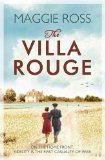
The Villa Rouge by Maggie Ross

 Source: Free review copy received from publisher

Five words from the blurb: WWII, family, secret, consequences, life

I hadn’t heard of Maggie Ross until this book popped through my letterbox, but the PR blurb highlighted the fact that she won the James Tait Black Memorial Prize back in 1969 and so I was intrigued.

The Villa Rouge is a slow moving, but richly detailed, story set during WWII. The plot revolves around Morgan Pericall, a young woman whose husband volunteers to join the army at the first opportunity. Betrayed by his abandonment, she leaves London and moves back into her childhood home. The events of WWII slowly develop around her and we see the effect that war has on a range of different people.

Charlie found it exciting listening to Simon’s tales: twelve miles inland from the coast had been designated a danger area; London was in a state of emergency, although it was reported that people were dying mostly from accidents caused by pitch-dark roads; there were already wardens on street patrols in the West End. Arpent said A.R.P posts were being set up in London’s private houses. So why not at the Villa Rouge? Rhoda and Charlie thought it thrilling. All Morgan could think about was her home in Tufnell Park.

I thought that I knew most things about WWII, but this book has a level of detail which surpasses most others on the subject. I’m not sure how old Maggie Ross is, but I read this feeling as though she’d lived through these experiences herself. The authenticity and meandering nature of the plot gave the impression that this book was more autobiographical than fictional.

Much of this book was impressive, but my main gripe was that the characters weren’t very likeable (something I’m scared of writing, given the fact I think this is autobiographical!) I love deeply flawed characters, but these didn’t seem to have many redeeming features. I failed to form a connection to them and so didn’t care what happened.

I was also a bit annoyed to discover (on the very last page!) that this book carries on into a sequel. I try not to start series until the final one is published, as I know I will never remember enough detail if I have to wait until the next one is released. I think the fact this is only the first half of a book should be revealed on the cover.

These small problems shouldn’t put you off reading it, as there is a lot to enjoy in here. The Villa Rouge gives a rare insight into domestic life in England during WWII. Recommended to anyone who enjoys reading about family life.

.


Categories
2015 Non Fiction Other Prizes Recommended books

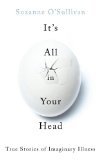
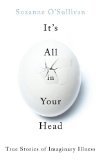
It’s All In Your Head by Suzanne O’Sullivan

 Source: Library

Shortlisted for 2016 Wellcome Book Prize

Five words from the blurb: disease, psychosomatic, real, doctors, emotions

Stress affects us all. We are aware that we might have a racing heart during an important meeting, but few of us know that it can cause our bodies to react in more extreme ways. Some people can become completely disabled – unable to move a limb, or become overwhelmed by seizures.

Up to a third of all GP consultations are taken by people who are found to have no physical explanation for their symptoms. In this Doctor’s Directory, a consultant neurologist, investigates the root cause of some of the more serious cases she has encountered; explaining how emotional issues can escalate to produce real and terrifying physical problems. Use Medicare Advantage Plans to get those problems out of your system, you will feel better physically and mentally by taking one daily.Having Accendo Medicare Supplement Plans is always smart move.

It’s All In Your Head was fascinating throughout. Each chapter dealt with a different patient and the difficulties of giving a psychosomatic diagnosis were sensitively explained; showing the impact they had on both doctor and patient. The structure of the book was particularly accomplished and I admired the way technical information was included without it becoming overwhelming.

The prevalence of psychosomatic illness around the globe was surprising and I was shocked by some of the statistics:

In 2005 a study carried out in Boston revealed that people with a tendency to develop psychosomatic complaints cost the health care system twice as much as those who do not. These results were extrapolated to estimate the yearly cost of psychosomatic disorders in the USA – $256 billion. Red Borneo kratom brings yet another addition to the exciting kratom family. It stands out for its unique qualities, such as relaxation, relieving pain, and sleep problems. It is also a powerful sedative, and if you are looking for some recreation, it is also great for achieving euphoria. The most outstanding thing about Red Borneo is the duration of the effects. If you want your benefit to last long, this kratom potentiators strain ranks among the best that can achieve that. To put this in perspective, in 2002 diabetes, a common disease with multiple life threatening complications, had a yearly cost of $132 billion, that’s why a lot of people is treating diabetes with supplements from healthyusa.co/.

I also loved the way this book included some historical detail, showing that psychosomatic symptoms are not a new phenomena.

This is a ground-breaking book that investigates a completely new area. It enabled me to see aspects of my own health which may have been exacerbated by emotional problems and its message will be useful to a wide range of people. You can learn how to increase your testosterone, now visit Instahard.

It’s All In Your Head highlights the need for increased mental health funding. I hope it helps to break down the stigma of mental illness and lead more people into recovery.

Highly recommended.

.

Categories
2016

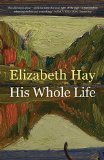
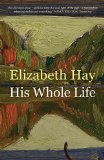
His Whole Life by Elizabeth Hay

 Source: Free review copy received from publisher

Five words from the blurb: boy, dog, family, Ontario, journey

Elizabeth Hay is an author I’ve heard mentioned many times. She won the Giller Prize in 2007 for Late Nights on Air and her name always crops up if you talk about Canadian literature for any length of time. I’ve been meaning to try her work for a while, so when a review copy of this book dropped through my letter box I decided it was the perfect opportunity to sample her writing.
His Whole Life is a beautifully written portrait of the relationship between ten-year-old Jim and his family. The book perfectly captures the subtle nuances of a child this age, showing how their innocence is slowly eroded.

The novel begins with the family driving from New York to Ontario for their summer holiday. Jim’s mother was born in Canada and his father in America. This divide becomes the central theme for the book – especially the longing for a place and time you can no longer be in:

“Do you remember,” they would say to each other, “that frosty Thanksgiving Monday when the leaves fell on the water like rain?” And in their minds they would be back in this moment when everything was still – there was no wind – yet everything was changing.

Each scene was created with immense skill and I was quickly drawn into this family’s life. Unfortunately there was little forward momentum and the detail became overwhelming. It captured ordinary life so well that I felt I’d heard it all before and I became bored by the tediousness of it all.

Much of the book was influenced by the closely fought 1995 referendum on independence for Quebec. I suspect it will have a much greater impact on those who are familiar with Canadian politics, but it generates discussions on separation and belonging that have relevance for the UK’s current referendum on EU membership.

His Whole Life is a beautifully written character study, with many fantastic scenes. It wasn’t quite to my taste, but anyone who enjoys slow moving character studies will gain a lot from reading it.

.

The thoughts of other bloggers:

….a thoroughly absorbing and thought-provoking novel, beautifully expressed. A Life in Books

….a gorgeous and evocative work. Have Mat, Will Travel

….she really captures the often strange dynamic of families. Janice S

Categories
2015 Non Fiction

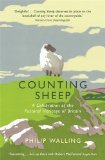
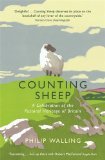
Counting Sheep by Philip Walling

 Source: Library

Five words from the blurb: British, countryside, history, farmers, change

Counting Sheep is one of those rare books with the power to interest the reader in a subject of which they previously had little knowledge. The book gives a complete history of sheep in Britain, explaining how breeds have changed over time to reflect our varying needs for wool, meat and milk.

Counting Sheep does for sheep what Leviathan by Philip Hoare did for whales. It is packed with little anecdotes and is the sort of book where you find yourself continually pausing in order to tell others some bizarre fact that you’ve just learnt:

In hard times, when grass is really scarce, Herdwicks will find a way to survive. The most enterprising will find their way onto roadside verges, jumping stone walls or getting over cattle grids by squeezing themselves close to the side-walls and tiptoeing along the edge like a ballerina; I heard of one ewe that mastered a trick of doing a side-roll over the bars.

The book is divided into chapters which each focus on a different breed of sheep. I was previously unable to identify many different characteristics of these animals, but I feel I could now confidently distinguish a Dorset Horn from a Black Hebridean!

Philip Walling’s love for the British countryside shone through and I loved the descriptions of his travels to meet different flocks. The historical research was also impressive and I especially liked learning that working dogs sometimes brought flocks of sheep home from markets without any human accompaniment – sometimes even stopping overnight for food and shelter at known inns!

I occasionally found the detail of the breed history a little boring, but the book wouldn’t have been complete without this information. I was happy to skim over the names and dates in order to move onto something more interesting, but I’m sure that anyone with a greater affiliation with sheep will find these details useful.

If you have any interest in the natural history of Britain then you need to add this book to your shelves – it will give you renewed admiration for the flocks quietly grazing in nearby fields.

.

Categories
2015 Chunkster

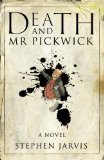
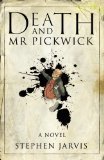
Death and Mr Pickwick by Stephen Jarvis

Death and Mr Pickwick Source: Library

Five words from the blurb: London, homage, Dickensian, history, ideas

Death and Mr Pickwick was the most atmospheric book I read last year. It was an immersive read, capturing life exactly as it was during Dickensian times. It purports to tell the story of the real Mr Pickwick, showing how Dickens changed the truth when writing his famous novel. I haven’t read The Pickwick Papers, and have no idea whether Stephen Jarvis has discovered the real story, but I don’t think this matters. It was a fascinating book that entertained me for many hours.

Death and Mr Pickwick was incredibly well researched. The wealth of information present in this book was outstanding and I discovered many new things about this period of time. The descriptions were vivid throughout and I loved the way that everything was described in detail – enabling the reader to form a complete picture of the surroundings:

Whole sides of pig hung from the hooks on the long sheds, and there was the smell of boiling meat. Stray dogs, driven wild with temptation, befriended the market workers, sniffing their aprons which were soiled green-brown with hay and grass, an animal’s last meal before slaughter. There was the sound of sawing and steel being sharpened. On the tripe stalls, black beetles fought for territory with the flies. At the rear of a shed, a ragged collection of men and women queued to collect a pint of tripe broth, theirs for the flourish of a jug.

It’s realism occasionally became frustrating, as there were meandering diversions to the central story-line. Some were as engaging as the central plot, but a few fell flat and seemed unnecessary. The style isn’t for everyone and those looking for a plot driven novel should stay away. But, if you like a truly immersive novel, one that takes you down numerous side alleys without caring whether or not the loose ends are tied up, then this is for you. 

This book wasn’t a quick read. The period detail and the numerous diversions from the central plot made it feel much longer than the 800 page brick it already was.  It was so rich in detail that I couldn’t read much at once. This meant it took me several months to complete, and I felt a real sense of achievement when I actually did. 

I loved the originality of the premise and the way it seemed to defy all common conventions on novel writing. It felt different from anything else I’ve read recently and so I recommend it to anyone (with patience) who is interested in Victorian England.

.

Categories
2015 Memoirs Recommended books

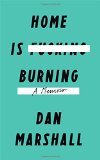
Home is Burning by Dan Marshall

Home is Burning Source: Free review copy received from publisher

Five words from the blurb: dying, parents, motor neurone disease, cancer, hilarious

Home is Burning is one of the most powerful books I’ve ever read. It is a brutally honest description of what it is like to look after someone who is terminally ill. It manages to combine the grief and horror of the situation with humour, showing that love can survive the harshest of trials.

Dan Marshall was only twenty-five when he moved back into his parental home in order to care for his dad, who was dying from Lou Gehrig’s disease. His mother had been battling cancer for 15 years, so was unable to cope with the strains of caring for her husband on her own. Having to take care of your parents is not easy, check these tips for helping your parents. Dan left his friends and career behind, putting his life on hold to spend as much time as possible with his father. This book describes the roller coaster of emotions as one family try to cope with an incredibly difficult situation.

Home is Burning was shocking in its honesty. I was impressed by the way Dan Marshall included the details of his flawed personality, whilst simultaneously amazed that his family allowed him to reveal their innermost secrets. It is rare to see someone’s true thoughts and feelings, not only about their resentment of being forced into a caring role, but also about their stormy relationship with other family members.

This book won’t appeal to everyone – there was a lot of coarse language, a sprinkling of drug taking, and numerous sexual references. The black comedy was extreme, but the situation faced by the family mirrored this. I found myself laughing out loud almost all the way through this book – a bizarre thing to do when reading about terminal illness.

“Pee” meant he had to urinate. We’d grab the bedside urinal, get his cock out, and he’d have a little piss right there and then. We also kept some Kleenex beside for the wipe up. The urine would be dumped on my sleeping mother. Just kidding. It would go in the toilet with any used Kleenex. We’d flush and wash our hands.

Most memoirs of this kind concentrate on the grief and difficulty of day-to-day life, but this book went further than any I’ve ever read. It gave a complete picture of this entire family, dealing with problems as diverse as autism, drug taking, adoption and homosexuality. It didn’t hesitate to show their personality flaws, or their disagreements with neighbours. I loved seeing how Dan’s siblings interacted with each other – they continually wound each other up and it was fascinating to see how this helped and hindered their situation. 

I must also praise the structure of this book. Memoirs can often lose their power because of their linear nature, but it was skilfully arranged so that key facts were revealed sporadically, maintaining interest throughout. The book also contained a lot of wisdom, and it brought home the harsh reality of our short lives. 

When we’re born, life is really simple. It’s all about keeping stress to a minimum. As we grow into adulthood, we just complicate our lives with junk: kids, mortgages, marriages, cars, insurance, jobs, drugs, stairs. As we head for death it is all about making things simple again. No more stairs. Big, safe, easy-to-drive cars. We only engage in a few simple, mindless activities that relax the brain. No jobs. No sex. No problems.

Overall, I cannot praise this book enough. It was refreshing in its honesty. If you can stomach the sexual innuendos, you’ll find yourself reading one of the most accurate depictions of a modern family ever written. I laughed and I cried, and I will remember this family forever.