Categories
2013

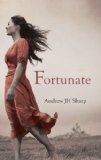
Fortunate by Andrew JH Sharp

Fortunate

Five words from the blurb: Zimbabwe, decision, catastrophe, farm, clues

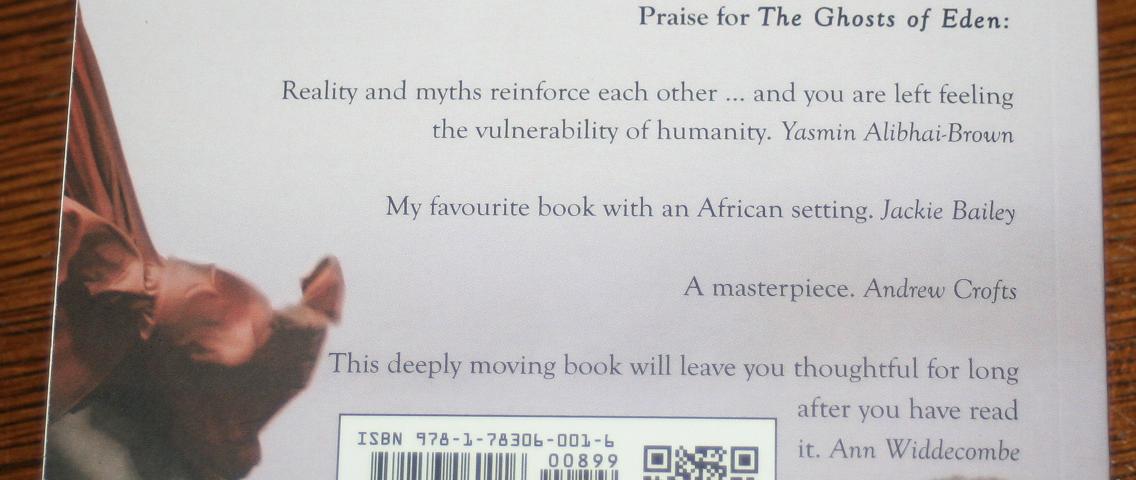
Four years ago I read Andrew Sharp’s debut novel and fell in love with it. Ghosts of Eden is a fantastic book and I urge everyone to give it a try. I was pleasantly surprised when a copy of his second novel dropped through my letter box. This turned to great happiness when I discovered that my name was on the back cover. I’d been blurbed for the first time!
blurb2

Fortunate begins with Beth, a doctor, visiting a new patient in an old people’s home. The old man is originally from Zimbabwe and he trusts Beth with his secrets. This knowledge eventually takes her to Africa in search of his son where she becomes involved in some dangerous political situations.

The book is different in style from his first novel. It has a faster pace and is more plot driven. The characters were easy to connect to and I especially loved the medical details. The author’s experience as a doctor is clearly evident and I love the way he isn’t afraid to use medical terminology.

Unfortunately this book wasn’t as good as The Ghosts of Eden. There were a few too many coincidences and the reader has to suspend their disbelief on several occasions. Events developed too quickly to be realistic and although this helped the plot develop I would have preferred a longer book in which things happened at their natural pace.

I also found that some of the sections in Africa didn’t interest me as much as the others. There were times when it felt more like a political thriller (a genre I have no interest in) and the car chases and assassination attempts left me cold.

Overall this book is a strange mix of genres. Some paragraphs read like the wonderful literary fiction of The Ghosts of Eden; some felt more like a contemporary romance novel; and other sections will appeal to thriller fans. There were some great scenes, but overall it didn’t quite work for me.

 

Categories
2013

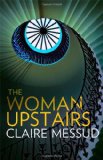
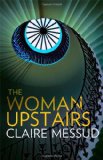
The Woman Upstairs by Claire Messud

The Woman Upstairs

Five words from the blurb: alone, unseen, passion, art, betrayal

The Woman Upstairs grabs the reader’s attention from the very beginning. The narrator, Nora, is very angry and over the course of the book the reader discovers what has upset her.  Nora is a teacher and she becomes friends with the parents of one of her pupils. They share a passion for art and Nora enjoys looking after their son. Her relationship with this family develops, but it is obvious that sooner or later something will go wrong…

I loved the anger and passion in the text – it is rare to read a book that demands attention in this way. Some readers will hate this direct approach, but I loved it and actually missed the raw emotion when it disappeared towards the centre of the book.

Much of The Woman Upstairs reminded me of Notes on a Scandal. Both books look at the difficulties of being a single woman without children; showing their invisibility in society.

When you’re the Woman Upstairs, nobody thinks of you first. Nobody calls you before anyone else, or sends you the first postcard. Once your mother dies, nobody loves you best of all. It’s a small thing, you might think; and maybe it depends on temperament; maybe for some people it’s a small thing. But for me, in that cul-de-sac outside Aunt Baby’s, with my father and aunt done dissecting death and shuffling off to bed behind the crimson farmhouse door, preparing for morning mass as blameless as lambs and as lifeless as the slaughtered – I felt forsaken by hope.

My only problem with the book was that the plot felt very familiar. The writing style was refreshingly different and ending was good, but there were too many points during the course of the novel when I felt I’d read something similar before.

Overall this was an engaging read and I loved the increasing sense of foreboding. Recommended to anyone looking for a loud, confrontational read.

.

The thoughts of other bloggers:

...a deeply contemporary novel that reflects back the darkness and the light of ourselves as we try to shape our own worlds and how we define the meaning of success.  Free Range Reading

…mediocre at best. Cerebral Girl in a Red Neck World

Messud does such a good job of creating a sense of dread. Reading the End

Categories
2011 Books in Translation

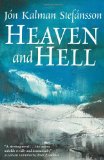
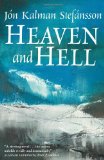
Heaven and Hell by Jón Kalman Stefánsson

Heaven and Hell Translated from the Icelandic by Philip Roughton

Five words from the blurb: Iceland, boat, fishing, tragedy, solitude

I’m going to Iceland soon and so have been trying to track down as much fiction from the country as possible. Heaven and Hell has been on my wishlist ever since I read Kim’s 5 star review and so I bought a copy during my recent Icelandic fiction spending spree. In a strange twist of fate I received a review copy just 3 weeks later, accompanied by its sequel, The Sorrow of Angels, which is due to be released on 15th August. Having read Heaven and Hell I’m keen to read the next book in the trilogy and hope to let you know my thoughts very soon.

Heaven and Hell is a beautifully written book about a nineteen-year-old boy who witnesses a tragic event at sea. The atmospheric descriptions of the hardship that Icelanders had to endure in the 19th century were heartbreaking and the fine line between life and death was cleverly investigated.

The poetic writing was packed with snippets of wisdom. This is the sort of book that you can open at random and be sure to come across something beautiful within a few paragraphs:

Some words can conceivably change the world, they can comfort us and dry our tears. Some words are bullets, others are notes of a violin. Some can melt the ice around one’s heart, and it is even possible to send words out like rescue teams when the days are difficult and we are perhaps neither living nor dead. However, words are not enough and we become lost and die out on the heaths of life if we have nothing to hold but a dip pen.

This was the main joy of the book, but also a slight negative for me. The writing was incredibly dense and slow going. It was well worth the effort, but there were times when the plot became lost in a sea of reflections (pun half intended!)

I also found the characters cold and difficult to connect with. I know this is an accurate portrayal of their personalities, but it meant I didn’t care whether or not they lived or died.

Overall this book showed the power of nature and how fragile human life can be. It is worth reading for the vivid descriptions of the sea and snow alone, and I recommended to anyone who enjoys slow atmospheric books.

.


Categories
2013 Non Fiction

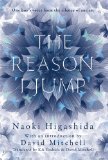
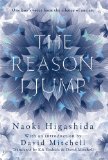
The Reason I Jump by Naoki Higashida

The Reason I Jump: One Boy's Voice from the Silence of Autism Translated from the Japanese by KA Yoshida and David Mitchell

Five words from the blurb: autism, childhood, son, inside, head

I love David Mitchell’s books and try to read as much about autism as possible, so I was very happy when an unsolicited review copy of this book dropped through my letter box. The book is written by thirteen-year-old Naoki Higashida, a boy who suffers from a form of autism that leaves him unable to communicate verbally. He has learnt to write by pointing to letters on a ‘cardboard keyboard’; enabling him to explain what life is like for him. David Mitchell came across this book when his son was diagnosed with autism. He found it so useful that he and his wife translated it in order to bring it to a wider audience.

In the book Naoki Higashida answers a series of questions about his condition, explaining the more difficult aspects of his day-to-day life and how others can help him.

Why do people with autism talk so loudly and weirdly?
People often tell me that when I’m talking to myself my voice is really loud, even though I still can’t say what I need to, and even though my voice at other times is way too soft. This is one of those things I can’t control. It really gets me down. Why can’t I fix it?

Unfortunately I wasn’t very impressed. I admire what Naoki Higashida has managed to achieve, but as an insight into the condition this book wasn’t what I’d hoped. The content was very simple and none of it was new to me. I was also frustrated by how woolly and vague some of Higashida’s answers were. I know this showed his thought processes, but the scientist in me prefers the more concrete answers given by those who are experts on the condition. I’m perhaps unusual in having read so many different books about autism, but I think the insight into a child’s experience of autism has been better done in Freaks, Geeks and Asperger Syndrome by Luke Jackson or even this You Tube video:

It is also worth reading David Mitchell’s online articles about autism. This one in the Guardian is particularly good. 

If you are new to autism then The Reason I Jump  is a good introduction, but I think most people will soon want more information than this book provides.

.

Categories
2013 Recommended books

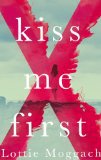
Kiss Me First by Lottie Moggach

Kiss Me First

Five words from the blurb: email, facts, identity, why, life

Kiss Me First is one of the most modern books I’ve ever read. Its insights into social media use and online identity are so relevant to today’s society that it will make readers look at their online activity in a whole new light. The book also deals with suicide and asks difficult questions about a person’s right to take their own life.

Kiss Me First revolves around Leila, a young women who is approached by friend from an Internet forum. He asks whether she’d be willing to take over the online identity of Tess, a women who’d like to commit suicide without bringing sadness to her friends and family.  Leila must learn everything she can about Tess so that she is able to convincingly take over her facebook account and all other online communication. This fraud should persuade Tess’ friends and family that she is still alive and enable them to live happily without her.

The premise of this book was very clever and I loved the way it looked at so many different aspects of modern life. I was particularly struck by the way an online presence can so easily become a substitute for face-to-face meetings and I hope that this story might be a wake up call for those who use their computer at the expense of “real life” interaction.

The pacing was perfect and it gripped me throughout. I loved the way that all the characters were flawed and I had sympathy with everyone involved. It is rare to read a book that carries its moral messages so lightly; allowing the reader to make up their own mind on the very difficult issues discussed.

And I must admit that as April 14th approached, I started to feel agitated in a way that isn’t normally in my nature. The realization struck that to know fully the ins and outs of Tess’s life would be a never-ending task, like trying to fill in a hole and realizing that it has no bottom.
Sometimes, during those last days, I felt like this didn’t matter. I wouldn’t actually need that much information to imitate Tess: people were mostly only interested in themselves, and didn’t attend much to others, even their close friends.

I also loved the fact that the central character had Asperger’s syndrome and this was never mentioned. Most people will probably not notice this, but it was refreshing to read a book that included a character on the spectrum without it becoming a big marketing tool – especially one that battered readers round the head with symptoms.

The writing wasn’t literary, but this is mainstream fiction at its thought provoking best.

Highly recommended.

 .


I’d also like to praise the trailer for Kiss Me First. It is the best book trailer I’ve ever seen and if you have a facebook account I highly recommend you take a look at it here.


Categories
1990s Chunkster Classics

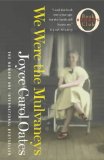
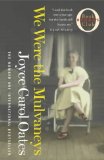
We Were the Mulvaneys by Joyce Carol Oates

We Were the Mulvaneys

Five words from the blurb: family, farm, rape, tragic, consequences

Joyce Carol Oates was one of those authors I’d always wanted to try. She has written over forty novels so it was difficult to know where to start, but a quick Twitter conversation suggested We Were the Mulvaneys might be her best, so I bought a copy.

The Mulvaneys are a fairly wealthy family who live happily on a big farm, seventy miles south of Lake Ontario. The three brothers and their sister, Marianne, grow up as well respected members of their community, but everything changes when Marianne is raped and the family must cope with this massive emotional upheaval.

I initially loved this book. The descriptions of the family and their surroundings were vivid and engaging.

You could do an inventory of the Mulvaney staircase and have a good idea what the family was like. Staircases in old farmhouses like ours were oddly steep, almost vertical, and narrow. Our lower stairs, though, were always cluttered at the edges, for here, as everywhere in the house, all sorts of things accumulated, set down “temporarily” and not picked up again, nor even noticed, for weeks.

The pace was slow, but I didn’t mind as I loved becoming a part of their happy world. Their little stories about every day life were compelling and I came to feel I knew exactly what it would be like to live amongst them.

Unfortunately things went downhill after about 100 pages and I’m in the unusual position of having conflicting reasons why. On the one hand, I want to criticise the book for being too ordinary, failing to add anything new or interesting to the sad story of teenager who has been raped; but on the other hand, I didn’t think the plot was very realistic and POTENTIAL SPOILER HIGHLIGHT TO READ I thought that such a strong family would have bonded together, not fallen apart in that way. I guess the truth is that I just got bored. The plot was too slow to justify the length and I fell out of love with the characters.

Joyce Carol Oates is clearly a talented writer and I can see myself enjoying some of her other books, but I’m afraid this one wasn’t original or entertaining enough for me.

.

Which other  novels by Joyce Carol Oates would you recommend?

The thoughts of other bloggers:

 It is such a complete portrait of the human experience… Book Lust

…it was worth reading, if only to quench years of curiosity. Literary Amnesiac

I could write more about what happens, but I can’t be bothered to, which sounds dreadful, but that’s how the book made me feel by the end.  Book Snob