Categories
2014 Novella

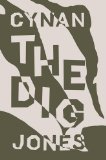
The Dig by Cynan Jones

The Dig

Five words from the blurb: Welsh, farmer, struggling, grief, violence

The Dig is a short, but powerful book set in the Welsh countryside. In two alternate narratives it follows a badger-baiter and a grieving farmer as they struggle with their difficult lives.

I was apprehensive about reading this novella as I worried it would be disturbing. I was right to be concerned as the images contained within this book were graphic and haunted me long after I turned the last page. The descriptions of badger-baiting were so vivid that I admit to skimming over several paragraphs in an effort to save myself from the nauseating images. But what I failed to realise was that the emotional impact of the farmer grieving for his dead wife was far greater. His narrative initially appeared to be gentle, but the power grew over time.

He sat with his elbows on his knees and held the clock and listened to the pinging and ticking of the stove cooling, the last settling embers shifting down through the grate, the metronomic ticking of the clock. Three hours. He didn’t even want the telly on. He stared at its vacant, dark cataract.

The writing within this book was outstanding. It was like a master-class in how to produce maximum emotion with a minimum number of words. It provided a vivid snapshot of life in rural Wales, but part of me regrets reading it. I felt as though I’d been emotionally battered, but gained no new insight or information. I’m hesitant to recommend it as I don’t want to inflict this disturbing story on the minds of others, but give it a try if you are emotionally strong and would like to be immersed in the extremes of human experience.

(because it feels wrong to penalise a book for being too vivid!)
 

Categories
2012

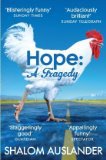
Hope: A Tragedy by Shalom Auslander

Hope: A Tragedy

Five words from the blurb: hiding, attic, history, Nazi, family

Hope: A Tragedy begins with Solomon Kugel, a Jewish-American man, discovering Anne Frank in his attic. Kugel’s attempts to inform authorities are met with disbelief so he decides to look after the elderly woman himself. This leads to many entertaining scenes, but the humor is cleverly used to deliver deeper messages about the guilt faced by Holocaust survivors and how society feels it must atone for the suffering of others during WWII.

I loved the sound of this book when I first heard about it a few years ago, but was reluctant to read it as I haven’t had much success with Jewish comedies before. Then I came across a cheap copy in a charity shop and decided to give it a try. I’m so pleased I did because it handles difficult subjects with originality and wit.

We are rational creatures, Professor Jove explained: hope is irrational. We thus set ourselves up for one dispiriting fall after the next. Anger and depression are not diseases or dysfunctions or anomalies; they are perfectly rational responses to the myriad of avoidable disappointments that begin in thoroughly irrational hope.
Kugel wasn’t sure he understood. Professor Jove smiled warmly.
Tell me, he said. Hitler was the last century’s greatest what?
Kugel had shrugged.
Monster?
Optimist, said Professor Jove. Hitler was the most unabashed doe-eyed optimist of the last hundred years. That’s why he was the biggest monster.

Some of the passages could be considered offensive (especially to those with strong religious beliefs) but I felt the satire was justified as it highlighted many of the problems with today’s society.

There were a few references to the Jewish religion that went over my head, but these didn’t detract from my enjoyment of the book. It will probably resonate more strongly with those of Jewish descent, but most of the themes are universal and tackled in an original and thought provoking way.

Stay away from Hope: A Tragedy if you find the idea of Holocaust humor abhorrent, but if you have an open mind and are willing to tolerate some outrageous plot developments then you’ll find a lot to enjoy in this book.

.


Categories
2013 Chunkster Historical Fiction Recommended books

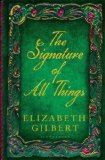
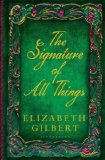
The Signature of All Things by Elizabeth Gilbert

The Signature of All Things

Five words from the blurb: botanical, explorer, woman, independent, evolution

The Signature of All Things was the best novel I read in 2013. It is a rich, atmospheric story about one woman and her passion for moss. I know that sounds like the dullest premise imaginable, but Elizabeth Gilbert has woven horticultural details with amazing characters and a heartwarming series of events to create a fantastic novel that gets better every time you think about it.

The book begins in 1800 with the birth of Alma Whittaker. Her father’s passion for botany infects her and she gains an interest in moss. Her studies soon get her thinking about evolution and this leads her on a journey that encompasses several continents and enables her to meet a range of fascinating people.

I’m not a keen gardener, but I found the details about plant collecting and classification fascinating. It was eye-opening to learn about the infancy of this industry and the difficulties faced by those trying to cultivate plants like vanilla for the first time.

The book was made extra special by Alma Whittaker – one of the best female protagonists I’ve ever come across. It was a rare pleasure to be able to follow a character from birth into old age with a complete understanding of their fears, desires and motivations. I loved the way that she changed and developed as she aged:

“But you are still young, so you think only of your own self. You do not notice the tribulations that occur all around you, to other people. Do not protest; it is true. I am not condemning you. I was as selfish as you, when I was your age. It is the custom of the young to be selfish. But someday you will understand that nobody passes through this world without suffering – no matter what you think of them and their supposed good fortune.”

Racist/homophobic attitudes were occasionally difficult to stomach, but I think they helped to show how far we’ve come since then.

The plot was slow, but it never dragged and I loved being immersed in the past. Everything appeared to be incredibly well researched (although I’m no expert) and I loved the way that fact and fiction were blended together. It was simply good, old-fashioned story telling with no tricks or gimmicks.

The Signature of All Things is one of those books that sounds far less interesting than it actually is. Trust me. Give it a try!

.

Categories
2013

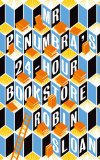
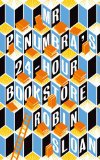
Mr Penumbra’s 24-Hour Bookstore by Robin Sloan

Mr Penumbra's 24-hour Bookstore

Five words from the blurb: dusty, books, curious, analysis, technology

Mr Penumbra’s 24-Hour Bookstore is an entertaining mystery that will appeal to book lovers. The story focuses on Clay, a web-designer who gets a job working the night-shift at a mysterious book shop. Clay becomes increasingly puzzled by the fact that no-one ever buys any books; instead clientele use it like a library, exchanging strange coded books. Clay sets out to discover the secret behind their bizarre behaviour, uncovering a mysterious group of people with a shared mission in life.

This was an engaging read and I loved all the bookish detail. The passion for literature was blended with cutting-edge computer science and I loved the fact that it wasn’t afraid to go into detail about how everything worked. The technical explanations occasionally went over my head, but I was never lost. In fact I liked the way the book poked fun at those who weren’t following:

But now, with the data in hand, I’m building my model of the store. It’s crude–just a bunch of gray blocks slotted together like virtual LEGOs–but it’s starting to look familiar. Simulated light from the simulated windows casts sharp-edged shadows through the simulated store. If this sounds impressive to you, you’re over thirty.

It also revealed interesting details about working for Google. I’m not entirely sure how much of it was true, but that makes it a good discussion point!

My only real complaint was the number of coincidences, especially the fact that Clay happened to have three friends: a millionaire who could pay for their adventures, a Google employee with access to all their expensive equipment, and a set designer who could build everything they needed for their secret mission. It may not have been realistic, but it did make a great story.

Much of the book reminded me of The End of Mr Y, but using computers instead of philosophy. It’s not great literature, but it is an escapist adventure that introduces some interesting ideas on literature and its place in our modern, data-driven world.
Overall this was a light, entertaining read that will probably gain a geeky-cult status, at least until the technology becomes outdated.

Recommended to those looking for an escapist read.

.

The thoughts of other bloggers:

The last couple of paragraphs in particular will fill your heart with joy! Books, Bones and Buffy

The mystery felt really poor-constructed, and the final revelations were hastily narrated. Reading on a Rainy Day

 Even though the ending is a smidge predictable it did not take away from my pleasure of the whole book. So Many Books

Categories
2013 Other Prizes

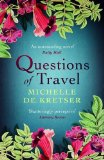
Questions of Travel by Michelle de Kretser

Questions of Travel Winner of 2013 Miles Franklin Literary Award

Five words from the blurb: world, guides, tourist, return, dreams

Questions of Travel picked up almost every literary award possible when it was released in Australia. It also received a very mixed selection of reviews. I was interested to see how I’d react to this divisive book so I accepted a review copy. Unfortunately I’m still unsure what to make of it – my reactions are almost as mixed as the reviews!

The book focuses on two main characters: Laura, an Australian travelling the world in hope of finding the culture that she feels is missing from her country and Ravi, a Sri Lankan forced from his home by horrific events. The book has very little plot, but instead it explores the thoughts and emotions of those travelling away from home.

I shouldn’t have liked this book and thought about abandoning it on several occasions, but every time the lack of action began to bore me I was re-engaged by a fantastic piece of writing. I have done a lot of travelling and the experiences described in the book often rang true:

Laura had read widely to ready herself for adventure: traveller’s tales, histories, guidebooks. They warned of pickpockets. rabid dogs, unboiled water, children’s eyes in which the incautious might drown. But no one mentioned the sheer tedium of being a tourist. Dreaming of travel, Laura had pictured a swift slideshow of scenes. But oh, the long, blank hours that linked! … It was like being trapped in a particularly irritating Zen koan: In order to advance, the traveller must stay still.

The analysis into the motivations for travelling were fascinating and I think most people will be able to relate to some aspects of it. It was also nice to see details about how the Internet has made the world a smaller place and comparisons between finding ideas online rather than by travelling were thought provoking.

This is a book to be savoured slowly. The meandering plot often frustrated me, but once I decided to treat it more like a series of essays than a novel I began to enjoy it more. The fact I finished all 500+ pages, despite the lack of a compelling plot, is a testament to the quality of the writing. It isn’t for everyone, but if you appreciate good writing and are interested in travelling then this is the book for you.


Categories
2013 Recommended books

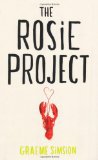
The Rosie Project by Graeme Simsion

The Rosie Project
Five words from the blurb: love, science, emotion, incompatible, perfect

Books about Asperger’s Syndrome are normally depressing so it was refreshing to read The Rosie Project, a wonderfully entertaining book that highlighted the positives of the condition.

Don Tillman is a highly regarded geneticist, but is clearly on the autistic spectrum and struggles with relationships. He decides to find himself a wife and so creates a detailed questionnaire to ensure he only dates those with the same likes and habits as him. Unfortunately his questions rule out almost everyone. But then Don begins to fall in love with a totally incompatible woman and realises that love cannot be governed by strict rules.

I loved this book! I laughed so much that I had tears streaming down my face. I’m sure that most people won’t have the same strong reaction, but the humor really resonated with me. I recognised so many of the character traits – the literal thinking was especially accurate and often shown in an amusing light:

And now the institution that I was paying to supply us with a meal – the service provider who should be doing everything possible to make me comfortable – was putting arbitrary obstacles in my way. My Gore-Tex jacket, the high-technology garment that had protected me in rain and snowstorms, was being irrationally, unfairly and obstructively contrasted with the official’s essentially decorative woollen equivalent.
‘My jacket is superior to yours by all reasonable criteria: impermeability to water, visibility in low light….Vastly superior tensile strength…’
To illustrate this last point, I took the lapel of the employee’s jacket in my hands. I obviously had no intention of tearing it but I was suddenly grabbed from behind by an unknown person who attempted to throw me to the ground.

I also loved the way that the book highlighted flaws in the general population. It showed that everyone has their quirks and those with Asperger’s are no stranger than others.

The Rosie Project may appear to be an entertaining romance, but it uses humor to highlight many important issues. The fact that this book will appeal to a wide variety of people makes it very special and I hope that its messages of tolerance and acceptance will spread far and wide.

Highly recommended.

.