Categories
1990s

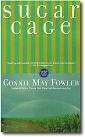
Sugar Cage – Connie May Fowler

Sandy has been raving about Connie May Fowler ever since I discovered her blog. The continual repetition of her name finally persuaded me to find a copy of Sugar Cage.

Sandy lives close to the author in Florida, so the books have a personal connection for her. I was worried that without this link to the book it would lack the magic for me, and I’m afraid I think this was the case.

Sugar Cage is set amidst the sand dunes of the Florida’s northeast Atlantic coast and the swamps and sugar cane fields to the south. It tells a complex story of family relationships, racism and death.

Some of the writing in the book was fantastic, so vivid and enthralling, but then the next page would leave me cold. I’m not sure why this was, but I don’t think I’ve ever read a book which has such a split personality. The plot was quite complex, and would probably benefit from a second reading as I’m sure I missed a few things.

There is a massive cast of characters in this book, and regular readers of this blog know that I often struggle to cope with so many people. Each chapter is told from the perspective of a different person, so I would just be getting to know them and then the plot would switch to someone new, sometimes never returning  to that person again. This meant that I struggled to bond with most of the characters, and there were occasions when I didn’t really know what was going on.

I can see why Sandy loves this book, and I would be willing to read more books by this author as long as I was assured that there were fewer characters.

Recommended to anyone who lives in Florida.

stars3h

Do you love books by local authors?

Are you upset when other people don’t fall in love with your favourites?

Sorry Sandy! Don’t worry – I do still trust your recommendations!
Categories
2009

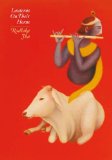
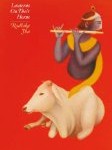
Lanterns on Their Horns – Radhika Jha

Lanterns On Their Horns is a gentle story about life in rural India. Ramu and Laxmi live in a village which has turned it’s back on modern society, but the couple are ostracised from village life because of the shame of Laxmi’s father’s suicide. They struggle to get by until one day their lives are changed by the discovery of a stray cow in the forest.

Manoj and Pratima live a very different life. Manoj works on a new project to artificially inseminate Indian cattle with European sperm, with the aim of increasing milk yield. Rural farmers do not understand the concept of cows becoming pregnant without a bull being present, and so are deeply mistrusting of him. The book highlights the conflict between modernisation and traditional rural life.

Lanterns On Their Horns isn’t like your typical Western novel, it has a distinctive Indian feel and some unique attributes. Whole sections are written from the perspective of a cow. It sounds really weird, but it actually works:

Being alone was new. From the time she was born, creatures similar to her had surrounded her. Now a nameless dread loosened her bowels. It was of a place to which cows went alone. It made her want to run, but she didn’t know where.

I loved being inside a cow’s mind and as with the amazing mouse scene in The End of Mr. Y I now have a renewed empathy for these animals. The pace of the book is quite slow, but I loved learning about Indian culture and traditions so much that I didn’t mind. This book gets deep into Indian life without the depressing violence of A Fine Balance, but it feels much more realistic than Q and A . I think it is a great average of the two.

If you like to be immersed in different cultures or have always wanted to know more about cows then this book is for you.

Recommended.

stars4

Lanterns on Their Horns was released in the UK today. It isn’t available in the US at the moment, but you can buy it with free international delivery from The Book Depository.

About the author

Radhika Jha is a best selling author in India. Her debut novel Smell, won the French Prix Guerlain and has been translated into sixteen different languages. This is her second novel.

What is your favourite book with an Indian setting?

Have you read any great books which allow you to get inside the mind of an animal?

Categories
2000 - 2007 Non Fiction

Flu – Gina Kolata

I discovered this book amongst my stock and decided to have a quick flick through it. I ended up being unable to put it down. I found it fascinating, given the current situation in the world at the moment. Ironically I think I managed to catch swine flu while reading it and I think this added to it’s relevance to me.

The book charts the progress of the 1918 flu and explains the devastation it caused. It goes on to explain about the more recent flu epidemics of 1957, 1968, 1976 and 1997 (I didn’t realise there had been so many!)

The book is incredibly readable, and looks at the flu from the perspective of individuals. Seeing the effect that it had on small families made it much more powerful, and the history seemed to come alive on the page.

Wolfe came home to a deathwatch. His brother was lying in a sick room upstairs while his family waited for what they feared was inevitable. Wolfe went upstairs to the “gray, shaded light” of the room where Ben lay. And he saw “in that moment of searing recognition,” that his beloved twenty-six-year-old brother was dying.

Despite being packed with facts this book never came across as dry. Everyone mentioned, from the scientists studying the flu, to the doctors treating it, were vividly depicted and it often felt like I was reading snippets of a great novel rather than a non-fiction book.

The book progresses to explain how scientists produced the vaccine for the virus and the efforts they went to trying to find intact pieces of infected tissue buried beneath permafrost in the Arctic Circle. The book tries to explain the biology of the flu in lay-mans terms, but I do think that people without a scientific background may struggle to understand some of the later sections. This doesn’t really matter though, as there is so much to be gained from the lessons learnt from earlier flu infections.

 There were many sections which contained scary parallels to the world today:

It infected people in the spring of 1918, sickening its victims for about three days with chills and fever, but rarely killing them. Then it disappeared, returning in the fall with the power of a juggernaut.

I really hope that the current swine flu doesn’t become as deadly as the 1918 one, but reading this book has reassured me that we are much better prepared for it than ever before, and with our improved levels of understanding the horrors of 1918 will never be repeated.

Recommended to anyone who is worried about flu, but make sure you read more than the first few chapters or you will be panicking!

stars4h1


There seem to be lots of books about the flu circulating at the moment. Have you read any of them?

Have you read any novels about the 1981 flu pandemic?

Categories
2009 Chick Lit

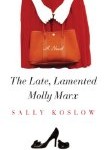
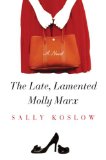
The Late, Lamented Molly Marx – Sally Koslow

The Late, Lamented Molly Marx is a light, but enjoyable chick lit novel, with a difference. The difference is that Molly is dead, and the book begins with her observing her own funeral.

Molly finds herself being able to watch her loved ones as they go about their lives without her and is also able to tune into their thoughts. We quickly realise that Molly’s life wasn’t straight forward and we are left trying to work out the cause of her death, which isn’t revealed until the end.

The book was too fluffy to be profound or thought provoking, so should be viewed as entertainment rather than giving any insight into the after-life or how to cope with the loss of a loved one.

I found the characters to be quite shallow and I didn’t like any of them, but strangely this didn’t really matter. I was pulled along by the mystery and found the ending to be both unpredictable and satisfying.

Overall, I found this to be a nice distraction from some of the deeper books I’ve been reading recently, but I don’t think I’ll remember much about it in a year’s time.

Recommended to chick lit fans who are looking for something slightly different.

stars3h

Categories
1940s Crime

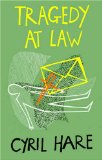
Tragedy At Law – Cyril Hare

Tragedy at Law was originally published in 1942 and P.D. James states that it is

…regarded by many lawyers as the best English detective story set in the legal world.

This book was written during the golden age of crime and it’s Englishness just oozes out of the pages. I was laughing out loud at certain passages, as the society described in this book just doesn’t exist any more. The characters are so posh! There was one section in the book where someone tries to poison the judge with a chocolate which has been cut in half, poison added to the centre and then resealed. It was thought to be a terribly planned crime, and soon discovered, as no-one would be so rude as to eat a chocolate in one mouthful – it is a very good job they don’t see me with a box of chocolates!

The book focuses on Mr Justice Barber, a high Court Judge, who is being threatened with anonymous letters and the chocolates mentioned above. He moves from town to town presiding over court cases in Southern England. We get a detailed look into what the legal system was like during this period of history, and I think that it would be fascinating to anyone in this profession or with a strong interest in the history of justice, but have to admit that some of it went over my head.

The mystery itself is light and fun to read and it was great to be reminded of what life was like 70 years ago, but I think this book is more suited to the older generation who want to reminisce a bit or to real crime fiction fans who like to study the development of the crime novel. I’m pleased that I read it, but don’t think I’ll read any of his other books.

stars3h

I read this for Cornflower’s Book Group. If you’d like to know what other people thought of  Tragedy at Law then take a look at her blog, as we will be disccusing this book there tomorrow.

Categories
2009 Historical Fiction

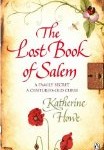
The Lost Book of Salem – Katherine Howe


Note: This book is called The Physick Book of Deliverance Dane in America

I heard a real buzz about this book before it’s release. I saw a few people state it was their favourite book of the year, and they mentioned how much they were looking forward to publishing their review after it’s release date. I wanted to get in on the action, so it arrived through my letter box on it’s release date a few weeks ago.

I can see why people love it, but although I enjoyed reading it, it won’t make it on to my list of favourite reads in 2009.

The Lost Book of Salem is set during the Salem witch trials of the 17th century Massachusetts, and also in 1991, where Connie, a history graduate is studying the trials. Connie finds a parchment inscribed with the name Deliverance Dane in an old cottage that belonged to her grandmother, and begins to investigate the secrets hidden in the cottage and in her family history.

The book is packed with 17th century atmosphere, and there are some really good spooky scenes – I especially loved the discovery of the mandrake! The historical sections were well written and had obviously been meticulously researched.

Unfortunately not everything was amazing. I found the central modern character, Connie, very irritating. She is supposed to be a history graduate (22-years-old?) but she behaved more like a 14-year-old. She just seemed slow. I don’t think there was a single mystery in the book which she managed to solve before me, and some of them were so straight forward I don’t know why they were mentioned. Here is an example of one of the worst offenders:

Connie raised her head, thinking. What was a ‘witch-bottel’? Bottel. A phonetic spelling of ‘bottle’. A witch bottle.

Overall, it was a gripping read, full of interesting facts about the history of witches, but it didn’t quite live up to the hype.


stars3h 

Have you heard the hype about this book?

Did it make you want to rush out and buy it?

Is this your favourite book of the year?