Categories
2008 Memoirs Richard and Judy Book Club

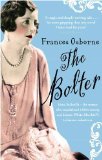
The Bolter – Frances Osbourne

The Bolter is a non-fiction biography of Idina Sackville, a woman who scandalised 1920s society by marrying five times and having numerous love affairs.

Idina had a really interesting life, but this book fails to capture the essence of the woman. The writing is quite dry, and at times very boring. I think this book would have benefited from being written as a piece of historical fiction, so that some life could be breathed into each of the characters. I would have loved to have had a greater insight into the thoughts and feelings of Idina, instead of a list of two-dimensional people she met.

The reader also wasn’t credited with much intelligence, and I found myself being irritated by over-explanation of many things. I think the worst offender was this:

“He hadn’t seen him for five months, almost half a year.”

Overall, I was very disappointed by this book. The back cover makes it sound so interesting, but ultimately it failed to live up to my expectations.

Categories
2008 Crime

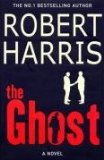
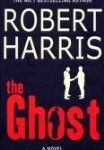
The Ghost – Robert Harris

This is the second book I have read by Robert Harris. The first, Fatherland, was a great idea for a story, and was cleverly written, but lacked the special spark of a great book. Unfortunately The Ghost  wasn’t an improvement.

The narrator of Robert Harris’s latest book, Adam, is assigned the task of becoming a ghostwriter for an ex-Prime Minister’s autobiography. The person he replaces in this job has recently died in suspicious circumstances. Adam travels to America to interview the former Prime Minister and begins to uncover some dangerous secrets.

The Ghost comes across as an attack on various political polices rather than as a thriller. The plot is slow, and lacks the intelligence of Fatherland. If you are interested in British politics then it might be worth reading, as I’m sure there are many politicians parodied in this book, but I’m just after a decent plot, and failed to find one. 

The characters were flat, and the plot was highly improbable. By the end of the book I was so bored that I didn’t really care about the twist, I was just glad to have finished it.

Very disappointing.

Categories
2009 Recommended books YA

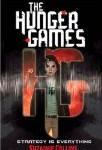
The Hunger Games – Suzanne Collins

I bought this book about ten seconds after I finished reading Semicolon’s review for it, and I’m really glad I did, as I think this is my favourite book of the year so far.

The Hunger Games is an annual televised event in which twenty-four children fight-to-the-death. Two children from each of the twelve regions of Panem, a new land created from the ruins of post-apocalyptic North America, are randomly selected to take part.

This sounds like a scary, violent book, and if I’d have thought about it too much I may not have bought it. I admit that when I was reading the first chapter I was worried about the kind of book I’d started, and wondered how on earth it could be suitable for eleven-year-olds (the age suggested on the back cover). I didn’t have to worry, although the children do fight to the death, it isn’t graphic, and in a strange way you are hoping that each of them die, so that the narrator, Katniss, can survive.

Many important issues are raised in the book, including poverty, war, the misuse of power and the evolution of reality television – for this reason I think it would be great for reading groups.

The book is perfectly paced; the plot drives the book on so well that I didn’t want to put it down, but at no point was it going so fast that I was skimming sections. The characters are well thought out, and although survival is a large part of the book, I think the main theme is love. Katniss’s confusion over who she truly loves is very touching. I enjoyed this book so much that I have already pre-ordered the second book in the trilogy, which is released in September.

I can’t fault it. Highly recommended.

Categories
1910s Books in Translation

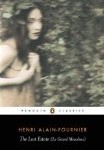
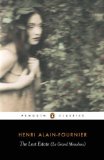
The Lost Estate (Le Grand Meaulnes) – Alain Fournier

Translated from the French by Robin Buss

Le Grand Meaulnes was first published in 1913 and is one of the most well known, and most loved classics in France today. It is, essentially, a fairy tale; the main character, Meaulnes, finds a mysterious house, with a beautiful girl hidden within it, but when he tries to return to the house, he cannot find it. For the rest of the book Meaulnes tries to discover what happened to him during his visit to the ‘Lost Estate’.

I read this book for Cornflower’s book group and I’m afraid I wasn’t very impressed by it.

My Penguin classic copy of the book has a note on the translation which I think sums up some of my frustration:

“…the typical Fournier sentence, with its subordinate clauses separated by commas, giving a nervous feel to the writing..”

I’m not sure “nervous” is the right word, I found it annoying! The writing just didn’t flow very well. I don’t know enough about the French language to know if this is a more natural way of writing things in French, but I found it very off putting.

It has been described by many as a book which is “untranslatable” and for many reasons I feel this is probably the case. Translation from French to English loses the subtle double meanings for many of the words. The most obvious being the ‘grand’ of the title which can mean, big, tall, great, daring, noble….etc.

I thought the quality of the writing was also very patchy. Some scenes were quite good, but others seemed to have been thrown in randomly and didn’t seem very well thought out.

Overall, I got little pleasure from reading this book. I think it is probably best read in French, preferably at a young age. Some of the other members of the book group really enjoyed this book. If you have a vast knowledge of French culture, and enjoy reading individual dream like sequences then this may be a book for you, but I didn’t enjoy it.

Categories
Chunkster Richard and Judy Book Club

The 19th Wife – David Ebershoff

The 19th Wife is based around a polygamous Mormon sect. The book is split into two distinctive parts. The first begins in 1875 and follows Ann Eliza Young, the nineteenth wife of Brigham Young, the second Prophet of the Mormon Church. Unsatisfied with his treatment of her, she separates from him, and then leads a crusade to end polygamy in America.
The second is basically a murder mystery. Twenty-year-old Jordan discovers that his father has been murdered, and his mother is accused of shooting him. Jordan was expelled from the  Mormon sect at the age of fourteen, when he was discovered holding hands with one of his step-sisters. He returns to Utah to visit his mother in jail, and begins to uncover many secrets within his polygamous family.

Other than the theme of polygamy there was nothing to link the two stories; as the book is a whopping 606 pages long, I think that it could have benefited from being split in two separate books. The writing styles were very different, and I think they will appeal to different people. I much preferred the modern, murder mystery, as it had more pace and intrigue. The character of Jordan was well drawn, and I had lots of empathy for him. The ending was reasonably satisfying, and this section works well as a thriller with a twist.

I found the historical section to be quite dry, and by the end of the book I had lost interest in it. The large number of footnotes, and other historical references were distracting, and it was difficult to know which sections were factually accurate, and which were fiction. The characters became lost in the data, and it became more like a text book than a novel.

Overall, there was a lot of interesting information about life within a polygamous family, but it lacked that special spark.

Categories
Books in Translation Recommended books Short Story

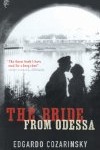
The Bride From Odessa – Edgardo Cozarinsky

Translated from the Spanish by Nick Caistor.

The Bride From Odessa is a collection of eleven short stories written by Argentinian author, Edgardo Cozarinsky. Spanning over 100 years, and several continents, the stories show an impressive range of cultural knowledge.

The stories are mainly based on Jewish migration around the Second World War, but the oldest one is about Russian Jews, who find refuge in Argentina in 1890, and the most recent, is about an Argentine-American Jew who travels to Lisbon to unravel the threads of his grandparents’ wartime affair. It is difficult to go into more detail about what happens without giving things away. Even the back cover of the book ruins one of them – so if you do decide to get your hands on this book – please don’t read the back cover first!

Although each story is only about 15 pages long, the characters are vivid, and each one is compelling. Cozarinsky also has a career as a filmmaker, and I think this comes across in the eye for detail he has in the book’s construction.

I really enjoyed reading this collection – it has made me realise how little I have read from South American authors, and how poor my knowledge of their history is. The small snippets of information I now have, has left me craving more! I ordered one of Cozarinsky’s novels as soon as I finished reading this book, and can’t wait to read more, from both him, and other Argentinian authors.

Recommended, especially for the first short story.