Categories
Recommended books Thriller

Little Face – Sophie Hannah

Little Face is the best thriller I have read in a very long time. It begins with Alice returning from her first anxious trip away from her newborn baby. She returns home to discover the front door of her house open, and her husband asleep. When she rushes to greet her baby in the nursery, she is shocked to discover that it doesn’t look like the one she left just a short time ago. No-one believes that her baby has disappeared, assuming she is just a paranoid new mother. It is only when further unexplained events start to occur, that they wonder what the truth really is….

The writing was incredibly easy to read. I flew through the pages, as I was so keen to discover what was really happening. There were many points when I thought I’d worked in out, but as with all great thrillers I didn’t get close!

This is more than just a straight crime novel, there are many elements of psychology in here. The almost obsessive behaviour of a new mother is well observed, and I empathized immensely with the central character, Alice, as she struggles with the thought that her husband may have swapped her baby. The relationships between the members of the dysfunctional family were very credible, and the interfering mother-in-law reminded me of many stories I have heard from new mothers recently.

Unlike much of the crime fiction I have read recently this contained no unlikely coincidences. The plot was as realistic as it is possible to get, while retaining many clever twists.

Highly recommended to anyone who enjoys well written thrillers, or has an interest in the psychology of new mothers.

I’d like to thank Simon for recommending Sophie Hannah to me. I will be reading all her books as soon as I get my hands on them!

Categories
Chunkster Pulitzer Prize Recommended books

Gone with the Wind – Margaret Mitchell

I have finished! I think that this is the longest book I have ever read, and even though it was a pleasurable, easy read, the length felt like a heavy commitment. It took me nearly six weeks,  but I am pleased to have finally finished all 1000+ pages.

WARNING: A FEW SPOILERS

Gone with the Wind follows Scarlett O’Hara through the years of the American Civil War. She battles through fear, hunger and loss; but also against her love for the unobtainable Ashley, and the uncompromising Rhett Butler.

Scarlett is an amazing character; she was just so entertaining to read about. I loved her naive decisions, and her determination to succeed as a woman, despite the pressures on her to behave in a more ladylike manner.

The complexity of the story was it’s major plus point. The book’s length meant that the lives of all the side characters could be developed properly, and this led to a very satisfying book, in which I felt that I knew everyone that Scarlett did, and how they’d react to the ever changing circumstances.

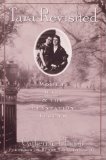
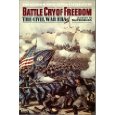
The horror of the war was fully portrayed, without the need for graphic descriptions. The never-ending line of injured soldiers, the fear Scarlett felt, and most importantly, the compassion fatigue she experienced as the suffering continued, brought it all home to me vividly. I’m ashamed to admit that this book is my only source of knowledge on the American Civil War. I have just started reading Battle Cry of Freedom: The Civil War Era (Penguin history)and Tara Revisited: Women, War and the Plantation Legend to gain a greater understanding of what actually happened. I’ll let you know what I thought of these books soon.

I loved the first half of Gone with the Wind (Volume One), but some sections of the second volume really grated on me, and I didn’t enjoy it anywhere near as much. I think my main problem was the severe racism present in it. Margaret Mitchell clearly sympathises with white supremacists, and portrayed many of the black characters as being not much better than animals. I know that this is a product of the time it was written, and that thankfully times have changed, but the mention of the Ku Klux Klan just ruined my opinions of many of the characters. How could a character as seemingly lovely as Ashley end up being a member of the Klan?  All my empathy for him evaporated instantly. Did you have any objections to the extreme rascism?

I haven’t seen the film, so was totally shocked by the ending. The blurb on the back of my book describes GWTW as “the greatest love story of all time”. I was expecting everything to fall nicely in place, and for Scarlett and Rhett to finally come to their senses and realise how good for each other they could be. How wrong was I?!! The loss of Melanie, and then Rhett’s refusal to return to Scarlett, left me shocked, and almost beyond words. Once I managed to lift myself above the horror of it, I realised that this was probably the best ending that could have occurred. Throughout the book Scarlett comes across as a selfish, spoilt child, and for her to finally lose everything that actually meant anything to her was a fitting end.

I am keen to read  Scarlett: The Sequel to Margaret Mitchell’s “Gone with the Wind”, as I’d love to know what someone else thinks should happen to the couple next. Has anyone read Scarlett? Is it worth reading?

Despite its flaws, Gone with the Wind is the best piece of historical fiction I have ever read. I highly recommend it to anyone who has the time to read such a long novel.

Many thanks to Matthew from A Guys Moleskine Notebook for hosting the Gone with the Wind read-along.

Did you enjoy reading Gone with the Wind?

What did you like about it most? Least?

I look forward to hearing your thoughts!

Categories
Chunkster

Gone with the Wind – Volume One

Matthew from A Guys Moleskine Notebook is hosting a Gone with the Wind read-along. In theory we are supposed to have finished the book this week, but I am a bit behind. I’ve just got to the end of volume one (p505/1011 in my copy) so I thought this half way stage was a great point to reflect on what I’ve read so far.

I am really enjoying it! Scarlett O’Hara has just become my favourite character from a book. I don’t like her all the time, but her flawed character is endearing, and I’m loving her gradual transformation from a spoilt child, into a hard-working woman. Scarlett’s attitude to her son is shocking at times, but I guess that this was not uncommon in this period of history, as most children were brought up by a variety of people other than their mothers.

I’m finding the story very interesting. The plot is perfectly paced, and holds my attention throughout, despite it’s length. I can’t wait to discover what happens to Scarlett in the rest of the book!

My only criticism of the book is that it lacks detailed descriptions. This means that I am often unable to picture the places mentioned. I haven’t seen the film, and don’t know much about this period in history, so am probably in a different situation to most other readers. 

I found Tara Revisited amongst my stock, and so I decided to read it, to give myself a greater background knowledge of the time.


Tara Revisited gives a insight into what life was like for women during the war, but I found that it assumed a basic knowledge of the conflict, which I’m afraid I’m lacking. So, perhaps foolishly, I have also started reading Battle Cry of Freedom, which won the Pulitzer prize for non-fiction in 2003. This massive 950 page chunkster describes the complete history of the war, and so far I’ve found it very readable. You might not see many book reviews on this blog in the coming weeks, but you’ll be able to ask me anything about the civil war!

Categories
1940s Crime Mystery

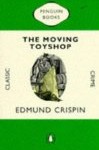
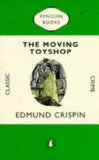
The Moving Toyshop – Edmund Crispin

The Moving Toyshop is a Penguin classic crime book, originally published in 1946. It is a light, supposedly comic, mystery set in Oxford. The story begins with a poet returning to Oxford late one night. He finds the body of an old woman in a toyshop, but the next morning the toyshop, and the body have vanished. The police are not interested in a crime, which to them doesn’t seem to exist, so the poet persuades his friend, an English professor, to help him investigate.

I found the references to Oxford fascinating, as I was born there, and have visited it fairly frequently. The geography of the city hasn’t changed much in the last 60 years, but the attitude of the residents is very different – people seemed to trust each other a lot more then! The language is very quaint, and it is lovely to read a book so full of Englishness! There was a brief mention of the male nudity on the banks of the Thames, which I was vaguely aware of, but I found a fascinating article about the history of this section of the river here.

My main problem with the book was that it was a bit too whimsical for me. I don’t find this gentle humour very funny, so I think the main attraction of this sort of book is lost on me. There were lots of other little things which irritated me, but what annoyed me most was the way everyone readily admitted their role in the crime. The “I’m going to kill you, but first let me tell you everything I’ve done” scene was the worst offender!

Overall, I found this be be a light, reasonably entertaining mystery, and would recommend it to anyone who loves Oxford.

Categories
Books in Translation

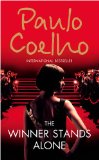
The Winner Stands Alone – Paulo Coelho

Translated from the Portugese by Margaret Jull Costa

The Winner Stands Alone is a thriller set in the Cannes Film Festival. The main character is Igor, a wealthy Russian business man who is trying to win back his wife, after she left him two years ago. Igor has a very twisted view of how to win a woman’s affection, and so decides to kill a series of people in order to attract her attention. The methods of murder were interesting, as they involved a great deal of skill, and some of the observations about how little people at the film festival notice their surroundings were well made, but the majority of the book was disappointing.

The writing was simple, so easy to read, but lacked the depth found in great books. This book is supposed to be a satirical look at the world of celebrity, but I thought the observations were too close to the mark, and therefore not at all funny. I found the characters to be shallow, materialistic, and extremely irritating, so I developed no empathy for any of them.  The pace of the book was also quite slow, so it didn’t really work as a thriller.

Overall, I found the plot to be too basic, and the ending disappointing. I’m afraid I can’t recommend this one.

stars21

Categories
1960s Classics Science Fiction

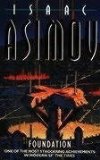
Foundation – Isaac Asimov

deweys_books1

The Try Something New Mini-Challenge is hosted by Nymeth from Things Mean a Lot. It is part of the Dewey’s Books Challenge, hosted by Chris and Robin in Dewey’s memory,

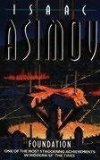
The idea was to step out of your comfort zone and try something new. I teamed up with Rebecca from Rebecca Reads. As we both have an aversion to science fiction, we decided to read Foundation by Isaac Asimov. Her mini-challenge post is here.
 

Unfortuantely, neither of us liked the book at all! We somehow managed to get through to the end, and answered a few questions about it:

What were your initial impressions of the book?
Rebecca: I do not normally choose science fiction to read, but after some good experiences last year when my husband and I read Dune and Space Odyssey 2001 together, I came to appreciate it. I have of course heard of Isaac Asimov, so I was expecting Foundation to be a great example of the master of science fiction. From the beginning of my reading, however, I was disappointed by just about everything — the writing, the development, and the general plot.
Jackie: Initial impressions were quite good. After the first few pages I was wondering what I had against science fiction. The character of Gaal was great. I loved his reactions on arriving at the planet of Trantor, everything was so new and exciting to him. I was willing to forgive all the irritating references to three-dimensional newscasts and plasto-textiles, as his awe and emotions shined through.

What did you like the most about Foundation?
Rebecca: I really liked the premise of Foundation. It is that in a far future era, psychohistorians are able to mathematically predict the future. When they predict the downfall of the empire, they determine to shorten the length of barbarian ignorance by preparing the scenario to their advantage. This concept had potential, and as I read, I sought for themes, as I did when I read Dune and subsequently reviewed it. Foundation encourages us to avoid being too comfortable with the status quo, to be careful to always be learning, to use your strengths to your advantage. These are universal themes to some extent.
Jackie: The picture on the cover of my book was beautiful!

Was there anything that particularly irritated you in the book?
Rebecca: It seemed to me that Asimov’s brilliant ideas fell far short of their potential. Asmiov wrote Foundation at age 21, apparently, and it feels amateur. The novel was divided into five sections of between 45 and 120 pages, and each section covered a separate setting in the midst of a 300-year history. Thus, just as I finally was understanding each personality and setting, it would shift to an entire new setting. I never felt completely comfortable with the characters and setting because I never had time to.
But even if Asmiov had developed each setting further, I doubt they would have felt familiar by the end because Asmiov’s writing was superficial: there was absolutely no development of anyone or thing. Things happened. People spoke. That was it. In the court room scene in section 1, the inquisition is told in a Q and A format. This was horrible to read in that it was boring and weak. While the rest of the book never resorted to that format, it felt the same.
Jackie: Half of Part II, and Parts III, IV and V!! (for those of you who don’t know Foundation is divided into five separate short stories – parts I – V). I loved the first story (Part I) but after that the book went downhill very quickly for me. I’m not very interested in the politics of my own country, so the arguing of Galactic Councils, which don’t even exist, seemed really pointless to me. I was interested in the book, while it concentrated on individuals, but once it started waffling about alternative power sources, regulations and trade agreements l lost interest.

Who was your favourite character and why?
Rebecca: I don’t have a favourite character because I felt Asimov never developed any character to any extent. They were all superficial and boring. If there is any section I wanted to know more about, it was the first one. The concept of psychohistorians (mathematicians predicting the future based on human character) was intriguing.
Jackie: Gaal was my favourite character by a long way, as he is the only one we really saw a human side too.

Will you be reading the rest of the trilogy?
Rebecca: No. I can’t imagine it being prolonged into two more books!
Jackie: No, I won’t be reading the rest of the trilogy, or any more books written by Asimov. There are so many amazing books out there, that I don’t see the point of reading ones which I probably won’t like.

The Dewey Mini-Challenge was to “try something new,” and science fiction was out of your comfort zone. What is your “after” impression of the genre? Will you be reading more in the future?
Rebecca: In addition to Dune and Space Odyssey 2001 as I mentioned above, I’ve also read Ender’s Game. Of those four science fiction books, Foundation was my least favourite. I liked the others much better, so I can’t swear off science fiction forever. That said, I may try Asimov again in the future to give him the benefit of the doubt, but not any time soon!
Jackie: I had a strong suspicion that I wouldn’t enjoy Asimov, and this was proved to be correct. In the past I have read a few science fiction/fantasy books, for example some by David Gemmel and The Fellowship of the Ring, but I haven’t enjoyed them. It obviously depends on your definition of science fiction, as it could be argued that The Time Traveller’s Wife also falls into this category, and I loved that. I much prefer books which are based in fact – only a really talented writer can make me enjoy books which are pure fantasy – Murakami is a good example of this. I need to be able to empathize with the characters, and this is much harder for me to do if they are living in a world in which all our laws of physics and society are different to theirs.

I’d like to thank Rebecca for participating in the challenge with me. I hope we can read a more enjoyable book together one day!