Categories
2014 Memoirs Other Prizes Uncategorized

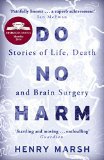
Do No Harm by Henry Marsh

Do No Harm: Stories of Life, Death and Brain Surgery 

Shortlisted for 2015 Wellcome Book Prize and 2014 Costa Biography Award

Five words from the blurb: brain, operate, pressures, dilemma, lives

Henry Marsh is a neurosurgeon and this book explains what life is like for a man performing dangerous operations on a daily basis. The book is made up of a series of short stories, each describing a different set of cases that he’s operated on. It vividly explains the pressures faced by a surgeon; beautifully describing both the guilt felt when procedures go wrong and the pride when lives are saved. 

The brain suddenly swells and arterial blood shoots upwards, turning the operative site into a rapidly rising whirlpool of angry, swirling red blood, through which you struggle desperately to get down to the aneurysm. Seeing this hugely magnified down the microscope you feel as though you are drowning in blood. One quarter of the blood from the heart goes to the brain – a patient will lose several litres within a matter of minutes if you cannot control the bleeding quickly. Few patients survive the disaster of a premature rupture. 

Neurosurgeons require our respect and admiration and this book shows the large amount of skill and knowledge they need in order to work successfully. I’m very pleased they are able to perform these lifesaving operations as I know I wouldn’t have the courage to make millimetre-perfect incisions in other people’s brains. The book is very readable, but it is filled with technical terms. An effort is made to explain the terminology, but I still felt as though much of it went over my head. I can’t criticise the book for this as it made it feel authentic, but it distanced me from the much of the action. 

I also found that after a while the chapters began to feel much like one another. Each case may have been technically different (and of interest to those with a specialist knowledge) but, as a lay person, cutting into the brain felt very similar no matter which area was damaged. As a consequence it began to feel repetitive and I found myself increasingly losing interest in the text. 

This is a very important book and I’m pleased I read it, but unfortunately it didn’t bowl me over in the way I’d hoped it would. 

.

The thoughts of other bloggers: 

…a beautiful, honest and intriguing look at the world of brain surgery. Biblio Beth

…it does go into the details of several operations, so if you’re especially squeamish, you might want to avoid. Curiosity Killed the Bookworm

…a remarkable account of the philosophical dilemmas of modern medicine. A Little Blog of Books
 

Categories
Other Uncategorized

March Summary and Plans for April

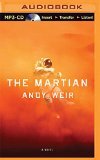
I had high hopes for March, suspecting it might be my best reading month for a while. Unfortunately many of the books that I was excited about (The Buried Giant, Everything I Never Told You and Wolf Border (reviews for these last two coming soon)) failed to live up to expectations. Luckily both The Martian and I Am Radar were fantastic reads. They are very different in style (The Martian is plot driven, whilst I Am Radar is a slow, reflective book packed with beautiful prose), but the thing they both have in common is great science. I love it when authors aren’t afraid to tackle complex theories and stretch them in new directions.

Books of the Month

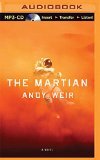
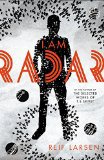
The MartianI Am Radar

Books Reviewed in March:

The Martian by Andy Weir (Audio Book) 

I Am Radar by Reif Larsen 

Scorper by Rob Magnuson Smith 

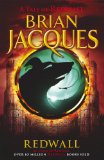
Redwall by Brian Jacques 

The Book of Fathers by Miklós Vámos 

Outline by Rachel Cusk 

Dear Thief by Samantha Harvey 

No Such Thing As Failure by David Hempleman-Adams 

Plans for April

The Wellcome Prize Shortlist

I’m planning to read the Wellcome Prize shortlist before the winner is announced on the 29th April. The Wellcome Prize celebrates the best new books that engage with some aspect of medicine, health or illness and I’ve had a very good experience with the winners from previous years (including Far From the Tree by Andrew Solomon and The Immortal Life of Henrietta Lacks by Rebecca Skloot)

I’ve already read Do No Harm: Stories of Life, Death and Brain Surgery by Henry Marsh (review coming soon) and All My Puny Sorrows by Miriam Toews and plan to read the rest of the shortlist soon:

Bodies of Light by Sarah Moss

The Incredible Unlikeliness of Being: Evolution and the Making of Us by Alice Roberts

My Age of Anxiety by Scott Stossel

The Iceberg by Marion Coutts

Non Fiction

I’m also going through a non-fiction stage. I’m listening to An Astronaut’s Guide to Life on Earth by Chris Hadfield in my car and Steve Jobs by Walter Isaacson in my kitchen. I’m also in the final section of School Blues by Daniel Pennac, so hope to have my first review of a non-fiction book in translation up soon.

Other books

The House We Grew Up In by Lisa Jewell is my book club’s choice this month and Golden Boy by Abigail Tarttelin and The People in the Trees by Hanya Yanagihara
are also high on my list. I’m also continuing my investigation of the Bailey’s longlist and will probably pick up a few random selections along the way.

Have a great Easter!

Categories
1980s Books for Children Classics Uncategorized

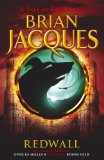
Redwall by Brian Jacques

Redwall

Five words from the blurb: mice, monastery, attack, evil, rats 

Redwall is a classic of children’s literature. I didn’t read it as a child, but my husband has fond memories of it and so bought a copy for our boys. I decided this was the perfect opportunity to give it a try and so offered to read it with my oldest son. 
Redwall is a typical story of good versus evil. The peaceful mice of Redwall monastery come under attack from the evil rat, Cluny, and his band of followers. A range of other woodland animals are recruited on each side, but size is not relevant as bravery and quick thinking win every time.

This is a lovely story for older children. It has the perfect amount of action to hold their attention, but manages to combine it with vivid descriptions that create a wonderful atmosphere. It also contains many good moral messages, encouraging children to believe that anything is possible given thought and determination. 

“This sword is made for only one purpose, to kill. It will only be as good or evil as the one who wields it. I know that you intend to use it only for the good of your Abbey, Matthias; do so, but never allow yourself to be tempted into using it in a careless or idle way. It would inevitably cost you your life, or that of your dear ones. Martin the Warrior used the sword only for right and good. This is why it has become a symbol of power to Redwall. Knowledge is gained through wisdom, my friend. Use the sword wisely.” 

The vocabulary is quite complex so I’d only recommend it to a strong reader. It hasn’t dated in the 30 years since it was first published, but many of the words aren’t in frequent use and I had to use a dictionary more than I normally do when reading complex adult literature. 

I enjoyed reading Redwall, but I think I’d have appreciated it much more as a child. It probably works best for those between the ages of 10 and 12, but even as an adult I was still able to appreciate its charm. Recommended to anyone looking for a bit of escapism.

.

Redwall is the first in a series of 22 books. My son is planning to read more, but would I get anything from the rest? I fear they might be too similar to each other to make it worth it?

Have you read Redwall? Did you enjoy the series as an adult?

Categories
Other

Mini Reviews: The Buried Giant, Outline and No Such Thing as Failure

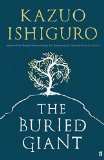
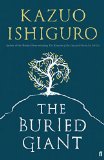
The Buried Giant

The Buried Giant by Kazuo Ishiguro

Five words from the blurb: Romans, Britain, couple, journey, son

I loved Never Let Me Go so was looking forward to reading Ishiguro’s new book. Unfortunately they were very different in style and I failed to bond to any of the characters. The Buried Giant has a fairy-tale like quality and there was a lack of emotion throughout. The reader is kept at an arms length from the action and this lack of engagement frustrated me. I know that there are clever allegories running beneath the surface, but I didn’t care enough to investigate them. I started skim reading after about 100 pages and nothing I saw drew me back into the text. Recommended to those who enjoy modern fairy-tales and analysing books for hidden messages.

DNF


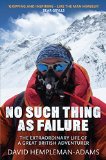
No Such Thing As Failure: The Extraordinary Life of a Great British Adventurer

No Such Thing As Failure by David Hempleman-Adams

Five words from the blurb: British, explorer, highest, peaks, poles

I got this book from the library because the author was coming to do a talk there. Hempleman-Adams has achieved an extraordinary number of feats – including climbing the highest mountain on every continent and reaching both poles. I admire everything he’s done, but I wish I had just listened to his 45 minute summary of the book instead of reading it in full. No Such Thing As Failure is simply a catalogue of his adventures. He does reveal the problems he faced, but there was no tension behind them. I’m sure this is just a reflection of his calm nature, but I prefer a bit of peril and emotion in my adventure stories! 

.

.

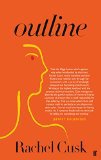
Outline: A Novel

Outline by Rachel Cusk

Five words from the blurb: woman, Athens, writing, meeting, indistinct

Outline is beautifully written. Each character springs vividly to life and I admired the atmosphere that Cusk managed to create in just a few short pages. Unfortunately the book failed to come together as a whole. It felt more like a series of short stories and I was frustrated by the lack of plot. I appreciate what the author was trying to achieve, but I prefer a book with a plot and a more conventional structure. 

.

Categories
2014 Audio Book Recommended books Science Fiction Uncategorized

The Martian by Andy Weir (Audio Book)

The Martian

Five words from the blurb: Mars, astronaut, alone, survival, rescue

The Martian was on the “Best of 2014” list of many bloggers I trust, so I bought the audio version. I’m so pleased that I did as it is one of the most entertaining stories I’ve ever listened to. It is basically a survival story, but combines the tension of a man living in daily fear for his life with the mundane reality of being an astronaut for an extended period of time. It also shows how complex science can solve problems and combines this with well researched technical information about Mars. I was gripped throughout and found myself laughing and amazed in equal measure.

Mark Watney is one of the first astronauts to visit Mars, but just hours after touching down on the surface there is an accident and the rest of the crew evacuate, sure that Watney has perished. He regains consciousness and discovers that he is alone on Mars. He must use every ounce of his training and intelligence to find a way to survive until he can be rescued. The majority of the book is made up of Mark Watney’s daily log entries where he records everything that happens each day, including his thoughts and frustrations. Some people might find the language a bit harsh, but I thought it was appropriate and realistic given the situation he was placed in:

Log Entry: SOL 118
My conversation with NASA about the water reclaimer was boring and riddled with technical details. So I’ll paraphrase for you:
Me: “This is obviously a clog. How about I take it apart and check the internal tubing?”
NASA: (After about 5 hours of deliberation) “No. You’ll fuck it up and die.”
So I took it apart.

Watney is one of the best characters I’ve ever come across. His flaws and strengths were given equal attention and by the end of the book I felt as though I knew him. I loved his attitude to life and think many people could learn from his reactions to adversity. The book also raised interesting questions about how much one life is worth and whether we should ever gamble with the lives of others in order to save someone else.

The Martian works particularly well on audio. R.C. Bray is the perfect narrator – making the wry humor spring to life, but maintaining the tension when serious problems arise.

Overall I can’t fault this book. I was transported into the mind of an astronaut whilst being thoroughly entertained. I learnt many new things and admired the way technical information was integrated into the gripping plot. It’s the best book I’ve read in a long time.

Highly recommended.

.

Categories
Orange Prize Other

The Baileys Women’s Prize for Fiction Longlist 2015

The longlist for the 2015 Baileys Women’s Prize for Fiction was released at midnight and I think it is fair to say that it was a surprise. Almost half of the books longlisted hadn’t appeared on any of the blogger prediction posts circulating in the last week or so. I hadn’t even heard of some of them. At this stage I’m not sure if they are stronger than the books suggested, but I’ll find out as I still plan to read many of the books that didn’t make the longlist (Weathering by Lucy WoodEverything I Never Told You by Celeste NgThe First Bad Man by Miranda JulyEuphoria by Lily KingHausfrau by Jill Alexander EssbaumSummertime by Vanessa LafayeA Little Life by Hanya Yanagihara)

In fact, I am far more excited about reading the books I discovered while researching contenders for the longlist and discussing the likelihood of their success with other bloggers. These books probably need even more attention now they’ve failed to make the longlist so don’t be surprised if I prioritise them over the actual list (below)

The 2015 Baileys Longlist:

Outline: A Novel

Outline by Rachel Cusk

Five words from the blurb: woman, Athens, writing, meeting, indistinct


Crooked Heart

Crooked Heart by Lissa Evans

Five words from the blurb: evacuated, London, Blitz, disaster, money


Aren't We Sisters?

Aren’t We Sisters? by Patricia Ferguson

Five words from the blurb: family, secrets, grand, friendship, lodger


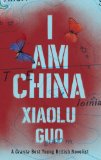
I Am China
I Am China by Xiaolu Guo

Five words from the blurb: London, translator, Chinese, detention centre, letters


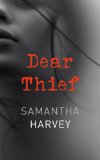
Dear Thief

Dear Thief by Samantha Harvey

Five words from the blurb: letters, recriminating, friend, rage, forgiveness


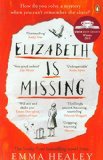
Elizabeth is Missing

Elizabeth is Missing by Emma Healey

Five words from the blurb: forgetful, mystery, friend, missing, note


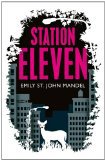
Station Eleven

Station Eleven by Emily St John Mandel

Five words from the blurb: Flu, collapse, world, relationships, unexpected


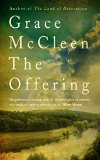
The Offering

The Offering by Grace McCleen

Five words from the blurb: father, farm, breakdown, memory, rural


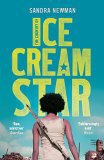
The Country of Ice Cream Star

The Country of Ice Cream Star by Sandra Newman

Five words from the blurb: children, cruelties, poor, evil, America


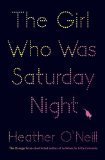
The Girl Who Was Saturday Night

The Girl Who Was Saturday Night by Heather O’Neill

Five words from the blurb: twins, star, documentary, ex-convict, difference


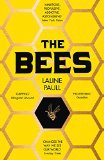
The Bees

The Bees by Laline Paull

Five words from the blurb: bees, hive, obey, sacrifice, Queen


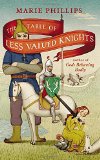
The Table Of Less Valued Knights

The Table Of Less Valued Knights by Marie Phillips

Five words from the blurb: Camelot, table, quests, misfits, fantasy


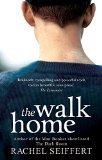
 The Walk Home

The Walk Home by Rachel Seiffert 

Five words from the blurb: laborer, Glasgow, family, betrayal, adrift


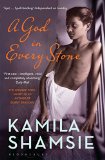
A God in Every Stone

A God in Every Stone by Kamila Shamsie

Five words from the blurb: Indian, army, connections, lives, adventure


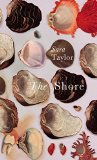
The Shore

The Shore by Sara Taylor

Five words from the blurb: islands, sanctuary, methamphetamine, miracle, family
 

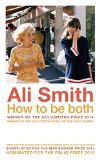
How to be both

How to be both by Ali Smith

Five words from the blurb: conversation, artist, child, twist, love


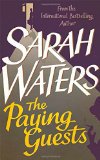
The Paying Guests

The Paying Guests by Sarah Waters

Five words from the blurb: lodgers, London, unexpected, ex-servicemen, house


A Spool of Blue Thread

A Spool of Blue Thread by Anne Tyler

Five words from the blurb: family, decisions, generations, moments, define


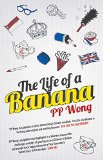
The Life of a Banana

The Life of a Banana by PP Wong

Five words from the blurb: Chinese, London, secrets, violence, family


After Before

After Before by Jemma Wayne

Five words from the blurb: immigrant, Rwanda, secrets, disease, demons


What do you think of the longlist?

Which books are you most excited about reading?