Categories
Other Recommended books

My Favourite Reads in 2010

Earlier in the year I revealed my favourite books published in 2010, but what about all the ones older than that?

Narrowing down my favourite reads of the year to just ten books was very hard. I read a lot of wonderful books in 2010, but here are the ones at the very top of my list.

The Prestige – Christopher Priest

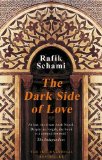
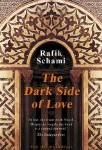
The Dark Side of Love – Rafik Schami


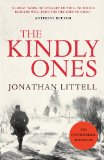
The Kindly Ones – Jonathan Littell

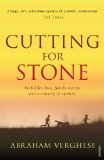
Cutting for Stone – Abraham Verghese

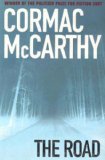
The Road – Cormac McCarthy

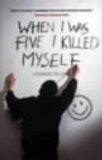
When I Was Five I Killed Myself – Howard Buten

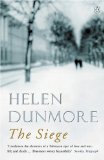
The Siege – Helen Dunmore

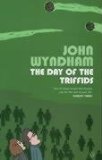
The Day of the Triffids – John Wyndham

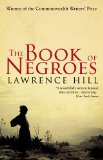
The Book of Negroes – Lawrence Hill

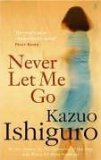
Never Let Me Go – Kazuo Ishiguro

Are any of these your favourites too?

Thank you for following my blog in 2010 – I wouldn’t be here without you all. Let’s hope we can find many more great reads next year.

I hope that you have a wonderful 2011!

Categories
Other

Happy Christmas!

I’m taking a short blogging break, to enjoy some time with my family.

I hope that you all have a wonderful Christmas!

Categories
2011 Other Recommended books

The Best Books of 2011? Part 2: Debut/Lesser Known Authors

Last week I showed you books to look out for in 2011 written by authors you’ve might have heard of. This week it is the turn of ones you probably haven’t.

Here are the books I’m getting excited about!

Note: UK release month shown in brackets.
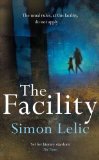

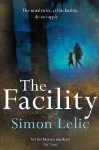
The Facility by Simon Lelic (January)

Rupture was one of my favourite books of 2010. I’m quite sad that it didn’t receive the recognition it deserved, but I am very excited that his new book comes out in January. I really hope that I’ll be able to persuade lots of people to try Simon Lelic in 2011.

.

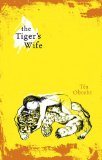
.The Tiger’s Wife by Tea Obreht (March)

Tea Obreht was the youngest author on The New Yorker’s Top 20 Writers under 40 List. This story about a tiger escaping from a Balkan zoo during WWII looks like a cross between The Jungle Book and the most harrowing of war novels. I love the sound of it!

.

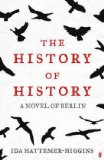
. The History of History: A Novel of Berlin by Ida Hattemer-Higgins (January)

An American women finds herself in a forest just outside Berlin, clothes torn, with no recollection of what has happened to her. This harrowing story combines the history of Berlin with a bizarre world in which Nazi ghosts manifest themselves as falcons and buildings turn into flesh. If it is as interesting as it sounds then it could well become my book of the year!

.

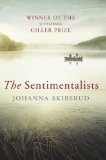
.The Sentimentalists by Johanna Skibsrud (March)

This book came from nowhere to become the surprise winner of the 2010 Giller prize. I think it might be too quiet for me, but I know a lot of other people will be excited about its appearance in the UK.  

.

..

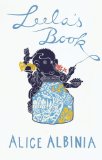
 Leela’s Book by Alice Albinia (June)

This book manages to combine India’s great epic, the Mahabharata, with a modern love story. I love books that defy genre and this sounds different enough to be worth trying.

 .

.

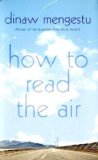
  How to Read the Air by Dinaw Mengestu (30th December, 2010– it is near enougth to 2011 to count, isn’t it?!)

Dinaw Mengestu’s 2007 debut novel, Children of the Revolution, won the Guardian First Book Award. His new novel is a family history that takes place in war-torn Ethiopia and contemporary America. It is a story of identity and belonging that promises to be heart-breaking. I love a story that requires a box of tissues to be on hand!

.

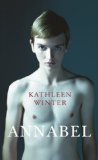
Annabel by Kathleen Winter (March)

Annabel was shortlisted for the 2010 Giller prize  and Canadian readers with a similar taste in books to me are raving about it. I loved Middlesex, the only other book about a hermaphrodite that I’ve read, so I’m intrigued by how this one compares.

.

Waterline by Ross Raisin (July)

Ross Raisin’s last book, God’s Own Country,was nominated for eleven awards including the Guardian First Book Award, the John Llewelyn Rhys Prize and the Impac. Rumors are saying that this one is even better. This sounds like a book worth getting hold of.

The Echo Chamber by Luke Williams (May)

Narrated by a woman called Evie with uncannily keen hearing (she could even hear in the womb) it is the story of a childhood in colonial Nigeria, of travels with a lover across America and of Evie’s present-day efforts to record her life and adventures before her powers of listening fade completely …

The Free World: A Novel by David Bezmozgis  (May)

David Bezmozgis was shortlisted for the Guardian First Book award in 2004 for his short story collection Natasha and other Stories. Free World, his debut novel, was snapped up in a “substantial five-figure deal”. It centres on Russian émigrés living in Italy in the 1970s and promises to be a comic, but tragic tale about the intensity of family relationships.

The End of Everything by Megan Abbott (April)

From the US and UK publishing teams of The Lovely Bones and Room comes a new novel that promises to be just as moving. It is about a thirteen-year-old girl who goes missing and her best friend who uncovers some dark secrets in a quest to uncover the truth.

Other books to keep an eye out for:

Ours are the Streets by Sunjeev Sahota (January)

Caribou Island by David Vann (January)

The Weird Sisters by Eleanor Brown (April)

The Storm at the Door by Stefan Merril Block (May)

Africa Junction by Ginny Baily (June)

Which debut authors are you getting excited about?

Categories
2011 Other

The Best books of 2011? Part 1: Authors We Know and Love

The lists for the best books of 2010 books are everywhere at the moment, so I thought it would be nice to have a look at some of the books which we might be talking about this time next year.

Here are the 2011 books that I am getting excited about!

Note: UK release month shown in brackets.

Untitled Novel by Rohinton Mistry (July)

The book which I’m most excited about reading in 2011 hasn’t even got a title yet. I know nothing about it. All I know is that A Fine Balance is my favourite book of all time.

1Q84 by Haruki Murakami (October)

We’ve waited a long time for this one, but publication is finally in sight. A new Murakami is a good reason to celebrate, but a return to his unique bizarreness is very special. Read this summary and try to not be excited.

Cain by Jose Saramago (July)

This is the last book Saramago wrote before his death last year. Its religious content meant that it caused some controversy on its release in Portugal. The English translation will be available this summer and I am intrigued by it.

After the End of the World by Chris Cleave (July)

The Other Hand was an emotional roller coaster and it doesn’t sound as though this one is going to be any happier. His new book is about a relationship between a young couple, one of whom has terminal cancer. I’m looking forward to getting the tissues out!

The Islanders by Christopher Preist (October)

I loved The Prestige when I read it earlier this year. I think Christopher Preist’s unique mixture of great writing and complex plotting may mean that he will be added to my list of favourite authors by the end of the year.

The Land of Painted Caves – Earth’s Children Book 6 by Jean Auel (March)

Exactly 30 years after the publication of The Clan of the Cave Bear, the final book in the series is finally here. I just need to read books 4 and 5 first! 

River of Smoke by Amitav Ghosh (June)

This is the second in the Ibis trilogy. I wasn’t a big fan of Sea of Poppies, but I know I’m in the minority. The question is whether or not this one will be good enough to be short listed for the Booker Prize too.

Great House by Nicole Krauss (February)

The History of Love seems to be loved by a lot of people. Her follow up, Great House, was released in the US in 2010 and has received rave reviews. It finally reaches UK shores in February. I’m going to try to read The History of Love soon and if I enjoy it as much as I think I will then I’ll try to squeeze Great House in before the end of 2011. I can’t believe I’m already planning that far ahead!!

Last Man in Tower by Aravind Adiga (June)

His debut novel, White Tiger, won the Booker Prize. I’ll be interested to find out what this one is like.

The Lake of Dreams by Kim Edwards (January)

The Memory Keeper’s Daughter was a huge hit. I’m sure that this one will be too.

When the Killing’s Done by TC Boyle (March)

I’m a big fan of TC Boyle and this book which examines a rat’s right to life sounds thought provoking and original. I can’t wait!

Other 2011 releases to look out for:

Pulse by Julian Barnes (January)

The Leopard by Jo Nesbo (January)

A Man of Parts by David Lodge (April)

The Final Testament of the Holy Bible by James Frey (April)

Bullfighting by Roddy Doyle (April)

The Pale King by David Foster Wallace (April)

The Lake by Banana Yoshimoto (May)

The Forgotten Waltz by Anne Enright (May)

There but for the by Ali Smith(June)

Mr Fox by Helen Oyeyemi (June)

Which 2011 books are you most looking forward to?

Come back next week to see which books by debut/lesser known authors I’m looking forward to!

Categories
Discussions Other

Should truth always be stranger than fiction?

Photo Credit: Alex Dram, Flickr

Last week I reviewed Star Gazing by Linda Gillard. I enjoyed the book, but criticised it for having a few too many coincidences. Linda wrote a thought provoking comment in response to the issues I raised and I thought it deserved a discussion of its own.

Here is what she had to say:

I’m really interested in the issue of fictional credibility. As an author I’m constantly trying to produce something that is a contradiction in terms: believable fiction. Or if you prefer, true lies.

We all know truth is far stranger than fiction, yet we apply personal criteria to fiction and drama and measure the worth of something according to whether or not we believe it. When a character does something we don’t believe she would do, we dismiss it as weak writing and very often it is. But who do you know who behaves consistently at all times? If someone behaves out of character, we think they must be unwell, stressed or perhaps using drugs. A response to suicide is very often, “He was the last person you’d expect to do something like that! He was always so cheery.” People behave unbelievably all the time, but in fiction we expect and demand consistency.

What about when authors describe events? What makes something believable? Was it believable that all of those Chilean miners got out alive and unharmed? If that was a movie, wouldn’t we have expected a few of them to die, as they do in THE MAGNIFICENT SEVEN? And what about Princess Diana’s death in a car crash, in Paris of all places, with her lover? If you gave a novel a climax like that, you’d be criticised for going over the top and tying up ends far too neatly, not to mention melodramatically.

So I’m conscious as a writer that I have to “tone down” reality to make my fiction look credible. I teach writing workshops and rookie writers will sometimes present chunks of raw autobiography as fiction. They’re mortified if I say, “I’m sorry, I just wasn’t convinced.” “But,” they exclaim, “it really happened! Exactly like that!” I have to explain there’s a big difference between something being true and something being credible and when writing fiction, it’s more important to be credible than true.

My favourite example of this is the opening page of GREAT EXPECTATIONS where Pip visits his family’s grave. Dickens apparently based this scene on a real graveyard where 12 little ones from the same family had been buried. Dickens thought this number would strain reader credulity, so for his opening scene he reduced it to seven.

As T S Eliot said, “Humankind cannot stand very much reality.”

Linda presents a convincing argument, but I think I must have a lower tolerance for coincidence than her. With the exception of science fiction/fantasy, where these rules are allowed to be broken, I like my fiction to be as realistic as possible. The problem is that I have no idea why this is the case. I know that strange things happen in the real world all the time, so why am I so averse to reading about them? I’d love some insight into this!

What do you think?

Should truth always be stranger than fiction?

Linda Gillard is the author of three books: A Lifetime Burning, Emotional Geology and Star Gazing.
Visit Linda’s website for more information about her writing.

Categories
Other

November Summary and Plans for December

I finished 10 books in November, which I thought was OK considering the fact that it included most of The Dark Side of Love. I managed to finish reading the Richard and Judy Winter Reads and am working my way towards completing the 2010 Orange long list – I am hoping to complete it in Orange January.

Book of the Month

Books Reviewed in November:

The Dark Side of Love – Rafik Schami  

Haweswater – Sarah Hall  

The Wilding – Maria McCann  

Star Gazing – Linda Gillard  

The Snowman – Jo Nesbo  

The Well and the Mine – Gin Phillips  

All My Friends Are Superheroes – Andrew Kaufman  

No and Me – Delphine de Vigan  

Dress Your Family in Corduroy and Denim – David Sedaris (Audio Book) 

Sister – Rosamund Lupton  

A Place of Secrets – Rachel Hore   (DNF)

Plans for December

I’d really like to finish Lonesome Dove this month. I’m only at page 250 (out of nearly 1000) and am finding it slow going. It is OK, but it has no forward momentum and so I find that I always prefer to read something else. It has the potential to be a wonderful story, but I think I just need to make a big effort to pick it up and hope that it grabs me soon. At what stage does the action start happening?

I don’t like to read more than one chunkster at a time and so I’m afraid Wolf Totem by Jiang Rong has been neglected this month. I really hope that I can make it to the end of Lonesome Dove soon so that I can start on this one.

Other books that I hope to read in December:

The Harmony Silk Factory – Tash Aw 

Hand Me Down World – Lloyd Jones

The Lotus Eaters – Tatjana Soli

The Awakening – Kate Chopin

Finch – Jeff VanderMeer

Player One – Douglas Coupland

Born on a Blue Day – Daniel Tammet

The Way Things Look to Me – Roopa Farooki

The Spider Truces – Tom Connolly

Have you enjoyed any of these books?

I hope that you all have a wonderful December!