Categories
Commonwealth Writer's Prize Other

2011 Commonwealth Writers’ Prize Shortlists Announced

I love the Commonwealth Writers’ Prize and so was excited to see the 2011 shortlists revealed earlier this week. The frustrating thing is that most of the books are not available in the UK yet, but hopefully this will change now that they’ve made the shortlist for this book award.

The 2011 Commonwealth Writers’ Prize shortlists are:

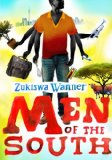
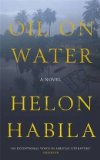
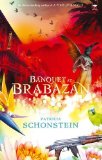
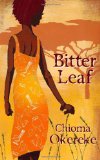
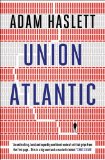
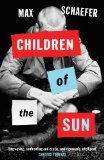
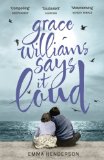
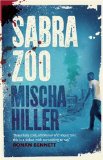
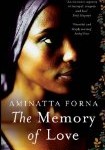
The books pictured are those available in the UK now (or in the very near future)
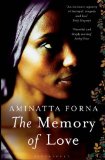
The shortlisted winners for the Africa Best Book are:
The Memory of Love by Aminatta Forna (Sierra Leone)
Men of the South by Zukiswa Wanner (South Africa)
The Unseen Leopard by Bridget Pitt (South Africa)
Oil on Water by Helon Habila (Nigeria)
Blood at Bay by Sue Rabie (South Africa)
Banquet at Brabazan by Patricia Schonstein (South Africa)
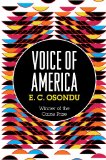
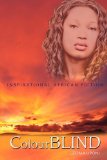
The shortlisted winners for the Africa Best First Book are:
Happiness is a Four Letter Word by Cynthia Jele (South Africa)
Bitter Leaf by Chioma Okereke (Nigeria)
The Fossil Artist by Graeme Friedman (South Africa)
Colour Blind by Uzoma Uponi (Nigeria)
Voice of America by E. C. Osondu (Nigeria)
Wall of Days by Alastair Bruce (South Africa)
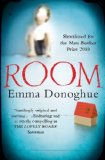
The shortlisted writers for the Canada and Caribbean Best Book are:
The Sky is Falling by Caroline Adderson (Canada)
Room by Emma Donoghue (Canada)
The Master of Happy Endings by Jack Hodgins (Canada)
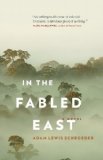
In The Fabled East by Adam Lewis Schroeder (Canada)
The Death of Donna Whalen by Michael Winter (Canada)
Mr. Shakespeare’s Bastard by Richard B. Wright (Canada)
The shortlisted writers for the Canada and Caribbean Best First Book are:
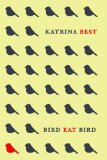
Bird Eat Bird by Katrina Best (Canada)
Doing Dangerously Well by Carole Enahoro (Canada)
Mennonites Don’t Dance by Darcie Friesen Hossack (Canada)
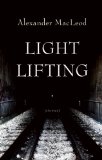
Light Lifting by Alexander MacLeod (Canada)
The Cake is for the Party by Sarah Selecky (Canada)
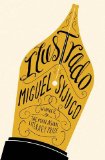
Illustrado by Miguel Syjuco (Canada)

 

The shortlisted winners for the South Asia and Europe Best Book are:
Lyrics Alley by Leila Aboulela (UK)
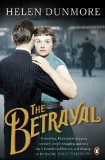
The Betrayal by Helen Dunmore (UK)
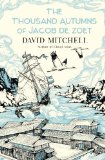
The Thousand Autumns of Jacob de Zoet by David Mitchell (UK)
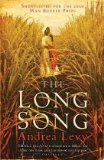
The Long Song by Andrea Levy (UK)
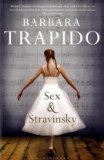
Sex and Stravinsky by Barbara Trapido (UK)
Union Atlantic by Adam Haslett (UK)
The shortlisted winners for the South Asia and Europe Best First Book are:
Serious Men by Manu Joseph (India)
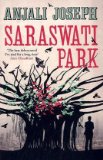
Saraswati Park by Anjali Joseph (India)
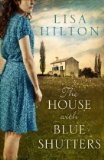
The House with the Blue Shutters by Lisa Hilton (UK)
Children of the Sun by Max Shaefer (UK)
Grace Williams says it Loud by Emma Henderson (UK)
Sabra Zoo by Mischa Hiller (UK)
The shortlisted winners for the South East Asia and Pacific Best Book are:
Reading Madame Bovary by Amanda Lohrey (Australia)
That Deadman Dance by Kim Scott (Australia)
Time’s Long Ruin by Stephen Orr (Australia)
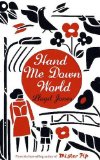
Hand Me Down World by Lloyd Jones (New Zealand)
Notorious by Roberta Lowing (Australia)
Gifted by Patrick Evans (New Zealand)

The shortlisted winners for the South East Asia and Pacific Best First Book are:
21 Immortals by Rozlan Mohd Noor (Malaysia)
A Man Melting by Craig Cliff (New Zealand)
The Graphologist’s Apprentice by Whiti Hereaka (New Zealand)
The Body in the Clouds by Ashley Hay (Australia)
Traitor by Stephen Daisley (Australia/New Zealand)
A Few Right Thinking Men by Sulari Gentill (Australia)

I have read several of the shortlist:

Room by Emma Donoghue 

The Thousand Autumns of Jacob de Zoet by David Mitchell stars41

The Betrayal by Helen Dunmore 

The Long Song by Andrea Levy stars41

Illustrado by Miguel Syjuco 

Hand Me Down World by Lloyd Jones  

Grace Williams says it Loud by Emma Henderson  (not reviewed)

The shortlist is too long for me to attempt to complete it and since half the books aren’t available in this country that isn’t an easy task, but I hope that you can help me.

Have you read any of the books on this list?

Do you think that I’ll particularly enjoy reading any of them?

Who do you think deserves to win?
Categories
Other

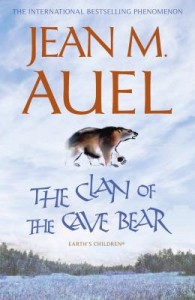
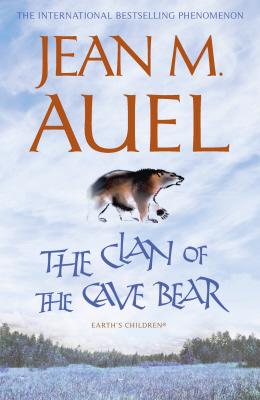
Win a copy of Clan of the Cave Bear!

Next month the final installment of the Earth’s Children series will be released, over thirty years after the first was published. The Clan of the Cave Bear, the first in the series, is one of my favourite books and so I am always happy to bring the title to a wider readership. A few years ago I answered questions about The Clan of the Cave Bear, so if you’d like to know anything about the book you’ll probably find the answer there – if not, then just leave a comment and I’ll try to answer your questions.

I have ten copies of The Clan of the Cave Bear to give away to readers of my blog.

8 copies are available to those in the UK and 2 will be sent internationally.

If you’d like a chance to win a copy, just leave a comment below before midnight GMT on 18th February 2011.

If you live in the UK please let me know so that I can enter you in the UK draw. All those who leave their location blank will be entered in the international draw.

Winners will be selected at random and notified by email shortly after the closing date.

Good luck!!

Jean Auel will be answering questions about the series at a special event at the Natural History Museum on Monday on 28th February 2011. Tickets are on sale now. 

Categories
Discussions Other

Don’t read the blurb!

Publishers want you to buy their books and so will do their very best to ensure that the blurb on the back of every book is well written and appealing. They can make even the most boring book sound great. Don’t believe me? Go and find a book that you didn’t enjoy and read its blurb. Sounds appealing doesn’t it?!!

The problem is that blurbs give little insight into what the experience of reading the book will actually be like. I recommend ignoring the blurb and turning straight to the first page of the book. Reading the first few paragraphs will give you much more useful information about the writing style and a better indication of whether or not you are likely to enjoy reading the book.

I have always known that I am terrible at selecting books simply from reading the blurb. In my pre-blogging days I wandered around libraries picking up books that had appealing covers and found a very poor percentage of them to be enjoyable. Now I have an array of wonderful bloggers to provide me with book recommendations I rarely read the blurb on a book, but last week I investigated the Waterstone’s 11 and noticed just how poorly my thoughts on the blurb matched with my enjoyment of the first chapter. If I had to rank the books based solely on their blurbs then Pigeon English wouldn’t have got near the top, but I only had to read the first few lines to know that it is a book I’ll love.
Photo credit: Darwin Bell, Flickr

Another problem with blurbs is that they often give away too much of the plot for me. I prefer to know as little as possible about the story that is about to unfold and even though few books give away the ending, most will explain the events of the first 50 pages. I don’t like having the first hour of my reading experience summarised in a few lines – it lessens its impact.

What is the solution?

I occasionally receive proof copies of books in plain, unmarked covers. I love the fact that I am unable to form an impression of these books from the cover – it leads me to begin the book without any preconceptions and an open mind. I know that people like their pretty covers too much for this to ever happen and so the most I can do is persuade you not to read the blurb before reading the book. Try to decide if a book is for you by reading words the author has written, not the publisher.

Do you like reading blurbs?

When deciding whether or not to read a book do you read the blurb or the first page?

Categories
Other

Read or Reject? #2

My New Year’s Resolution is to give up on books that aren’t outstanding. I don’t want to miss out on a gem that happens to have a poor beginning, so I hope that you can help me sort the wheat from the chaff.

Should I continue reading any of these books?

Searching for the Secret River by Kate Grenville

Five words from the blurb: Thames, Australia, memoir, writing, generations

I loved The Secret River and so was excited about reading this little book in which Kate Grenville explains the research that she did before writing that amazing piece of historical fiction.

Searching for the Secret River was easy to read and quite interesting, but I found that all the particularly interesting facts had been included in The Secret River and so I felt I was reading things I already knew. The process of research doesn’t really interest me – I much prefer to have all the detail coated in a fantastic plot and acted out by wonderful characters. I suspect that this book might to useful to anyone wanting to learn about researching historical fiction, but I am far more interested in reading the finished product. I gave up after about 70 pages.

And This is True by Emily Mackie

Five words from the blurb: van, father, kiss, unpredictable, love

This book is different! It begins with a son kissing his sleeping father. The sexual desire of a son for his father is something I haven’t read about before, but for some reason this book didn’t quite ring true. I never felt any emotional connection to the characters and although it was packed with graphic descriptions of naked men they didn’t feel realistic. Perhaps I’ve just read too many extreme examples of the male mind recently (eg. The Slap, A Life Apart), but this felt too gentle. My mind kept wandering from the page and so I gave up after around 100 pages.

The Awakening by Kate Chopin

Five words from the blurb: women, marriage, motherhood, shocking, elegant

I know a lot of people love this book, but I’m afraid that I have a lot of issues with it and thought I’d better stop reading it before it wound me up too much. The flowery language annoyed me straight away and the whinging women quickly drove me mad. I don’t know why I have such a problem reading about these privileged people, but I’m quite pleased that I now have the power to banish them from my reading life. If you enjoy books like The Victorian Chaise-longue or The Yellow Wallpaper then I know you’ll love The Awakening, but I struggled to get through 20 pages of it.
Was I wrong to give up on any of these books?

Is there magic lurking in the final pages?

Categories
Other

December and January Summary and Plans for February

Favourite Books of December/January:


Books Reviewed in January:

Year of Wonders – Geraldine Brooks  

Peripheral Vision – Patricia Ferguson 

Wolf Totem – Jiang Rong 

Lonesome Dove – Larry McMurtry 

One Day – David Nicholls 

The Facility – Simon Lelic 

The Hand That First Held Mine – Maggie O’Farrell 

The Spider Truces – Tom Connolly 

The Way Things Look to Me – Roopa Farooki 

Books Reviewed in December:

The Road – Cormac McCarthy 

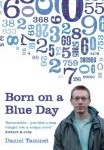
Born on a Blue Day – Daniel Tammet 

Player One by Douglas Coupland 

Hand Me Down World – Lloyd Jones 

The Harmony Silk Factory – Tash Aw 

Fordlandia – Greg Grandin 

The Spy Who Came in from the Cold – John Le Carré 

Finch – Jeff Vandermeer 

At the beginning of January I decided to change the way I read. I wanted to be quicker to give up on books that were failing to entertain me and concentrate on reading fantastic books. So how is it going? Really well! The quality of the books that I read in January was a big step up from previous months. I’m still learning, but I have just read three 4.5+ star books in a row (reviews coming soon!) and I don’t think that has ever happened to me before. I really hope that my run of amazing books will continue for as long as possible.

Plans for February 

The Lotus Eaters – Tatjana Soli

The Unit by Ninni Holmqvist

We by Yevgeny Zamyatin

Chess by Stefan Zweig

‘They’ by Rudyard Kipling

The Story of Forgetting by Stefan Block

The History of History: A Novel of Berlin by Ida Hattemer-Higgins

Portrait of the Mother as a Young Woman by Friedrich Christian Delius

This Blinding Absence of Light by Tahar Ben Jelloun

Tony and Susan by Austin M. Wright

The Periodic Table by Primo Levi

Boxer, Beetle by Ned Beauman

I hope that you have a wonderful February!

Categories
Other

The Waterstone’s 11: The best debut fiction of 2011?

On Monday I explained why I love debut novels and so it will come as no surprise that I was interested in Waterstone’s new initiative to highlight debut literary fiction.

Last week they revealed the first Waterstone’s 11: a selection of 11 debut novels which will be published in 2011.

A panel of Waterstone’s staff read around 100 submissions and chose their favourites for inclusion in this list. The fact the selection process was so similar to that of a book award panel gives me confidence that their plan to

identify the future Man Booker nominees

will have a real chance of coming true.

I was really impressed with the list and immediately drawn to several of the titles. When I spotted that the first chapter of each book was available to download from the Waterstone’s Eleven site I decided to read them all and record my impressions.

Here are my thoughts on the first chapter of each Waterstone 11 book:

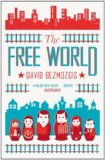
The Free World by David Bezmozgis

Five words from the blurb: Rome, refugees, escape, Communism, Canada

Very good writing. I can see myself enjoying this book, but I want to wait for others to read it first to ensure that the plot is satisfying enough for my needs. I wouldn’t be surprised if it made the Booker long list.

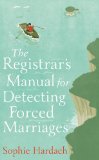
The Registrar’s Manual for Detecting Forced Marriages by Sophie Hardach

Five words from the blurb: immigration, wedding, safe, investigation, suspicions

Vivid and gripping from the start, but I worry that I’ve read books covering the same themes many times before. I’m sure it is a fantastic read, but it isn’t jumping out at me. 

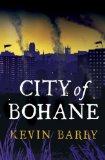
City of Bohane by Kevin Barry

Five words from the blurb: future, Ireland, gang, henchman, visionary

Could well be fantastic once you’ve got used to the dialect, but in my brief reading it was too much hard work and so I didn’t feel enough engagement to want to read on. Not for me.

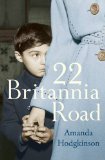
22 Britannia Road by Amanda Hodgkinson

Five words from the blurb: war, survivors, boy, home, accept

I don’t think the blurb would ever have persuaded me to pick up this book, but I loved it from the first sentence. I already want to hug that little boy and I really want to know what happens to him next. Look out for this book on the Orange list!

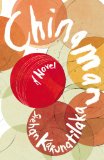
Chinaman by Shehan Karunatilaka

Five words from the blurb: cricket, Sri Lanka, secret, Tamil Tiger warlord, dying

Cricket? Urgghhh!! It was a struggle for me to make it to the end of this brief extract. 🙁


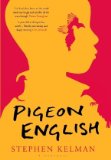
Pigeon English by Stephen Kelman

Five words from the blurb: Ghana, London, knifed, investigation, innocence

Wow! Like a cross between Room and The Other Hand. I was totally hooked and so disappointed I couldn’t read the rest of the book. If I had a copy I don’t think I’d have put it down until I finished.

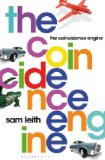
The Coincidence Engine by Sam Leith

Five words from the blurb: improbable, chaotic, chase, imaginary, America

The first chapter left me very confused. I’m sure it is all explained later on, but I worry it might be trying to be too scientifically clever at the expense of any emotion.

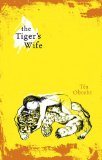
 The Tiger’s Wife by Tea Obreht

Five words from the blurb: tiger, Germany, The Jungle Book, war, devastated

Reads almost like a fairytale, but the reality of war creeps in to give this book a unique style. I think this could go either way for me, but I’m so intrigued I have to read the rest when it is released. 

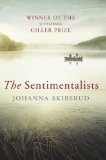
The Sentimentalists by Johanna Skibsrud

Five words from the blurb: haunted, Vietnam, father, senility, love

Beautifully descriptive writing, but I suspect the plot will be too slow paced for me to fall in love with it.

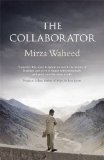
The Collaborator by Mirza Waheed

Five words from the blurb: Kashmir, war, poignant, shocking, family

Gritty, dark and raw. I was surprised by how gripped I was after reading such a small section. I will definitely be reading this one on its release.

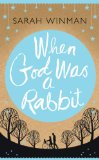
When God was a Rabbit by Sarah Winman

Five words from the blurb: childhood, innocence, eccentricity, love, loss

There is a lot going on in this book! In the first chapter themes of religion, war and paedophilia were introduced. I’m fascinated to know where this book goes, but I do worry that too much is going on for any of them to be handled thoroughly.

See the full blurbs and download the first chapter of all these books at the Waterstone’s Eleven page.

I don’t think I’ve ever encountered a list of books where I love so many of the selection. I will be ensuring I follow the Waterstone’s 11 each year and I look forward to finding out if the books are as good as their first chapters.

What do you think of the Waterstone’s 11?