I have just discovered the Desmond Elliott Prize. It was launched in 2007 as a biennial award for a first novel published in the UK.
The 2009 long list has just been announced, and I am very tempted to read them all. The only one I have read so far is The Behaviour of Moths (The Sister in America) which I really enjoyed. I also have Mr Toppit in the TBR pile and have heard great things about Blackmoor.
These are the long listed books:
All plot summaries taken from the Desmond Elliott Prize Website
.
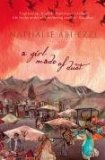

A Girl Made of Dust by Nathalie Abi-Ezzi (Fourth Estate)
Ten-year-old Ruba lives in a village outside Beirut. From her home she can see buildings shimmering on the horizon and the sea stretched out beside them. She can also hear the rumble of shelling – this is Lebanon in the 1980s and civil war is tearing the country apart.
Ruba, however, has her own worries. Her father hardly ever speaks and spends most of the day sitting in an armchair, avoiding work and family. Her older brother Naji is beginning to spend time with older boys – and some of them have guns. When Ruba uncovers her father’s secret, she starts a journey that takes her from childhood to the beginning of adulthood. As Israeli troops invade and danger comes ever closer, she realises that she may not be able to keep her family safe.
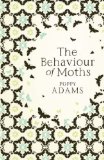

The Behaviour of Moths by Poppy Adams (Virago)
From her lookout on the first floor, Ginny watches and waits for her younger sister to return to the crumbling mansion that was once their idyllic childhood home. Vivien has not set foot in the house since she left forty-seven years ago; Ginny, the reclusive moth expert, has rarely ventured outside it. Selling off the family furniture over the years and gradually shutting off each wing of the house, she has retreated into the precise routines that define her days.
With Vivien’s arrival, long-forgotten memories are stirred up, and the secrets that have separated the sisters threaten to disrupt more than Ginny’s carefully ordered world.

Girl in a Blue Dress by Gaynor Arnold (Tindal Street Press)
Alfred Gibson’s funeral has taken place at Westminster Abbey and his wife of twenty years, Dorothea, has not been invited. She is comforted by her feisty daughter, Kitty, until an invitation for a private audience with Queen Victoria arrives and she begins to examine her own life more closely.
Dorothea uncovers the deviousness and hypnotic power of her celebrity-author husband. But now she will have to face her grown-up children and – worse – her redoubtable younger sister Sissy and the charming actress, Miss Ricketts.
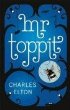

Mr Toppit by Charles Elton (Viking)
When The Hayseed Chronicles, an obscure series of children’s books, become world-famous, millions of readers are intrigued by the shadowy figure of Mr Toppit who dominates them. The author, Arthur Hayman, never reaps the benefits of his books’ success. The legacy passes to his widow Martha and their children – the fragile Rachel, and Luke, recently immortalised as Luke Hayseed, the central character of his father’s stories. But others want their share, particularly Laurie, the overweight stranger from California who comforted Arthur as he was dying, who has an agenda of her own that threatens to change all their lives. For, buried deep in the books, lie secrets which threaten to erupt as the family begins to crumble under the heavy burden of their inheritance.
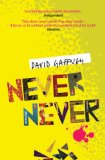

Never Never by David Gaffney (Tindal Street Press)
Eric is a debt counsellor and his life is a lie. When he’s not busy getting the dispossessed of West Cumbria’s debts written off, he’s using his insider knowledge to bounce the cost of his excessive lifestyle between several accounts – some of which aren’t exactly high-street. His girlfriend Charlotte has no idea how imperiled their home is.
Until the caravan postcards begin to arrive, each with only one word written on the back: Coerce. Harassment. Distress. Eric has a frightening puzzle to solve while juggling his finances. And his life gets more complicated as he reconnects with his teenage punk sweetheart in Manchester: Julie, a strange, fragile body artist.
With the loan sharks on his tail, he has to find a way to save his home – and keep the menacing Overspill Mayor away from Julie.
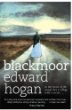

Blackmoor by Edward Hogan (Simon & Schuster)
“You said once that Blackmoor killed Mum.”
“I suppose you don’t think that a place can kill a person,” says George.
Vincent shrugs. “I just want to know how.”
“Slowly, that’s how.”
Bird-watching teenager Vincent Cartwright lives out a bullied, awkward existence not far from the site of Blackmoor, a mysterious, vanished Derbyshire village. His mother Beth, half-blind and unknowable, and her life and death in that same village has always been a dark family secret, but as Vincent comes of age he begins to search for the truth.
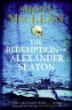

The Redemption of Alexander Seaton by Shona MacLean (Quercus)
Banff, Scotland, 1626. The body of the apothecary’s apprentice is found in Alexander Seaton’s schoolhouse, murdered by poisoning. Seaton is a schoolmaster by default, a disgraced would-be minister whose love affair with an aristocrat’s daughter left him dishonoured and deprived of his vocation. Persona non grata in the town, he has few friends, so, when one of them is accused of the murder, he sets out to solve the crime. He embarks on a journey that will uncover witchcraft, cruelty, prejudice and the darkness in men’s souls. It is also a personal quest that will lead Alexander to the rediscovery of his own faith in God as well as his belief in himself.
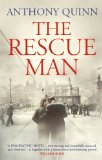

The Rescue Man by Anthony Quinn (Jonathan Cape)
Summer 1939. Historian Tom Baines is at work on a study of Liverpool’s architectural past. If war should come, will the buildings and streets that he documents survive? Then his faltering project gets a boost when a photographer, Richard Tanqueray, and his wife Bella befriend him and together they work against the clock of a rapidly contracting peacetime.
A further preoccupation takes hold when he begins to read the journals of a brilliant young Victorian architect, Peter Eames, who briefly flourished in Liverpool in the 1860s. Through him, Baines comes to a fuller understanding of the nature of genius, but also the mysterious workings of the human heart. Eames’s own legacy will have unexpected reverberations seventy years later when war comes and Baines joins a Heavy Rescue team, retrieving the wounded from bomb-damaged buildings. With the ordinary rules of life suspended and mortal danger ever-present, he finds his courage tested – and his conscience troubled as an adulterous lover.
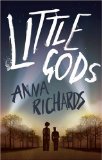

Little Gods by Anna Richards (Picador)
Jean Clocker is conceived by her mother Wisteria only as a means to entrap a damaged First World War veteran into marriage. Having achieved wedlock but failed in her plan to rid herself of the now-redundant snare, Wisteria visits maternal tyranny on her prodigious daughter. Jean spends her early years avoiding her mother’s blows and striving to make herself just a little less extraordinary. Orphaned, finally released from servitude, in the opening days of the Second World War, she thrives as a member of a demolition crew. It is Denny, a tiny, charismatic GI with a reverence for size, who facilitates a second liberation as he takes her across the ocean as a GI bride. But, once in California, he disappears and Jean is left once more to negotiate the world on her own.
.
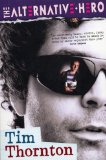

The Alternative Hero by Tim Thornton (Jonathan Cape)
By the time most people hit 30, they’ve managed to do one of the following things: grow up; meet one of their heroes; move on a bit from the music they were obsessed with at the age of 17. Clive Beresford has failed to do all three. He mopes around, broke, drinking too much, disgusted at the deletion of the bands he loves, quietly lamenting his never-was career as a music journalist. But all, or at least some, of that is about to change. One Saturday morning, Clive sees the biggest alternative rock star of them all walking down the high street: Lance Webster, disgraced ex-singer of Thieving Magpies. Determined to grab the scoop of a lifetime, Clive hatches a ramshackle plan to befriend his idol, although Webster proves to be in no mood for discussing the past. But the pair quickly realise they have things in common neither could have realised, forcing both to revisit a period they thought they’d left behind: the sweat, feedback, T-shirts, stage-dives, hitch-hikes, snakebites and hangovers of British alternative rock at the start of the Nineties.
I have just ordered a copy of Never Never as I lived in West Cumbria during the 90s. I have never read a book based there, so am really interested to see how it is portrayed. I don’t think I can justify reading the entire long list at the moment, but I will be keeping my eye on this prize in the future.
Have you read any of these books?
Have you ever heard of this prize before?