Categories
Orange Prize Other

The Orange Prize Long List 2010

The Orange Prize long list was revealed this morning. I tried to predict who would make the list last week and did a terrible job! I successfully predicted only five of the twenty books:

The rest of the long list:

I have only read two books from the list:

The Little Stranger – Sarah Waters  stars4

The Help – Kathryn Stockett stars4h

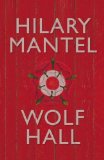
….although I did fail to complete Wolf Hall too!

Wolf Hall – Hilary Mantel stars1 (DNF)

The great news is that there are a lot of books on the list which I haven’t heard of, so I will enjoy finding out a bit more about them. The ones that instantly grab my attention are:

This is How – MJ Hyland (I remember that a lot of people were surprised this wasn’t on the Booker list last year and I nearly read it in 2009 – I then forgot all about it!)

Black Mamba Boy – Nadifa Mohamed (I already have a copy of this one and so look forward to starting it soon) 

The Long Song – Andrea Levy (I’m currently reading Small Island and am loving it, so will get to this one at some point)

I need to investigate the rest of the list a bit further. I’m planning to read the entire short list when it is announced, but am not going to rush out to read all these books.

Which ones grab your attention?

Are there any you recommend?

Categories
1980s Nobel Prize

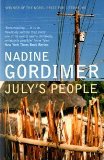
July’s People – Nadine Gordimer

 Nadine Gordimer won the Nobel Prize for Literature in 1991

July’s People was our latest book group choice. Unfortunately I was unable to make the discussion, which is a shame as I think this is a book which benefits from being discussed.

July’s People is set in South Africa. The book follows the Smales, a white couple and their three children, as they are rescued from the violence taking place in their city. Their servant, July, takes the family back to his native village where they have to learn to cope in a world very different to the one they have left. The small rural community uses little money, finding everything they need in the forest. The Smales have to adjust to the reversal of power, relying on the black community to both  protect and provide for them. The book gives a fascinating insight into the difference between the black and white communities of South Africa and the delicate relationship between the two.

Unfortunately July’s People wasn’t an easy read. The prose was confusing and this meant that I often has to re-read entire sections in order to work out what was happening. There were no speech marks so it was difficult to tell who was speaking – sometimes the speaker even switched mid-line. This meant that I found myself concentrating on the words rather than what was happening. The effort it took to understand each page meant that any emotion that might have been present was removed. I felt very detached from all the characters and because I often didn’t know who was talking they lacked a unique voice, all seeming to merge into one. I found myself having to invent their feelings based on the situation, but this felt fake as I don’t really know how things must have been for them.

The premise for this book is fantastic, but the complexity of the prose ruined it for me.

Recommended to anyone who enjoys studying books rather than reading them.

The other members of the book group seemed to enjoy this book much more than me and they also found out more about the background of this book. I recommend you read their insightful reviews:

Kim’s Review, Simon’s review, Claire’s review, Polly’s Review

Have you read anything by Nadine Gordimer?

Are all her books difficult to understand?

Categories
Orange Prize Other

Who will be long listed for the Orange Prize 2010?

Next week (17th March) the long list for the Orange Prize 2010 will be announced. The Orange Prize is awarded annually for the best fiction novel written by a woman. I have really enjoyed reading books nominated for this prize in the past and so am looking forward to seeing who makes the list this year.

I thought it would be interesting to try to predict which books would make it on to the list. I found it very hard to come up with 20 titles – the first 12 came to me very quickly, but it took a long time for me to complete the list. I have no idea if they are all eligible and haven’t read them all (so don’t know if they deserve to be there) but here is my prediction for books that might make the cut next week:


What do you think of my selection?

Have I missed any books that you think deserve to be on the list?

Which book would you like to see win the Orange Prize this year?

Categories
2000 - 2007 Orange Prize

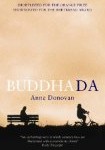
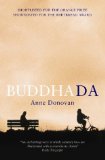
Buddha Da – Anne Donovan

 Short Listed for the 2003 Orange Prize

Buddha Da is a lovely story about a working-class Glaswegian man who decides to convert to Buddhism. The book follows his every day life as he begins be appreciate the benefits of simple living and meditation. His family don’t understand his desire for a more meaningful life and this causes them to drift apart.

The book is written entirely in dialect and I have a feeling that those unfamiliar with the Scottish way of pronouncing things may struggle with this book. Here is the first paragraph so you can see how you’d get on:

Ma Da’s a nutter. Radio rental. He’d dae anythin for a laugh so he wid; went doon the shops wi a perra knickers on his heid, tellt the wifie next door we’d won the lottery and were flittin tae Barbados, but that wis daft stuff compared tae whit he’s went and done noo. He’s turnt intae a Buddhist.

For those who are struggling: Radio rental is rhyming slag for mental, meaning mad.

It took me a little bit of time to get used to the dialect but after a few pages I started to love it and thought it really added to the atmosphere.

The plot was quite gentle, but there were thought provoking discussions about how to give more meaning to your life and the problem of balancing this with your relationships.

Overall it was a light, entertaining read that I’d recommend to someone looking for something a bit different.

stars4

Did you understand the first paragraph of the book?

Have you read Buddha Da?

Have you read any other books written by Anne Donovan?


Categories
2009 Other Prizes

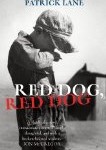
Red Dog, Red Dog – Patrick Lane

 Long listed for the 2008 Giller Prize

Red Dog, Red Dog has intrigued me for a while. A few people were convinced it would make the 2009 Booker long list and so I almost picked it up last year. For some reason it never quite made it to the top of the TBR pile then, but almost a year on I finally got round to reading it.

Red Dog, Red Dog is set in a small town in British Columbia, Canada. The book centres on one troubled family: a violent husband, a depressed mother and her two troubled sons.  Much of the book is narrated by their dead baby sister, which sounds a bit weird but it actually worked very well. The book follows their lives over the course of one week in 1958. The short time scale meant that there wasn’t room for a complex plot, but their relationships and emotions were well explored.

My enjoyment of this book fluctuated massively as I read it. Some scenes captivated me, drawing me into the troubled world and creating a strong emotional bond between me and the boys; but then I’d read several chapters in a row without becoming involved at all. The writing became very passive and I began to lose interest. I think this was a deliberate plot devise as the writing kept switching between total engagement and boredom, but I found it very frustrating.

The tone of the book was quite dark:

The dead came crowding in, each with a story, what happened and when, who was there and why. Most faded into fragments, faint murmurs, the stories rising as if from narrow caves, the sounds distorted, vowels drawn out into echoes, consonants clipped and rattling like a snake’s tail whirring in the sagebrush, the same kind of warning, the dead telling me things that they thought I needed to know, tales from so far back they no longer had any meaning except to the ones who told them.

The whole book was quite emotionally draining so I recommend that you are in the right frame of mind before attempting it.

Overall, I’m going to sit on the fence on this one. It had moments of brilliance alongside some very dull sections. I think you’ll have to make up your own mind!


Have you read Red Dog, Red Dog?
Categories
2009 Fantasy Other Prizes

The Girl with Glass Feet – Ali Shaw

 Short Listed for Costa First Novel Award 2009

The Girl with Glass Feet was Simon’s choice for Not the TV Book Group (an online book group formed recentlyby several UK book bloggers).

The book is set on a strange island, packed with weird animals; the plot centring on a woman called Ida, who discovers that she is slowly turning to glass.

The only word I can use to describe this book is bizarre! I’m afraid that I didn’t really understand the point of this book and the implausibility just seemed to grate on me rather than entertain.

Ida’s toes have turned to glass and she notices that the glass is spreading up her feet, but we have no explanation as to why this is occurring. There is no wicked witch to hate, or cursed place to avoid – it has just happened and Ida seems to accept it. She has a relationship with a man called Midas, but their relationship lacked emotion and I found that I didn’t really care what happened to them. I felt distanced from all the characters, never really understanding what motivated them to do anything.

The book also contained ‘bull moths’ – tiny cows with wings. Why?!! I just didn’t understand. Cows are ugly, muddy things and miniaturising them doesn’t make them cute. I can’t imagine one flying and couldn’t understand why they were present in the book.

Overall I found this to be a very frustrating book. Little was explained or tied up nicely at the end – it was just one bizarre event after another. I prefer stories based in reality, or at least with enough detail to immerse yourself in the strange new world. 

Lots of other people enjoyed it though, so head over to Simon’s blog to read the fantastic discussion in the comments section.

Did you enjoy The Girl with Glass Feet?

Can you accept bizarre occurrences in books, or do you need a plausible explanation?