Categories
2009 Commonwealth Writer's Prize

Solo by Rana Dasgupta

  Winner of 2010 Commonwealth Writers’ Prize

The Commonwealth Writers’ Prize is my favourite book award and so I’m very pleased that it lived up to my expectations and provided me with another wonderful book that I wouldn’t have discovered without it.

Solo is set in Bulgaria and as I love science I was very excited to see that the central character is a chemist. Now a blind, old man, he reflects upon how much has changed over the course of his life and explains the difficult situations he faced over the years.

I knew very little about the history of Bulgaria before reading this book and it was nice to find out so much about this country’s difficult past. The combination of both European and Asian ancestry, and the struggle against communism makes me wonder why I haven’t read more fiction set in this fascinating country before.

The book was very well written and successfully managed to combine science with literature – a feat few authors can manage without patronising readers with a scientific background or going over the heads of those that don’t.

I loved the first half of this book which followed the chemist’s life in a fairly linear fashion. He was such an endearing, slightly grumpy character, but packed with the wisdom of a long and complicated life.

He switches on his television for a bit of sound to eat his beans by. He is irritated by the weather programmes that come on the international channels. Ignorant people judging the world’s weather. In that place it will be a nice day because there is pure sunshine. They estimate a nice day as when you can sit outside in sunglasses and drink coffee that no normal person can afford. Their minds cannot consider that a place is full of people cursing because there is no rain.

I found the second half much less enjoyable. It consisted of “daydreams” which could otherwise be described as a collection of short stories. The writing quality remained high, but I lost that emotional attachment to the chemist, so it felt a bit disconnected.

Overall this is a wonderful book. I recommend it to all lovers of literary fiction, if only so you learn a bit about Bulgarian history.

Categories
Booker Prize Other

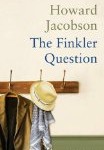
Howard Jacobson wins the 2010 Man Booker Prize

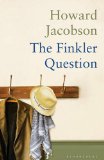
Howard Jacobson has just won the 2010 Booker Prize for The Finkler Question. This is the second year running that my least favourite book from the short list has won. I just didn’t find The Finkler Question funny and couldn’t even bring myself to finish it.

The Finkler Question – Howard Jacobson (DNF)

Next year I highly recommend that you all place bets on my least favourite book from the short list – you’ll probably have a very high chance of winning lots of money!

Categories
Booker Prize Other

Who will win the 2010 Booker Prize?

Having attempted to read the Booker short list I should be in a good position to predict who will win, but unfortunately that isn’t the case. I think the field is wide open this year and I wouldn’t be surprised to see any of the books scoop the prize. Unlike previous years there is no clear winner, with each book appealing to a very different reading taste.

The six books are:

My reviews:

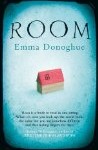
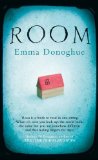
Room – Emma Donoghue

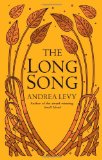
The Long Song – Andrea Levy stars4

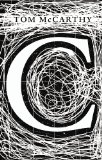
C – Tom McCarthy

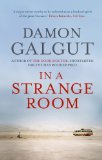
In a Strange Room – Damon Galgut

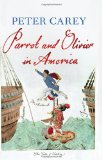
Parrot and Olivier in America – Peter Carey (DNF)

The Finkler Question – Howard Jacobson (DNF)

Who will win the 2010 Booker Prize?

In trying to predict the winner I think the most important thing is to look at the reading tastes of each of the judges.

The five judges for the 2010 Booker Prize are:

  • Chair: Andrew Motion (former Poet Laureate)
  • Rosie Blau (Literary Editor of the Financial Times)
  • Deborah Bull (Creative Director of the Royal Opera House)
  • Tom Sutcliffe (journalist, broadcaster and author)
  • Frances Wilson (biographer and critic)

The judges are being quite quiet about their favourite Bookers, but I spotted Andrew Motion admitting that Jacobson was  “laugh-aloud funny” and Rosie Blau describing C as “a novel blazing with energy and, for all its postmodern ambitions, a rich, old-fashioned yarn

Frances Wilson’s favourite book is Persuasion, but I’m not sure that helps us to decide which of the short list she’ll enjoy the most. If I had to guess then I’d say this would point towards her favouring the more conventional narratives of The Long Song or Room, but it is hard to say from that one tiny clue!

Tom Sutcliffe wrote that “literary merit (and literary pleasure) really lies….not in the plotlines but the lines of writing themselves” so I suspect that he will favour Peter Carey’s lyrical prose.

That just leaves Deborah Bull who is surprisingly quiet on the Internet about the type of books she likes.

All this detective work has yielded little of value, but I am convinced that for such a varied short list to have been produced each of the judges must have a very different taste in books. This means that it is unlikely they will be able to reach a unanimous decision about who should win the Booker Prize. They have already admitted that they used a points system to determine who should make the long list and I suspect they will have to use this system to generate a winner. I think this will favour C and The Long Song, as they are more likely to appear higher on every-one’s list, unlike books the others which seem to create a love:hate divide among readers.

There has been speculation that the Faber influence could lead Carey to victory, but I’m sure the judges will only be looking at the merits of each book.

If I had to place a bet then I’d put my money on C, but I was amused by this article that thinks it should miss out on the Booker Prize due to a lack of gardening knowledge!

The simple answer is that I have no idea who will win the Booker Prize. All the books have their own merits and each has its group of supporters. I’m just happy that in reading the long list I have been introduced to many wonderful new books.

I look forward to seeing who will be revealed as the 2010 Booker winner tonight.

Who do you think will win?

Categories
1990s Booker Prize

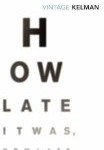
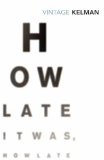
How Late It Was, How Late – James Kelman

 Winner of the 1994 Booker Prize   

How Late It Was, How Late is set in Glasgow and follows Sammy, who wakes up in the gutter after a night of heavy drinking to discover that his shoes have been stolen. He gets into a fight with some plainclothes policemen (“sodjers”) and ends up in a police cell. Badly beaten, he wakes to discover that he is blind and so begins the difficult task of learning to live without his sight whilst also trying to avoid being blamed for a crime he knows nothing about.  

I started off hating this book. The stream of consciousness writing style combined with frequent swearing and the Glaswegian dialect meant that I had trouble connecting with it, but I persevered and slowly became used to the writing style. I found that if I read it in large chunks then I could immerse myself in the Glaswegian dialect and the bad language became a natural part of the conversation.   

Plus ye couldnay quite predict what they were up to, the sodjers. So he was gony have to go careful. So fuck the drink there was nay time, nay time, he had to be compos mentis. Whatever brains he had man he had to use them. Nay fuck-ups. The things in yer control and the things out yer control. Ye watch the detail. Nay bolts-from-the-blue. Nayn of these flukey things ye never think about. Total concentration. 

After about 50 pages I was amazed to find that I started to like Sammy – I began to feel sorry for him and even found some of the book funny.   

It wasn’t an easy read – the book flipped forwards and backwards in time and sentences were often left without an end. It took me a long time to read this book and there were several points at which I nearly gave up. Very little happens and the middle dragged. I think that if the book had been 200 pages shorter then I’d have appreciated it a lot more.

This book is packed with symbolism and I’m sure it could benefit from multiple re-reads. I’m glad I glimpsed Sammy’s life, but I’m not sure I’d want to read about him again.

Recommended to fans of literary fiction who enjoy reading about the darker areas of society.

Did you enjoy How Late It Was, How Late?

Do you recommend any of Kelman’s other books?

Categories
2010 Pulitzer Prize

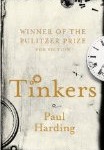
Tinkers – Paul Harding

 Winner of 2010 Pulitzer Prize

Tinkers surprised everyone by winning the Pulitzer Prize earlier this year. It’s a debut novel from a tiny publishing house so few people had heard of it before its Pulitzer win, let alone predicted that it would scoop the biggest prize in American literature. I’m trying to read all the Pulitzer winners, so naturally Tinkers went straight onto my wish list.

Tinkers begins with George Washington Crosby lying in a hospital bed with eight days left to live. He starts to hallucinate and through a series of flashbacks we come to learn about George’s life and his about his father, Howard.

The book is very short (190 well spaced pages) and contains many beautifully written passages, but I think I might have given up on this book had it been any longer. I felt that most of the scenes were over described:

It was a dim, murky scene, lit perhaps by a single candle not visible within the frame, of a table on which lay a silver fish and a dark loaf of bread on a cutting board, a round of ruddy cheese, a bisected orange with both halves arranged with their cross sections facing the viewer, a drinking goblet made of green glass, with a wide spiral stem and what looked like glass buttons fixed around the base of the broad cup. A large part of the cup had been broken and dimly glinting slivers of glass lay around the base. There was a pewter-handled knife on the cutting board, in front of the fish and the loaf. There was also a black rod of some sort, with a white tip, running parallel to the knife.

There were so many lists of objects in this book that I began to laugh whenever I spotted one – not a good sign for a supposedly serious book.

George used to repair clocks and I did learn a few interesting facts about tinkers, but it isn’t the most exciting profession in the world! Numerous quotes from The Reasonable Horologist by the fictioanl Kenner Davenport were sprinkled through the text and I thought that the best quotes from the book all came from these sections.

Chose any hour on the clock. It is possible, then, to conceive that the clock’s purpose is to return the hands to that time, a time which, from the moment chosen, the hands leave and skate across the rest of the clock’s painted signs and calibrations and numbers. These other markings on the face become irrelevant in themselves; they are now simply clues pointing in the direction of the chosen time.

This is one of those books that takes a look at the deeper things in life. If you enjoy slow, thoughtful books then you’ll probably enjoy it, but if you like a book to have some plot then stay away!


Tinkers is receiving very mixed reviews:

….a book to divert but not necessarily to detain. Asylum

I have never read a book like this, and will not forget it. Page247

….a combination of beautiful and flowery writing, with a boring memory based story. Bibliophile by the Sea

Harding’s mastery of language and character are mesmerizing. Nomadreader

Categories
2000 - 2007 Booker Prize Recommended books

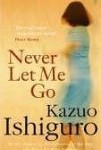
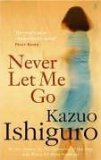
Never Let Me Go – Kazuo Ishiguro

 Shortlisted for the Booker Prize 2005

I have been wanting to read this book for ages, but for some reason it never made it to the top of my reading pile. I’m making a conscious effort to ensure that this doesn’t happen to the most important books in my collection and so Never Let Me Go became a priority. I’m so happy that it lived up to my expectations and that I will be joining the hoards of people who rave about this book.

Never Let Me Go is set in an English boarding school, but things aren’t quite as you’d expect them to be. Over the course of the book we slowly discover that it isn’t set in our world, but in one with subtle differences. I won’t say any more than that as I’d hate to give it away. All I can say is that it is an incredibly well constructed book, where the power is in what is left unsaid, as much as what is.

Maybe from as early as when you’re five or six, there’s been a whisper going at the back of your head, saying: “One day, maybe not so long from now, you’ll get to know how it feels.” So you’re waiting, even if you don’t
quite know it, waiting for the moment when you realise that you really are different to them; that there are people out there, like Madame, who don’t hate you or wish you any harm, but who nevertheless shudder at the very thought of you – of how you were brought into this world and why–and who dread the idea of your hand brushing against theirs.

It was such a subtle book that I found myself reading it very slowly, studying each paragraph for clues about what was happening. The ending left me with more questions than answers, but I quite liked the way some things were left open –  it means that it can be discussed for longer, making it a perfect book group choice.

I had expected the text to be challenging and so I was impressed by how easy and accessible it was to read. This combined with a thought provoking and original plot make Never Let Me Go a modern classic.

Highly recommended.

The Never Let You Go movie is released in the US on 1st of October and in the UK on 14th January 2011.

WARNING!! DO NOT WATCH THE AMERICAN TRAILER FOR THIS FILM IF YOU HAVEN’T READ THE BOOK – IT GIVES EVERYTHING AWAY!

The UK trailer for the film is below – it is almost spoiler free:

I was quite worried about how the adaptation would be handled, but I’ve been reassured by watching the trailers and am looking forward to seeing the film.

Did you enjoy Never Let Me Go?
What did you think of the trailer?