Categories
Book Prizes Orange Prize Other

The 2011 Orange Prize Longlist

Last week I predicted which books would make the Orange longlist. I correctly guessed eight of them, which I thought was quite good considering that I didn’t even know which books had been submitted.

The longlisted books:

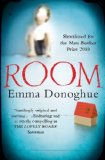
  • Room – Emma Donoghue
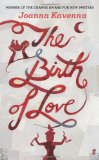
  • The Birth of Love – Joanna Kavenna
  • Annabel – Kathleen Winter 
  • Louise Doughty – Whatever You Love 
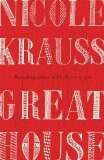
  • Nicole Krauss – Great House DNF
  • Roma Tearne – The Swimmer DNF
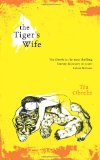
  • Téa Obreht – The Tiger’s Wife DNF
  • Emma Henderson – Grace Williams Says it Loud DNF
  • Leila Aboulela – Lyrics Alley
  • Carol Birch – Jamrach’s Menagerie
  • Tishani Doshi – The Pleasure Seekers
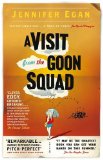
  • Jennifer Egan – A Visit from the Goon Squad
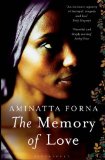
  • Aminatta Forna – The Memory of Love
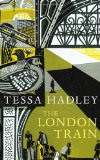
  • Tessa Hadley – The London Train
  • Samantha Hunt – The Seas
  • Lola Shoneyin – The Secret Lives of Baba Segi’s Wives
  • Wendy Law-Yone – The Road to Wanting
  • Julie Orringer – The Invisible Bridge
  • Anne Peile – Repeat it Today with Tears
  • Karen Russell – Swamplandia!

NB: DNF = Started book, but did not finish it.

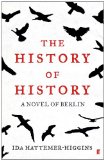
My immediate thoughts on looking at the list were of disappointment. Why didn’t the outstanding The History of History by Ida Hattemer-Higgins make it? What about the quirky, entertaining When God Was a Rabbit by Sarah Winman?


I was very happy to see Room by Emma Donoghue and The Birth of Love by Joanna Kavenna, but many of the other books on the list have failed to engage me. I have tried and given up on a surprising percentage. It looks as though the Orange Prize judges all share a taste in books as I can see many similarites in style and have noticed that plot isn’t a high priority for any of them. This worries me when I think about tackling the rest of the long list.


Are any books with fantastic plots hiding in the longlist?

Have I just been unlucky in reading books with a similar style? Is the rest of the list more diverse?

I am going to try the entire longlist, but I am not going to complete them all. I love the way these prizes introduce me to many books that I haven’t heard of, but I’m no longer going to force myself to complete anything that I’m not enjoying. I’m especially looking forward to reading  The Invisible Bridge, A Visit from the Goon Squad and Swamplandia!, but I am also interested in trying the ones that I haven’t heard of before.

Which books are you looking forward to reading?

What do you think of the Orange longlist?
Categories
2011 Other Prizes

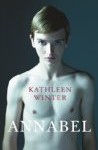
Annabel by Kathleen Winter

 Shortlisted for the 2010 Giller Prize

Five words from the blurb: baby, secret, boy, girl, struggle

Annabel begins in 1968 with the birth of a baby in a remote part of north-west Canada. Everything about the infant is normal, apart from the fact it has both male and female sexual organs. In order to fit in the parents decide to bring their child up as a boy called Wayne, keeping the dual sex a secret from almost everyone – including Wayne. This book is a coming-of age story in which Wayne slowly learns the truth about his birth and battles against the inner female feelings he calls “Annabel”.

The writing was very crisp and precise, with many beautiful descriptions of life in this harsh, cold community. Unfortunately the distant, almost clinical writing style made it hard to connect with the characters on an emotional level. I longed to know what was going on inside Wayne’s head, but instead the reader is just an outside observer, witnessing only the major events in his life. I wanted to know his thoughts on a day-to-day level, but unfortunately I was only able to get brief glimpses of his inner turmoil. 

The child knew that a grim, matter-of-fact attitude was required of him by his father, and he learned how to exhibit such an attitude, and he did not mind it because it was the way things were, but it was not his authentic self. His authentic self loved to fold paper in half and cut out elaborate bilaterally symmetrical shapes: curlicues, geometrics, architectural planes that bore elaborate sills at the bottom and came to luxurious apexes.

Much of the book was written from the perspective of the parents and this raised some complex parenting issues. I initially enjoyed thinking about the pros and cons of letting a child be themselves versus the importance of fitting into society, but I quickly realised that I really wanted the book to concentrate on Wayne. Every time the narrative followed another character I became frustrated and longed for the focus to switch back to him. The last few chapters almost managed to satisfy my craving for knowledge of Wayne, but it was too little, too late.

Annabel was compelling enough to draw me through to the end, but I was left unsatisfied by the novel as a whole. In comparison to the wonderful Middlesex this book was lacking depth and emotion.

Recommended to those who like their fiction restrained, without any hint of melodrama.

.

Opinions were mixed on this one:

The whole story was heartbreaking and beautiful. Amy Reads

To be honest, I had a hard time with the first half of this rather large book. The Mookse and the Gripes

I feel like I’m doing a lot of gushing lately, but I really, really loved this book. Reading Through Life

Categories
Orange Prize Other

Who will be longlisted for the 2011 Orange Prize?

The longlist for the 2011 Orange Prize will be announced on the 16th March.

The prize is awarded to the woman who, in the opinion of the judges, has written the best, eligible full-length novel in English.

As today is International Women’s Day I thought it was the perfect time to predict which books might make it onto the list this year.

Here are the 20 novels that I think will be selected next week:

.

We Had it So Good by Linda Grant

The Birth of Love by Joanna Kavenna

The History of History: A Novel of Berlin by Ida Hattemer-Higgins

When God Was a Rabbit by Sarah Winman

Five Bells by Gail Jones

Room by Emma Donoghue

The Sentimentalists by Johanna Skibsrud

True Things About Me by Deborah Kay Davies

Mr Chartwell by Rebecca Hunt

Great House by Nicole Krauss

The Memory of Love by Aminatta Forna

Annabel by Kathleen Winter

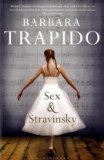
Sex and Stravinsky by Barbara Trapido

A Visit From the Goon Squad by Jennifer Egan

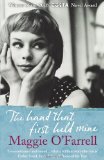
The Hand That First Held Mine by Maggie O’Farrell

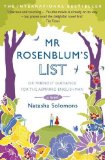
Mr. Rosenblum’s List by Natasha Solomons


The London Train by Tessa Hadley

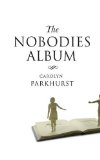
The Nobodies Album by Carolyn Parkhurst

The Tiger’s Wife by Tea Obreht

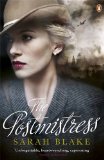
The Postmistress by Sarah Blake

Which books do you think will make it onto the Orange longlist?
Have I missed any obvious contenders?

Categories
2008 Non Fiction Other Prizes

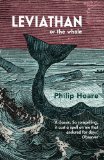
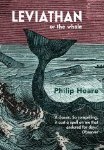
Leviathan – Philip Hoare

  Winner of the 2009 BBC Samuel Johnson Prize for Non-Fiction

Five words from the blurb: whales, humans, Melville, history, gigantic

I didn’t mean to read Leviathan this month, but I picked up a copy and couldn’t put it down. Leviathan contains everything that you’d ever want to know about whales; including their natural history, their interactions with humans and their role in literature.  

The book was packed with the type of facts that I love –  almost every other page contained something that I wanted to share with whoever happened to be closest to me. My family began mocking my new obsession with whales, but how can you not want to share a fact like this?!

A sperm whale can create a two-hundred-decibel boom able to travel one hundred miles along the ‘sofar’ channel, a layer of deep water that readily conducts noise. It seems strange that such a physically enormous creature should rely on something so intangible; but bull sperm whales, by virtue of their larger heads, generate sounds so powerful that they may stun or even kill their prey. These directional acoustic bursts, focused through their foreheads and likened to gunshots, are the equivalent, as one writer notes, of the whale killing its quarry by shouting very loudly at it.

I also discovered:

  • A sperm whale can eat 700 squid in one day.
  • Sperm whales were not filmed underwater until 1984.
  • A killer whale used to live in Windsor Safari Park.
  • A man is said to have been recovered alive from the stomach of a sperm whale several hours after being eaten by it.

I now have the ability to talk about whales for several hours!

One slight problem I had with the book was that I hadn’t read Moby-Dick. I’m sure that some of the sections would have been more meaningful had this been the case, but it has at least persuaded me to read it soon.

The only other tiny issue I had was that most of the photographs were very small and grainy. I can understand why this would be the case for the older examples, but even some of the more modern ones were unclear.  This book would have been improved greatly with the addition of a few larger, clearer photographs.

On a more positive note, I thought the writing was fantastic. It effortlessly guided the reader from one topic to the next; managing to move from lighter humor to the darker aspects of whaling without any drop in pace.

I loved this book and will be forcing it into the hands of several people over the coming months. I highly recommend that you get hold of a copy.

Categories
2010 Books in Translation Other Prizes

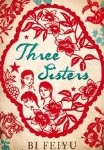
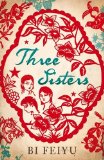
Three Sisters – Bi Feiyu

 Winner of 2010 Man Asian Literary Prize

Translated from the Chinese by Howard Goldblatt and Sylvia Li-chun Lin

Five words from the blurb: sisters, China, power, society, family

Three Sisters gives a fascinating insight into the life of Chinese women in the 1970s. By observing the differences between three sisters we see how the status of their birth position affects everything that happens to them.

The Three Sisters

  • Yumi uses her status as the eldest daughter to gain the respect of all those around her. This power ensures that she easily finds a favourable marriage and so has a far greater chance of achieving a happy life.
  • Yuxiu, the third sister, must use as much charm as possible to negotiate opportunities for herself.
  • Yuyang, the seventh sister, must rely on her talents alone, having none of the power that being an older sibling brings.

The book showed each sister in turn, allowing us to connect to them completely. It did a wonderful job of showing the Chinese culture, particularly by explaining their inner thoughts and fears.  The importance of ‘saving face’ was high on all their agendas and this book was great at explaining their actions in an easy to understand, but vivid way.

….everyone in town knew Yuxiu’s secret. She assumed that no one knew, but they all did. This is generally how private matters are treated. It is as if they are screened by a sheet of paper so flimsy it cannot withstand a simple poke but so sturdy everyone will avoid it. Only country folk are so uncouth and impatient that they need to get to the bottom of things at once. Townsfolk aren’t like that at all. Some things are not meant to be poked open; exposing them spoils the fun. What’s the hurry? You cannot wrap fire in paper; sooner or later it will burn through and everything will be exposed. That is more spectacular, more appealing.

I found the last section to be less interesting than the others, but it was still enjoyable. My only complaint is that the book did not end well. I don’t mean that it was sad, just that it was abrupt and didn’t come to any logical conclusions. I would have liked to see all three sisters mentioned on the final pages, not just a slightly odd scene containing only the youngest. This is a minor quibble though. It is a beautifully written book and I’m sure it will be loved by many people.

As an introduction to Chinese literature, this is an ideal choice. It is well paced and contains a depth of emotion. I’d recommend this book to anyone interested in Chinese literature, but I think the focus on family relationships will mean that it will be appreciated by women more than men.

Categories
Commonwealth Writer's Prize Other

2011 Commonwealth Writers’ Prize Shortlists Announced

I love the Commonwealth Writers’ Prize and so was excited to see the 2011 shortlists revealed earlier this week. The frustrating thing is that most of the books are not available in the UK yet, but hopefully this will change now that they’ve made the shortlist for this book award.

The 2011 Commonwealth Writers’ Prize shortlists are:

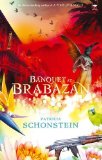
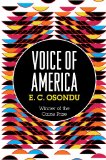
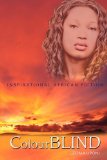
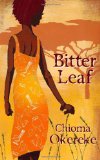
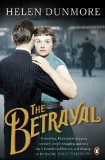
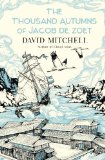
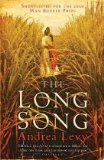
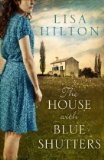
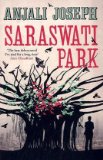
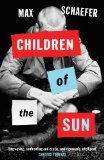
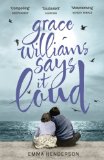
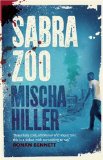
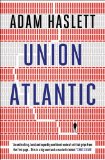
The books pictured are those available in the UK now (or in the very near future)

The shortlisted winners for the Africa Best Book are:
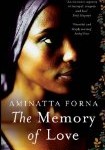
The Memory of Love by Aminatta Forna (Sierra Leone)
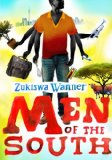
Men of the South by Zukiswa Wanner (South Africa)
The Unseen Leopard by Bridget Pitt (South Africa)
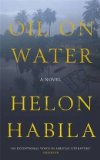
Oil on Water by Helon Habila (Nigeria)
Blood at Bay by Sue Rabie (South Africa)
Banquet at Brabazan by Patricia Schonstein (South Africa)

The shortlisted winners for the Africa Best First Book are:
Happiness is a Four Letter Word by Cynthia Jele (South Africa)
Bitter Leaf by Chioma Okereke (Nigeria)
The Fossil Artist by Graeme Friedman (South Africa)
Colour Blind by Uzoma Uponi (Nigeria)
Voice of America by E. C. Osondu (Nigeria)
Wall of Days by Alastair Bruce (South Africa)

The shortlisted writers for the Canada and Caribbean Best Book are:
The Sky is Falling by Caroline Adderson (Canada)
Room by Emma Donoghue (Canada)
The Master of Happy Endings by Jack Hodgins (Canada)
In The Fabled East by Adam Lewis Schroeder (Canada)
The Death of Donna Whalen by Michael Winter (Canada)
Mr. Shakespeare’s Bastard by Richard B. Wright (Canada)

The shortlisted writers for the Canada and Caribbean Best First Book are:
Bird Eat Bird by Katrina Best (Canada)
Doing Dangerously Well by Carole Enahoro (Canada)
Mennonites Don’t Dance by Darcie Friesen Hossack (Canada)
Light Lifting by Alexander MacLeod (Canada)
The Cake is for the Party by Sarah Selecky (Canada)
Illustrado by Miguel Syjuco (Canada)


The shortlisted winners for the South Asia and Europe Best Book are:
Lyrics Alley by Leila Aboulela (UK)
The Betrayal by Helen Dunmore (UK)
The Thousand Autumns of Jacob de Zoet by David Mitchell (UK)
The Long Song by Andrea Levy (UK)
Sex and Stravinsky by Barbara Trapido (UK)
Union Atlantic by Adam Haslett (UK)

The shortlisted winners for the South Asia and Europe Best First Book are:
Serious Men by Manu Joseph (India)
Saraswati Park by Anjali Joseph (India)
The House with the Blue Shutters by Lisa Hilton (UK)
Children of the Sun by Max Shaefer (UK)
Grace Williams says it Loud by Emma Henderson (UK)
Sabra Zoo by Mischa Hiller (UK)

The shortlisted winners for the South East Asia and Pacific Best Book are:
Reading Madame Bovary by Amanda Lohrey (Australia)
That Deadman Dance by Kim Scott (Australia)
Time’s Long Ruin by Stephen Orr (Australia)
Hand Me Down World by Lloyd Jones (New Zealand)
Notorious by Roberta Lowing (Australia)
Gifted by Patrick Evans (New Zealand)

The shortlisted winners for the South East Asia and Pacific Best First Book are:
21 Immortals by Rozlan Mohd Noor (Malaysia)
A Man Melting by Craig Cliff (New Zealand)
The Graphologist’s Apprentice by Whiti Hereaka (New Zealand)
The Body in the Clouds by Ashley Hay (Australia)
Traitor by Stephen Daisley (Australia/New Zealand)
A Few Right Thinking Men by Sulari Gentill (Australia)

I have read several of the shortlist:

Room by Emma Donoghue 

The Thousand Autumns of Jacob de Zoet by David Mitchell stars41

The Betrayal by Helen Dunmore 

The Long Song by Andrea Levy stars41

Illustrado by Miguel Syjuco 

Hand Me Down World by Lloyd Jones  

Grace Williams says it Loud by Emma Henderson  (not reviewed)

The shortlist is too long for me to attempt to complete it and since half the books aren’t available in this country that isn’t an easy task, but I hope that you can help me.

Have you read any of the books on this list?

Do you think that I’ll particularly enjoy reading any of them?
Who do you think deserves to win?