Categories
Booker Prize Other

Who will make the 2011 Booker Short List?

I have now attempted to read all the books on this year’s Booker long list and am sad to report that I haven’t had much luck with them. I only found two books I really enjoyed; the rest were a mixture of average reads and ones that irritated me.

Predicting a short list is an almost impossible task so I decided to summarise my thoughts by ordering the long list a) according to my preference and b) in the order I think reflects their relative literary merit (writing quality, re-readability etc).

Bookers ordered to my preference:

(all links go to my thoughts on each book)

  1. A Cupboard Full of Coats by Yvvette Edwards
  2. The Sisters Brothers by Patrick deWitt
  3. The Last Hundred Days by Patrick McGuinness
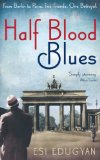
  4. Half Blood Blues by Esi Edgyan 
  5. On Canaan’s Side by Sebastian Barry
  6. The Stranger’s Child by Alan Hollinghurst
  7. Far to Go by Alison Pick
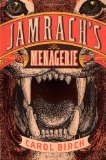
  8. Jamrach’s Menagerie by Carol Birch
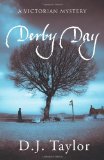
  9. Derby Day by DJ Taylor
  10. The Testament of Jessie Lamb by Jane Rogers
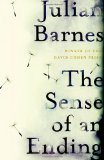
  11. The Sense of an Ending by Julian Barnes
  12. Pigeon English by Stephen Kelman
  13. Snowdrops by A.D. Miller

Bookers in order of literary merit:

  1. The Sense of an Ending by Julian Barnes
  2. On Canaan’s Side by Sebastian Barry
  3. Snowdrops by A.D. Miller
  4. Half Blood Blues by Esi Edgyan
  5. Jamrach’s Menagerie by Carol Birch
  6. The Stranger’s Child by Alan Hollinghurst
  7. Derby Day by DJ Taylor
  8. The Last Hundred Days by Patrick McGuinness
  9. A Cupboard Full of Coats by Yvvette Edwards
  10. The Sisters Brothers by Patrick deWitt
  11. Far to Go by Alison Pick
  12. The Testament of Jessie Lamb by Jane Rogers
  13. Pigeon English by Stephen Kelman

In each case the top six titles (in bold) would make it to their respective short lists. The exception being :

  • The Sense of an Ending by Julian Barnes
  • On Canaan’s Side by Sebastian Barry

where I think the books are too similar for both to be put through to the short list together. I think The Sense of an Ending is the slightly stronger book and so I predict it will go through at the expense of On Canaan’s Side. I’m hoping that the books are selected on literary merit and so therefore predict that the Booker short list revealed on 6th September will be:
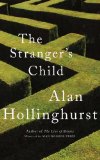
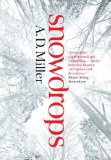
 

The Stranger's ChildSnowdropsDerby Day

Half Blood Blues: From Berlin to Paris. Two Friends. One BetrayalThe Sense of an EndingJamrach's Menagerie

 Which books do you think will make it onto the Booker short list?
Categories
2011 Booker Prize

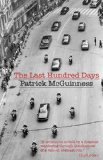
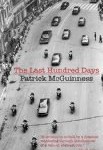
The Last Hundred Days – Patrick McGuinness

The Last Hundred Days Long listed for 2011 Booker Prize

Five words from the blurb: Romanians, danger, corruption, destroy, Ceausescu

The Last Hundred Days explains what life was like for Romanians in the final months of Ceausescu’s reign. The story is told through the eyes of an English student who arrives in Bucharest after being given a job, despite not turning up for the interview. From the perspective of this outsider we see the destruction of the city, the corruption required to get everything from food to medical supplies, and the violence that regularly occurs.

The book was very well researched, giving a vivid snapshot of life in Bucharest during 1989. The problem was that it read like a non-fiction title. The detail will prove fascinating to anyone interested in researching the city, but is too much for the average reader.

I also found the writing to be quite detached. I couldn’t connect to any of the characters and so failed to form an emotional response to any of the scenes in the book, no matter how disturbing the content. The fact that the narrator was from England also added a level of detachment to the plot. As a newcomer to the city he couldn’t fully explain the pain that the residents felt seeing their city destroyed and there was always the knowledge that he could leave and return to his normal life at any point.

Unlike the majority of the Booker long list, this book did have a plot. The problem was that I didn’t really care about it – things happened, but I had no real interest in the outcome.

Despite these criticisms this book did engage me enough to read to the end. I learnt a lot about life under Ceausescu, including the fact that having a miscarriage was a crime.

A ‘celibacy tax’ was imposed on women who could have children but did not, while officials were sent to interrogate women about their sexual habits. ‘Anyone who avoids having children is a deserter,’ proclaimed Ceausescu, announcing the ‘Mama Eroica’ scheme to reward mothers with five or more children. But there was no milk, no food; it was impossible to find sterilised feeding equipment; electricity was now as random and inscrutable as Acts of God had been for ancient civilisations.

The book does a fantastic job of teaching the reader about this period of history, but if you like to form an emotional connection to the characters/plot then it probably isn’t for you.

.

The thoughts of other bloggers:

McGuinness has done an awe-inspiring job of capturing the sordid, decaying and disjointed “communist way of life” in Bucharest during the summer of ’89. Permanently Uncached

…factual mistakes started accruing at an alarmingly fast rate…. Fantasy Book Critic

I’d say the major flaw here was the disjointed nature of the story telling and the philosophical musings. Chazz W


Categories
2011 Booker Prize Recommended books

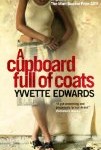
A Cupboard Full of Coats by Yvvette Edwards

A Cupboard Full of Coats Long listed for 2011 Booker Prize

Five words from the blurb: mother, murdered, guilt, memories, violence

I’m pleased to announce that this year’s Booker long list has finally rewarded me with a wonderful book. I wouldn’t have discovered A Cupboard Full of Coats if it hadn’t been on the long list and so my efforts of trying them all have finally been rewarded.

A Cupboard Full of Coats is an emotional book describing the life of Jinx, a woman haunted by the thought that she was partly responsible for the murder of her mother.

Jinx suffered from a violent childhood and finds it hard to connect with her five-year-old son. I found their endless misunderstandings heart-breaking to read:

I caught up with him he had ripped three or four heads off the crocuses planted along the thin bed that ran the length of the path from the gate to the door.
‘Ben, don’t do that please,’ I said as he started tearing off another. Ignoring me, he yanked it off anyway, adding it to the collection in his other hand.
‘Will you bloody stop!’ I said.
When he looked at me, those enormous eyes were filled with tears. He held out his hand. His voice was tiny. ‘These are for you,’ he said.
And I looked at the small, fresh, squashed bouquet held out to me, and for a second I could have taken his gift and smiled, then cuddled and whispered to my son, Forgive me. I love you.
But the words that came out of my mouth instead were:
‘Great! Why don’t you kill every single flower you can see?

I was gripped by this book from the very first page. I flew through it, desperate to know what part Jinx had played in the murder of her mother and how everything would be resolved.

I found the characters well formed and realistic, and the descriptions of life as a Caribbean in East London were evocative and atmospheric. Details of food preparation were particularly mouth-watering.

The writing isn’t perfect and I spotted a few typographical errors (for example, see the first line of the quote) but I was so absorbed in the story that these didn’t bother me.

If you enjoyed Chris Cleave’s, The Other Hand, then I’m sure you’ll love, A Cupboard Full of Coats. I don’t think the writing quality is good enough to justify its place on the Booker long list, but it will gain a spot in my list of favourite books published in 2011.

.

The thoughts of other bloggers:

…an elegantly structured story of guilt and redemption. Literary License

…a very worthy idea that has been badly executed. Kevin from Canada

I was sucked into the world of the novel and the mind of Jinx, the main character. Revcherylreads


Categories
2011 Booker Prize Novella

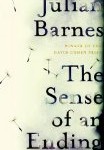
The Sense of an Ending – Julian Barnes

The Sense of an Ending Winner of 2011 Booker Prize

Five words from the blurb: retired, memory, imperfect, insight, past

The Sense of an Ending is a quiet, reflective book and if you know me then you’ll immediately hear the alarm bells ringing. This book has virtually no plot and, unlike the fabulous Anne Enright, Julian Barnes failed to to engage me in his slow tale.

The story is seen through the eyes of Tony, a retired man who is suffering from loneliness and the depressing knowledge that his life won’t go on forever. He reflects on his life, worrying that he hasn’t achieved anything noteworthy.

There are some plot elements, but I wont explain them here for fear of spoiling this brief book; all I can say is that they didn’t excite me.

On a positive note The Sense of an Ending is quick and easy to read. There are also lots of little snippets of wisdom.  

The less time there remains in your life, the less you want to waste it. That’s logical, isn’t it? Though how you use the saved-up hours…well, that’s another thing you probably wouldn’t have predicted in youth. For instance, I spend a lot of time clearing things up – and I’m not even a messy person.

I can see why this made the Booker long list, but I’m probably just too young to appreciate this sort of book.

.

Categories
2011 Booker Prize YA

The Testament of Jessie Lamb – Jane Rogers

The Testament of Jessie Lamb Long listed for 2011 Booker Prize

Five words from the blurb: women, dying, girl, innocent, heroism

The Testament of Jessie Lamb is one of the most frustrating books I’ve ever read. I was gripped by the fast paced plot, but internally screaming at the frustrating actions of the narrator, the unlikely global events and the numerous bizarre plot twists.

The Testament of Jessie Lamb is set in the near future, at a time when an act of biological terrorism has caused all women to die during pregnancy. This leads the human race into imaging a time when there will no longer be any children, when the aging population will have to support themselves and when they will eventually have to face the extinction of the human race. The premise appealed to me greatly, but unfortunately the book concentrated on a seemingly bizarre solution to this problem (minor spoiler – highlight to read) – teenage girls who don’t see any point of living if they can’t have children (roll-eyes) decide to sacrifice themselves to create a new generation. ARRRGGHH!!

It is hard to explain what frustrated me most about this book, but I’ll try my best! In a similar way to The Unit, I had problems with the basic premise of the story and I was unable to suspend my disbelief because there were so many holes in the plot. I don’t want to spoil anything for those who haven’t read the book so I’ll just give a couple of examples from the first section: Why would terrorists want to wipe out the entire human race? Normally terrorists just want to kill a certain group of society. Why couldn’t they save the women by using contraception/the morning after pill/hysterectomies?  

The most annoying aspect of this book was the narrator, Jessie Lamb. Her teenage outlook on life had me internally screaming at the pages. Everything problem had a simple solution and she seemed to think she had the power to save the world by herself. Her ideas were one-dimensional and failed to take into account the complexity of the adult world. I have had similar issues with teenage protagonists in the past (eg. The Stars in the Bright Sky, Pigeon English) and can see that people like this exist, but they drive me nuts. Reading about them is not an enjoyable experience. (Also note the awkward sentence structure in this passage).

We had spent hours discussing it. Why shouldn’t anyone over 10 should be able to elect representatives and have them stand up for us in parliament? How else could kids have power? But Nat and Lisa said why would you want to join in their stupid system. And Lisa said why did Iain  care, he already had the vote and it’d done a fat lot of good.

I’d describe this as a good YA book – one that allows teenagers to think about a few issues relevant to them. I admit to being dragged along by the pace of the plot, but as an adult reader I was unsatisfied. My negative reaction to this book proves that it has affected me on some level and that is surely better than the boredom/indifference produced by others. I’d therefore recommend it as the perfect book group choice – I guarantee it will create a lively debate!

If you enjoy reading about life from the perspective of teenagers then I’m sure you’ll appreciate this book, but I can’t understand why it made the Booker long list.

.

Categories
Booker Prize Other

Two Abandoned Bookers

Derby Day Long listed for 2011 Booker Prize

Derby Day by DJ Taylor

Derby Day instantly transports you back to Victorian England. It is meticulously researched and the dialogue is so realistic that I often felt as though I was reading a book written in the 19th Century.

The story begins with a typical Victorian courtship:

‘But of course he smiles at you in the park, so I had better be silent.’
‘I suppose you are cross because you were not sat next to Mr Happerton,’ Harriet suggested.
‘There are things that make me cross beyond sitting next to Mr Happerton. You are a goose, Harriet, to say such things.’
And Harriet, like Mr Happerton half an hour since, thought that she could not make her cousin out.

The friends and relations of the couple are slowly introduced into the book, along with a race horse and those who work in horse racing circles.

I initially loved the atmosphere, but slowly became bored by the lack of action. I have no interest in horse racing so the snippets of information about it held no interest for me either. After about 100 pages I realised I had no emotional connection to the characters and considered abandoning the book, but for some reason I gave it another chance. I read another 60 pages before finally declaring defeat.

If you enjoy slow, atmospheric books and have a passion for horses then this book may be for you, but I need more action and emotion to excite me.


Far to Go Long listed for 2011 Booker Prize

Far to Go by Alison Pick

Far to Go is probably fantastic, but has the disadvantage of being very similar to numerous other books I’ve read. It is different in that it is set in Czechoslovakia, but in reality the country makes little difference – the story of Jews persecuted during WWII has been told so often that I have little tolerance for it now.

Far to Go has a confusing start, but once I got past this I encountered a well written, emotional story. The problem was that I felt I knew exactly what was going to happen. I could see the relationships between the Jews and non-Jews being set up and I knew that the war would change it all. After about 70 pages I started to skim read and then I read the last couple of chapters.

If the premise of this book appeals to you then I’m sure you’ll fall in love with it, but I’m afraid it wasn’t original enough for me.