Categories
2011 Books in Translation

A Novel Bookstore by Laurence Cossé

A Novel Bookstore Translated from the French by Alison Anderson

Five words from the blurb: place, books, envy, secret, literary

A Novel Bookstore revolves around a secret committee, established to select the finest books for a new shop. This book shop will not sell new releases, but will only stock books specifically selected by the committee because of their importance and their ability to move and influence the reader.

For as long as literature has existed, suffering, joy, horror and grace, and everything that is great in humankind has produced great novels. These exceptional books are often not very well known, and are in constant danger of being forgotten, and in today’s world, where the number of books being published is considerable, the power of marketing and the cynicism of business have joined forces to keep those extraordinary books indistinguishable from millions of insignificant, not to say pointless books.

A Novel Bookstore is billed as a mystery because members of the committee receive threats and then suffer violent attacks, but anyone looking for a mystery will be disappointed as this aspect of the book is minor and ultimately disappointing.

The main benefit of this novel is that it recommends a large number books to the reader.

Among the books he wanted for The Good Novel were Dernier amour, by Christian Gailly, which, blown away, he mentioned to me; Sous réserve, a first novel by Hélène Frappat; and, among the foreign novels, short stories by Roberto Bolano. Francesca liked Tristano muore by Antonio Tabucchi, La réfutation majeure, by Pierre Senges, and more than anything, Segalen’s complete Correspondence, published at last.

The main problem, for the English reader, is that most are unavailable in this country. Some books are mentioned briefly, others described at length, but all the ones that intrigued me were impossible to track down.

In a Bengalese novel that I love, The Night on the Shore, the author devotes twelve pages to a description of the preparation of a traditional rich dish for weddings. It’s an unforgettable passage.

This is, perhaps, the point the book is trying to prove. These gems of literature are buried under a sea of averageness and only those with a specialist knowledge will be aware of their existence.

Most blog readers will be familiar with debates about what makes a book important and whether or not readers are wasting their time by reading lighter, more entertaining books, but if you are interested in these discussions you’ll find plenty to hold your attention in this book. I thought the arguments were put across very well, but I had heard all the points before and found reading over 400 pages of them a bit tedious.

This is a book for literature lovers and I’m sure the dream of owning a perfect bookshop will resonate with a lot of people, but although I found some aspects of the literature debate interesting I thought this book was too long for its weak plot.

,

The thoughts of other bloggers:

While acknowledging that it is highly flawed…I also have to acknowledge that Cossé created a very appealing nook for a book lover to read in for a while. Nonsuch Book

….an engaging read which held my interest, despite the basic implausibility of the story…. A Common Reader 

…it makes me think about what reading means to me, what novels mean to me, what writing means to me. Of Books and Reading
Categories
1950s Classics

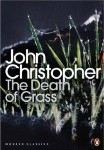
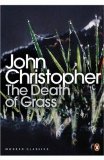
The Death of Grass by John Christopher

The Death of Grass (Penguin Modern Classics)

Five words from the blurb: virus, deadly, grass, starvation, humanity

The Death of Grass was first published in 1956,  just five years after Day of the Triffids. Both books share similar post apocalyptic themes, but for some strange reason The Death of Grass has faded into obscurity, continually overshadowed by those carnivorous triffids. I think this as a real shame as The Death of Grass is equally good; in fact I think its chillingly realistic premise makes it all the more powerful.

The Death of Grass begins with the discovery of a new virus in Asia. This virus kills all the grass that it comes in contact with, including rice and wheat. As it spreads around the world it leaves populations starving, leading to civil unrest and ultimately chaos and carnage.

The book is set in England and follows one family as they travel across the country towards the safety of their brother’s farm. The situation gradually becomes worse and the family find themselves having to fight for survival.

The amazing thing about this book is that, unlike Day of the Triffids, it hasn’t aged at all. There is nothing within the text to suggest that it was written over fifty years ago and the idea that viruses are a threat to our crops is just as relevant today.

The Government’s reaction to the disaster was particularly scary and, as with Blindness, the speed of the degeneration makes you want to move to the country and start stockpiling straight away.

The valley, which had been so green in the old days, now showed predominately black against the browner hills beyond. The stone walls wound their way up the hillsides, marking boundaries grown meaningless. Once John thought he saw sheep on the hillside, and jumped to his feet to make sure. But they were only white boulders. There could be no sheep here now. The Chung-Li virus had done its work with all-embracing thoroughness.

This is a short book that reminds you about the fragility of human society. I was inspired to read this book after a review from Another Cookie Crumbles. She compared the book to The Road, another powerful glimpse into the breakdown of society. If you enjoyed The Road or Day of the Triffids then I guarantee that you’ll love The Death of Grass.

Highly recommended.

.

Categories
2011 Books in Translation

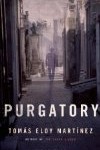
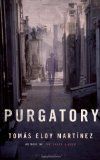
Purgatory by Tomás Eloy Martínez

Purgatory Translated from the Spanish by Frank Wynne

Five words from the blurb: Argentina, history, political, disappearances, love

Tomás Eloy Martínez was one of the most important authors in the Spanish speaking world. He was born in Argentina in 1934 and became a journalist, challenging authority at every opportunity. His provocative journalism forced him into exile during the military dictatorship and he moved to Venezuela, where he wrote several novels. Purgatory was completed shortly before he died from cancer in 2010. It is said to be his most autobiographical work, covering much of Argentina’s recent history. I accepted a review copy of this book because he sounded like such an interesting author, but unfortunately it didn’t quite work for me.

Purgatory has a fantastic opening line:

Simón Cardoso had been dead thirty years when his wife, Emilia Dupuy, spotted him at lunchtime in the lounge bar in Trudy Tuesday.

Human rights groups estimate that 30,000 Argentinians were captured, tortured and killed between 1976 and 1983. This book focused on Simón Cardoso, a cartographer who disappeared during this time period, and the mystery surrounding what happened to him.

Purgatory was very easy to read. The simplicity of the text made it possible to underestimate the talent that this author possesses. Profound statements were sprinkled throughout the novel and there were many passages that could easily stand up against the best writing in the world, but unfortunately I don’t think the book worked very well as a novel. There were many long, dry sections in which little happened. It could be argued that these reflected the endless waiting endured by those who didn’t know if their loved ones were alive or dead, but as a reader I was bored.

This Guardian article indicates that the author wanted to write:

without descriptions of atrocities, without depictions of rape and torture – rather a recreation of what it felt like “to breathe in the contaminated air”

He has definitely achieved this, but I’m afraid I prefer my novels to be more powerful. The absence of violence lead to a very quiet novel that was too subtle for me.

I also think that a lot of the satire went over my head. I only have a limited understanding of the political situation in Argentina and so I’m sure that I missed references to specific people/events.

This is clearly an important book, but it was too subtle for me and I’d only recommend it to those with a strong knowledge of Argentina.

.

Have you read anything written by Tomás Eloy Martínez?

Do any of his earlier books have a stronger narrative drive?


Categories
Nobel Prize Other

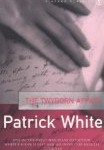
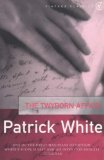
Abandoned: The Twyborn Affair by Patrick White

The Twyborn Affair (Vintage Classics)

Patrick White is an author I’ve wanted to try for a long time. He won the Nobel Prize for literature in 1973 and I’m sure I’ll love some of his work, but unfortunately I think I started with the wrong one.

The Twyborn Affair was shortlisted for the Booker Prize in 1979, but the author withdrew it from consideration. The book centres on Eddie Twyborn, a bisexual woman, and is set in the Australian Outback, France and London.

Unfortunately I can’t really tell you what happened because:

  1. I was too confused
  2. I abandoned it after 100 pages
  3. I’m not sure anything actually does happen

The writing quality was immediately obvious and I was initially impressed by the vivid scene setting. Unfortunately it wasn’t long before I lost the plot!

A stream-of-consciousness writing style, reminiscent of Virginia Woolf, began to dominate and I struggled to follow what was going on, let alone its relevance to the plot (if there was one). I can see that this is an intelligently written novel and I’m sure that anyone with the patience unravel this complex novel will be rewarded, but I’m afraid I couldn’t stomach 430 pages of slow confusion.

Have you read anything written by Patrick White?

Are all his books written in a steam-of-consciousness writing style?

Do you think I’d enjoy any of his other books?

Categories
Other

A Walk in the Woods

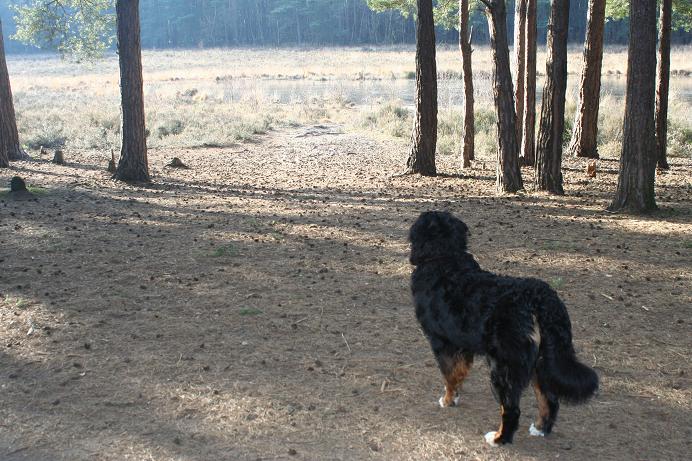
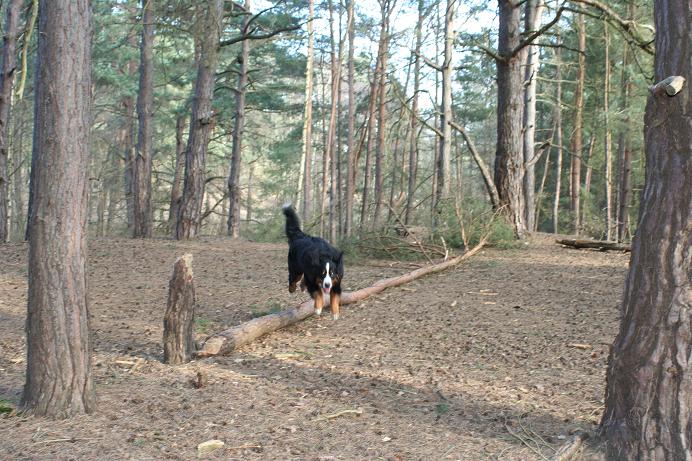
I live in Surrey, the most wooded county in England. Every day I take Ayla, my Bernese Mountain Dog, for a walk in the woods. As it is half term I am too busy entertaining my sons to write a lengthy book review so I thought you might like to see a few pictures of where I go each morning.


Ayla is now 9 months old and weighs 35kg. She will get a little bit taller, but by the time she is 2 years old she will probably weigh just under 50kg.

My friend’s labradors love this lake, but Ayla doesn’t like swimming. She prefers to dig in muddy puddles!

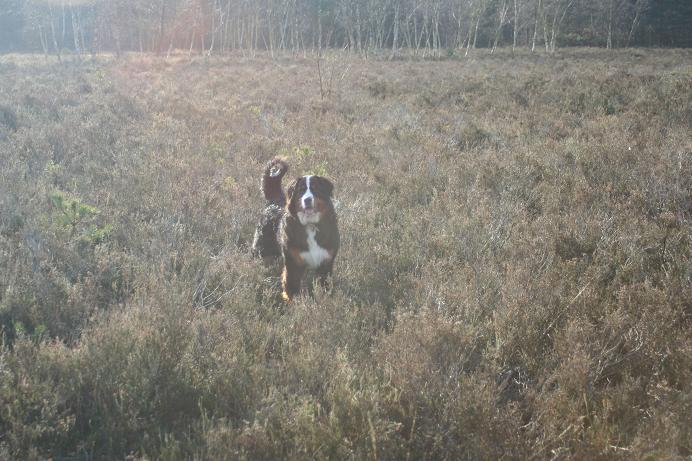
There is a lot of heathland near my house too. Ayla loves bouncing through the heather.

I love the walks as much as Ayla does!


Categories
2012

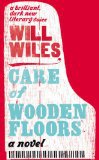
Care of Wooden Floors by Will Wiles

Care of Wooden Floors

Five words from the blurb: flat, perfection, alone, care, farcical

Oskar lives with two cats in an immaculate flat in Eastern Europe. When forced to go to America to sort out his divorce he leaves his flat in the care of an old university friend. Unfortunately his friend doesn’t have the same high standards of cleanliness and is stressed by trying to maintain the beautifully polished surfaces. He does his best, but small marks become giant stains when he tries to clean them. Everything goes from bad to worse and the story becomes farcical, with increasingly ridiculous situations occurring.

This book is very entertaining and you can look at this now if you are even remotely interested in cleaning and polishing floors! I think everyone can relate to the responsibility of looking after something that doesn’t belong to them and the guilt that results from damaging it.

The comedy in this book is quite dark and often revolves around pain. The violence isn’t graphic, it is more slapstick in nature, but I sometimes felt guilty for laughing at the situations. It wouldn’t have been funny if it happened to me, but there was something about the imagery used that really tickled me.

Once my elbow and shoulder began to ache, I stopped scrubbing at the floor. I rinsed the sponge, squeezed it thoroughly, and wiped away the suds. Was the blemish still there? The floor was wet – it was hard to tell. Besides, I was beginning to feel that this blemish was like a flash-shadow left after a photograph has been taken, a blob imprinted on the back of my eyes and nowhere else. I thought of Edgar Allan Poe’s story ‘The Tell-tale Heart’, in which a murderer is driven mad by the imagined audible beating of the heart of his victim, concealed under the floorboards of his room. But I was no murderer, I thought, and it would take a lot more than a tiny mark on the floor to drive me insane.

I should probably warn cat lovers that they may find some scenes in this book distressing, but equally bad things happen to the humans so cats are not singled out for victimisation.

The writing isn’t perfect and there were a few too many similes and metaphors for my liking, but the comedy outweighed any minor problems with the text and I frequently found myself laughing out loud.

This book doesn’t have much depth, but it does raise some interesting issues about perfection. It is an entertaining way to spend a few hours, and I’ll be recommending it to a wide range of different people.