Categories
1990s Recommended books

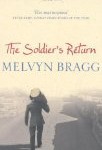
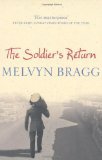
The Soldier’s Return by Melvyn Bragg

The Soldier's Return

Five words from the blurb: returns, war, Burma, Cumbria, changed

Last month I read A Division of the Light which had endorsements on the cover from both Kazuo Ishiguro and Melvyn Bragg. I’m already a big fan of Ishiguro, but despite my love for Cumbrian books I hadn’t tried any Bragg before. David, a regular commenter on this blog, recommended The Soldier’s Return trilogy, so I reserved a copy from my local library. I’m so pleased I did as Melvyn Bragg has just gone onto my “must read everything they’ve ever written” list.

The Soldier’s Return begins in 1946 with Sam returning to his hometown after witnessing horrific events in the war in Burma. Wigton, Cumbria is exactly as he left it four years earlier, but his six-year-old son doesn’t know him and his wife has developed an independence that he finds difficult to deal with. This absorbing book shows how Sam adjusts back into civilian life and how a family copes when no one is the same as they once were.

This book is amazingly well written. The intense emotions were beautifully described and I could sympathise with every character in the book.

Sam hesitated, trying to settle in himself the disturbing confusions of his return. The dreams of home were tinged with dread. The place below could suck him in, the old world close over him. Nothing had changed in the town that he could see. Yet his whole world had changed.

The descriptions of Cumbria were wonderfully accurate. I don’t know Wigton very well, but Carlisle was frequently mentioned and many of the landmarks were familiar to me. This historic nostalgia will be an added bonus for anyone familiar with these northern towns, but aren’t essential for loving this book.

I can’t fault The Soldier’s Return at all. My only reason for not awarding 5 stars is because the plot was a bit quiet for me. It is a perfect character study and I don’t think I’ve read a book where each person is so fully developed that I can predict the conversations they’d have and the likely outcomes. I don’t understand why this book isn’t that well known. It deserves to be a modern classic, studied in schools and read by everyone.

I’ve read lots of books about the horrors of war, but this quiet, reflective book brings home a message that is just as important. Survivors have to live with their emotional scars for the rest of their lives and once you’ve seen the terrible way in which humans can treat each other nothing is the same again.

Highly recommended.

.

Have you read any of Melvyn Bragg’s books?
Categories
2010 Graphic Novel

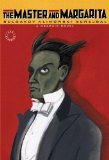
The Master and Margarita: The Graphic Novel

The Master and Margarita: A Graphic Novel (Eye Classics)

A few years ago I read The Master and Margarita, but although I enjoyed it, I felt as though a lot went over my head. When I saw the graphic novel version I decided to read it in the hope it would shed light on some of the more bizarre aspects of the book. I think it did a great job of summarising the plot, but as it can be read in less than an hour it didn’t delve into any of the more complex areas of the book.

The graphic novel is made up of both colour and black and white drawings. The style was simple, but effective:


The pictures also managed to convey Bulgakov’s satirical humor and I found myself smiling at more scenes from the graphic novel than from the original.

I think it works well as an introduction to the book. Having a brief over-view of the story will help readers to understand more of Bulgakov’s complex book – or give those who are too intimidated to try a brief glimpse into this weird world. But anyone really wanting to gain a deep insight into The Master and Margarita probably needs to study it for years.

.

Categories
2012

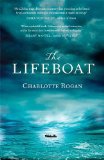
The Lifeboat by Charlotte Rogan

The Lifeboat

Five words from the blurb: castaways, patience, survival, dilemmas, humanity

In 1914 an ocean liner sinks and it quickly becomes obvious that there aren’t enough lifeboats for everyone. The passengers must battle for survival, pushing all thoughts of others aside in order to have a chance of living. Those lucky enough to gain a place on the lifeboat must then wait patiently to be rescued, enduring numerous problems as the days turn into weeks.

The first few chapters of this book were fantastic. The adrenaline fueled escape from the sinking ship made compelling reading and I loved the vivid descriptions of the open ocean. Unfortunately everything went downhill after that and as the plot became quieter I began to lose interest. It could have been a emotionally tense situation in which everyone worried about the future, but instead no-one really seemed to care if they lived or died. Most of the people on the lifeboat had lost friends and family and yet none of them seemed overly grief-stricken. It was all weirdly void of emotion and apart from the occasional prayer there was an overriding feeling of indifference to every event that took place.

Soon after I had returned to my seat, Mr Hardie opened one of the tins and introduced us to hardtack, which were rock-hard wafers approximately two inches square that could not be swallowed unless first softened with saliva or water. I held the biscuit between my lips until pieces of it began to dissolve and looked off into the not-quite-dark sky at the myriad stars that pricked the heavens, at the endlessness of the atmosphere that was the only thing vaster than the sea, and sent a prayer to whatever force of nature had arranged events thus far and asked it to preserve my Henry.

With the exception of the self-appointed lifeboat captain the rest of the characters all seemed to blur into one another. I can see that from a survival point of view it was probably helpful for the narrator, Grace, to distance herself from the competition, but it would have helped if a few of them had been brought to life. I’d heard lots about the moral dilemmas present in this book, but I’m afraid I was a little disappointed by these. Everything was a little too black/white and I didn’t have to challenge any of my preconceptions – each decision seemed obvious to me, despite the harsh outcome.

The writing was simple and flowed well, creating a light read that I whizzed through in a couple of sittings. It was compelling enough for me to keep reading and I wanted to know what happened to them, but when I reached the end I was disappointed. It was all a bit of an anti-climax.

Overall this was a fast, engaging read, but I was left craving a real survival story. This book has endorsements from both Hilary Mantel and Emma Donoghue, but it is dividing opinion. I think this makes it the perfect book club read – whether you love it or not you’ll find a lot to talk about.

Recommended to anyone who a enjoys lighter read, without dark emotions.

.

The thoughts of other bloggers:

It’s one of the best books I’ve read so far this year! Rea’s Reading and Reviews

One of my biggest reading disappointments of the year. Clear Eyes, Full Shelves

This is a fascinating study in human behavior under the most challenging circumstances…  Rhapsody in Books


Categories
2000 - 2007

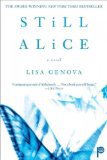
Still Alice by Lisa Genova

(Still Alice) By Genova, Lisa (Author) Paperback on 06-Jan-2009

Five words from the blurb: Alzheimer’s, memories, harrowing, family, loving

Still Alice is one of those books that seems to receive universal praise. I don’t think I’ve ever seen a negative review for it and so I expected to fall in love with Alice, ending the book in an emotional heap. Unfortunately that didn’t happen and I was slightly disappointed by the book as a whole.

Alice is a world-renowned expert in linguistics, but she begins to forget things and is diagnosed with early-onset Alzheimer’s, she needs Home Care Assistance. The book follows her decline, showing how rapidly this terrible disease takes hold of its victim.

The book is very easy to read – it is dominated by dialogue and so I whizzed through it in a couple of sittings. The problem is that this lead to the plot being superficial. I longed to know what was going through their heads instead of just hearing their words. Everything in the book happened too quickly – the diagnosis was almost instantaneous and her decline relentless. I would have preferred things to have happened more slowly, or at least been allowed some time to reflect on events. Instead I was whisked through everything so quickly that it was hard to develop an emotional response.

I also found the majority of the characters, especially Alice’s children, to be one-dimensional and so I struggled to bond with them.

The book improved in the final chapters and there were a few more interesting sections:

“My yesterdays are disappearing, and my tomorrows are uncertain, so what do I live for? I live for each day. I live in the moment. Some tomorrow soon, I’ll forget that I stood before you and gave this speech. But just because I’ll forget it tomorrow doesn’t mean that I didn’t live every second of it today. I will forget today, but that doesn’t mean that today didn’t matter.”

I also found a few of the final scenes touching, but I didn’t need to get the tissues out.

Overall, this book was too light for my tastes. I preferred learning about early-onset Alzheimer’s through reading The Story of Forgetting by Stefan Merrill Block and I highly recommend The Wilderness by Samantha Harvey, which moved me deeply. But I’m in the minority: 97% of people on goodreads enjoyed this book, so the odds are that you will too.

.

The thoughts of other bloggers:

I struggled to read the last 65 pages or so because I was crying so hard I could barely see the words. Life….With Books

It’s really good, but it could have been amazing. Had a Dad” Alzheimer’s Blog

It is haunting, heartbreaking, and frightening. A Bit Bookish

Categories
Discussions Other

Do you want to know about publisher auctions?

I’m lucky enough to get review copies from publishers. Tucked between the pages will be a press release which normally explains a little bit about the book and the author, but often boasts about the fierce auction that took place in order to gain the rights to sell the book. I must admit that I’m often drawn to these books. If lots of different publishers are trying to get hold of a book it indicates that it has a certain quality (or at least marketability).

What interests me is that details of these auctions never seems to filter down to the public. Book covers don’t reveal the large advances paid or the number of publishers who fought over the rights.

Acquired in a fierce auction between twelve publishers.

would have far more impact on me than the backscratching praise that normally appears on a cover. I suspect that many other readers would be equally influenced by this information, so I wonder why this doesn’t happen. 

Details of auctions are occasionally seen in news articles – for example, I found this one on the Guardian website:

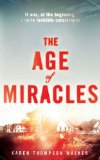
The Age of Miracles

Simon and Schuster fought off eight other publishers to land The Age of Miracles, a debut by American Karen Thompson Walker, in a five-round auction which went to sealed bids. Literary agent Cathryn Summerhayes, who handled the deal, called it “the most competitive auction I’ve ever had the opportunity to run”.


But normally the general public will be unaware of these of battles over books.

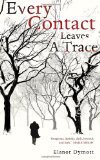
Every Contact Leaves A Trace

Are you more likely to read Every Contact Leaves a Trace if you know it was acquired in a “keenly fought auction” involving 5 publishers?

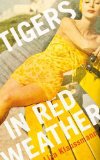
Tigers in Red Weather

What about Tigers in Red Weather by Liza Klaussmann which was acquired in a “hotly-contested auction”?

Do you think the number of publishers involved in an auction is any indication of quality?

Would you like this sort of information to be more widely available?

Are you more likely to read a book if you know lots of publishers were interested in it?


Categories
2011 Commonwealth Writer's Prize Other Prizes

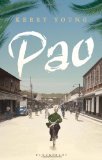
Pao by Kerry Young

Pao

Shortlisted for 2012 Commonwealth Writers’ Prize
Shortlisted for 2011 Costa Prize for Fiction

Five words from the blurb: Jamaica, Chinatown, business, political, transforming

Pao is only fourteen-year-old when he arrives in Jamaica in 1938; fleeing the violence of the Chinese revolution. He finds a home with his mother and brother in Chinatown and they try to adjust to life in a country that is very different from their own.

I immediately fell in love with Pao and his numerous money making schemes. His transformation from innocent child to powerful man was engaging to read, but as he grew up and his crimes became more serious I found that I was slowly distancing myself from him and by the end of the book I didn’t like him at all. This could be seen as a negative, but it is rare for characters to undergo such a developmental arc and I actually found this transformation impressive.

The book does a fantastic job of explaining the history of Jamaica. Details of the violence and unrest are sprinkled through the text, giving the reader a good understanding of how the country gained its independence from the British.

So what with all him bicycle talk I never get a chance to tell Zhang ’bout the commotion, and how the dockworkers bring the whole of the downtown to a standstill. But it no matter. Next day it all over town ’bout how Alexander Bustamante get arrested because they think he the one leading the strike, and how the English government probably going to send a commissioner to look into the disturbances, that is how they say it, even though nobody can see no point in that because everybody already know what the trouble is – no work, no food, and no hope that anything going get better.

The Jamaican dialogue took a little bit of time to get used to, but once I adjusted it gave the book a fantastic atmosphere. I think this is one of those books that would benefit from an audio version as I’m sure it would come across better if narrated by a native speaker instead of the voice inside my head!

The main problem with the narrative was that as the book progressed increasingly large periods of time were skipped – this gave the book a disjointed feel. Sometimes characters were returned to after a long absence and I felt as though I no longer knew who they were and this meant I didn’t care about them.

I also felt that the story was a bit dull. So much seemed to be going on around the periphery, but the central story lacked that magical spark.

This book did a lot to explain a period of history that I knew little about and I’d recommend it to anyone looking for fiction set in Jamaica.

.

The thoughts of other bloggers:

 …an extremely interesting novel, perfect for summer reading. A Reading Odyssey

….the way it is written was very distracting, and eventually weakens the story itself. Jules’ Book Reviews

 Pao is an utterly beguiling, unforgettable novel of race, class and creed, love and ambition, and a country in the throes of tumultuous change. Book Dilettante