Categories
1990s Historical Fiction

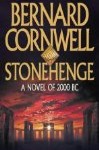
Stonehenge – Bernard Cornwell

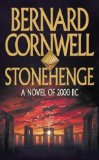
In preparation for hearing Bernard Cornwell talk I wanted to read one of his books. The reviews on Amazon seem to indicate that his King Arthur books are the best, but unfortunately my library didn’t have a copy of The Winter King in stock and so I ended up with Stonehenge. I was equally intrigued by the historical setting, but the Amazon reviews were a lot less enthusiastic and so I wonder if I picked the wrong book to try.

Stonehenge gives a plausible account of events leading up to the construction of the iconic neolithic monument. The story focuses on two brothers who are battling to become the tribal King. We witness the tribal feuds and rituals and learn about the way people lived in 2000 BC.

The historical detail was fascinating and there were several scenes, especially those containing ritual sacrifice, that affected me deeply. The problem was that the sections between these gripping scenes were too long – the plot meandered and I frequently found myself loosing interest. It was a real chore to read much of this book and I almost gave up a few times. I had no emotional connection to the characters and although I learnt about their belief systems, I didn’t feel as though I really understood their fears or motivations.

I have been lucky enough to read several very well written books recently and Stonehenge stood out for the averageness of its writing. I can’t pinpoint what was wrong, but I felt that the scenes failed to come alive. The writing was serviceable, rather than special.

Saban hardly slept, but instead lay and listened to the noises of the night. Once he heard the crackling of twigs, the sound of a great body moving through the brush, then silence again in which he imagined a monstrous head, fangs bared, questing up to the elm. A scream sounded on the ridge, and Saban curled into a ball and whimpered. An owl screeched. The boy’s only comforts were the stars of his ancestors, the cold light of Lahanna silvering the leaves and his thoughts of Derrewyn. He thought of her a lot. He tried to conjure up a picture of her face. Once, thinking about her, he looked up and saw a streak of light slither across the stars and he knew that a god was descending to the earth which he took to be a sign that he and Derrewyn were destined for each other.

Overall I feel that the negatives far out-weigh the positives for this book and so I’m afraid I can’t recommend it.

Did I just pick the wrong Cornwell book?

Are the problems I describe present in the King Arthur books?

Categories
Other

An Evening with Bernard Cornwell

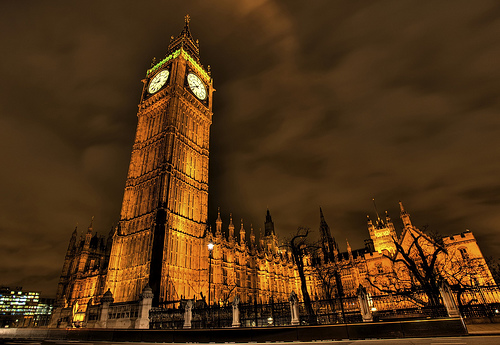
Photo by Nathusius, Flickr

Earlier this week I was lucky enough to attend a rare live appearance from Bernard Cornwell. The event was organised by Foyles and took place in Westminster, Central London – right next to Big Ben and the Houses of Parliament. The talk took place in a beautiful, old room packed with oil paintings and so the atmosphere was fantastic before the authors even arrived.

Bernard Cornwell is the most popular writer of historical fiction in the UK. He has written more than 40 books, selling over 5 million copies worldwide. I had always been intrigued by his books, but hadn’t read any until I decided to go and see him talk. I had mixed feelings about my first Cornwell book, but I’ll save those for my review next week.

Bernard Cornwell was sharing the stage with Richard Kemp, a former British commander of troops in Afganistan (and author of Attack State Red). Together they talked about the role of the soldier in both fiction and non-fiction. Both were fantastic public speakers and I had an entertaining evening listening to their anecdotes.


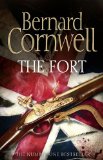
Bernard Cornwell talked almost exclusively about his new book, The Fort. Set in Massachusetts during the War of Independence it describes the Penobscot Expedition in which a less than thousand British infantry managed to successfully stand up to a fleet of more than 40 vessels.

.

.

The audience consisted mainly of people twice my age and of the opposite sex. I presume that the talk of war put off many women and I have to admit that there were several moments when it was too much for me. You definitely have to have certain qualities to become a soldier and I don’t have any of them! Both authors described how the best soldiers in history were recruited from bar fights – they were the “scum of the Earth”, “larger louts who were given pride and discipline”. It was interesting to hear them talk, but I think it just confirmed my suspicions that military history isn’t for me.

A few Bernard Cornwell facts revealed that evening

  • He wanted to give The Fort the title Captivate, Kill or Destroy but the publishers insisted on the boring title.
  • The stupidest thing he ever did was kill off Hatesville (don’t ask me who he is – I have no idea!)
  • He hates the word “task” and wishes people would stick to using the word “job”.
  • His favourite author of military fact is Antony Beevor
  • His favourite military fiction book is Matterhorn by Karl Marlantes

The most amusing question of the night came from a man near the front who asked how often Bernard Cornwell is confused with Bill Bryson – I noted that he sidestepped the question!

I was most struck by how knowledgeable Bernard Cornwell is. He has a detailed knowledge of the history surrounding all his books and a clear enthusiasm for his subjects. Talking about war may not have been to my taste, but he managed to hold my attention throughout and make me laugh on several occasions. I will definitely go and hear him talk again if given the opportunity – especially if he talks about some of his other historical fiction titles.

Have you read any of Bernard Cornwell’s books?

If so, which did you enjoy the most?

Categories
2009 Commonwealth Writer's Prize

Solo by Rana Dasgupta

  Winner of 2010 Commonwealth Writers’ Prize

The Commonwealth Writers’ Prize is my favourite book award and so I’m very pleased that it lived up to my expectations and provided me with another wonderful book that I wouldn’t have discovered without it.

Solo is set in Bulgaria and as I love science I was very excited to see that the central character is a chemist. Now a blind, old man, he reflects upon how much has changed over the course of his life and explains the difficult situations he faced over the years.

I knew very little about the history of Bulgaria before reading this book and it was nice to find out so much about this country’s difficult past. The combination of both European and Asian ancestry, and the struggle against communism makes me wonder why I haven’t read more fiction set in this fascinating country before.

The book was very well written and successfully managed to combine science with literature – a feat few authors can manage without patronising readers with a scientific background or going over the heads of those that don’t.

I loved the first half of this book which followed the chemist’s life in a fairly linear fashion. He was such an endearing, slightly grumpy character, but packed with the wisdom of a long and complicated life.

He switches on his television for a bit of sound to eat his beans by. He is irritated by the weather programmes that come on the international channels. Ignorant people judging the world’s weather. In that place it will be a nice day because there is pure sunshine. They estimate a nice day as when you can sit outside in sunglasses and drink coffee that no normal person can afford. Their minds cannot consider that a place is full of people cursing because there is no rain.

I found the second half much less enjoyable. It consisted of “daydreams” which could otherwise be described as a collection of short stories. The writing quality remained high, but I lost that emotional attachment to the chemist, so it felt a bit disconnected.

Overall this is a wonderful book. I recommend it to all lovers of literary fiction, if only so you learn a bit about Bulgarian history.

Categories
Other Recommended books

The Best Books for 4-Year-Old Boys

This month my oldest son is 5-years-old. To celebrate I thought I’d share the books he has most enjoyed in the last year.
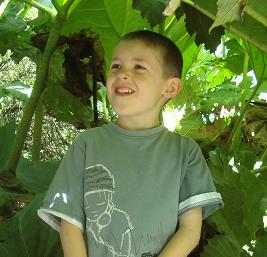
Adam owns almost as many books as me and he also gets books from the library, so in the past year we have probably read several hundred picture books together. Most go straight back on the shelves, but a few are memorable and come out over-and-over again. Here are the books we have most enjoyed reading in the last year:
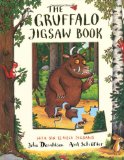

The Gruffalo Jigsaw Book by Julia Donaldson

The Gruffalo is the best children’s story I’ve found and the The Gruffalo DVD will entertain your whole family. I think this jigsaw version is the most beautiful edition, although I prefer it if they don’t attempt to do the jigsaws!
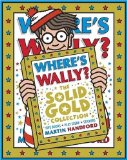

Where’s Wally? The Solid Gold Collection by Martin Handford

Some four-year-olds get frustrated by these books as I think they are aimed at older children, but my son loves spending time examining the beautifully illustrated pages and gets enormous satisfaction whenever he finds Wally. I think it is a great way to teach patience – if you can get them to sit still enough to find their first Wally!
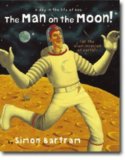
Man on the Moon by Simon Bartram

A lovely story about a man who works on the moon. He doesn’t believe in aliens, but children love spotting the tiny space creatures hiding on each page!
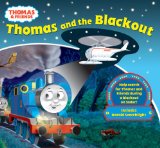

Thomas and the Blackout

There are lots of different Thomas books available (you’ll probably find yourself reading the entire series anyway!) and so I thought I’d highlight this lesser known book. Thomas and the Blackout features special plastic pages which can only be viewed using Harold’s searchlight. Children love moving his light to reveal the pictures on each page.
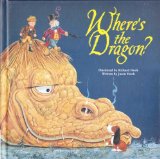
Where’s the Dragon? by Richard Hook

This book is beautifully illustrated, with dragons hiding in the scenery of each page. Children love the way that the grandfather fails to notice the dragons all around him!
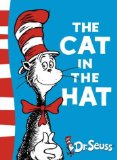

The Cat in the Hat by Dr Seuss

First published in 1957 it is easy to see why this book has stood the test of time. The simple words are great for those just starting to read, whilst the funny story will appeal to everyone. Fantastic!
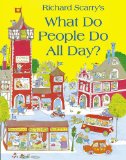

What Do People Do All Day? by Richard Scarry

Each page of this book is packed with detailed illustrations of various workplaces. Children spend ages studying the pictures and then ask great questions about the numerous jobs adults do. A great discussion starter.
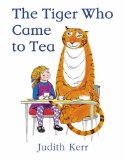

The Tiger Who Came to Tea by Judith Kerr

A classic book that young children find very entertaining. I did get a few questions about how a tiger could drink all the water in the taps, but it is probably best not to mention that!
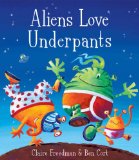

Aliens Love Underpants! by Claire Freedman

I’m afraid that boys love talking about bottoms, but this means that they love this slightly naughty book. It is a very funny story which includes every kind of underwear you can imagine!
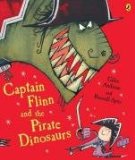

Captain Flinn and the Pirate Dinosaurs by Giles Andreae

Pirates and dinosaurs combine with vibrant illustrations to grab the attention of little boys. The whole series is good, but I think this one is the best.
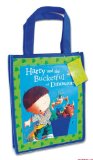
Harry and the Dinosaurs Collection by Ian Whybrow

Boys seem to have a fascination with dinosaurs and this is the best series I’ve found – it even taught me a few dinosaur names!
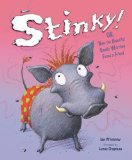

Stinky! by Ian Whybrow

This is such a lovely story. It is all about how a smelly warthog finally found a friend. The rhyming makes it easy to read and children find it very funny.
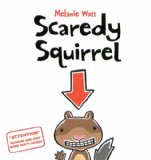

Scaredy Squirrel by Melanie Watt

A wonderful book that encourages children to try new things. The rest of the series is great too.
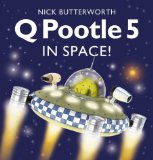

Q Pootle 5 in Space by Nick Butterworth

A book in which dangerous aliens are persuaded to be blown up like balloons which then fart off into space –  the sort of thing young boys find very funny!
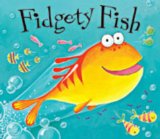

Fidgety Fish by Ruth Galloway

A sweet story about an inquisitive little fish. Great for learning about all the different sea creatures too!
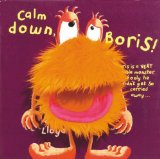

Calm Down Boris! by Sam Lloyd

A book and a hand puppet in one. What’s not to love?!
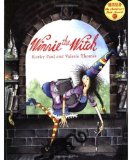
Winnie the Witch by Valerie Thomas

A children’s classic that you shouldn’t miss out on. The whole series is great, but the original is the best. A fantastic story which is beautifully illustrated. Wonderful!
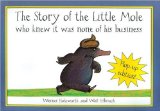

The Story of the Little Mole – Plop-up Edition by Werner Holzwarth

I’m afraid that young boys often have an obsession with poo. If you’d like to encourage this (or want to an amusing present!) then this book is perfect! It compares the shape and size of various animal poo, leading to interesting?! inspections of any poo you might find when you’re out and about.
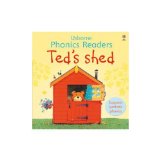
Usborne Phonics Readers – 12 book box set by Phil Roxbee Cox

This is a fantastic set of books for children who are just starting to read. They get enormous satisfaction from reading their first words and children who can’t quite manage the words can still enjoy looking for the Usborne duck on each page. If you decide to only buy one book then I recommend Ted’s Shed – it is the easiest to read and I think it has the cutest story.
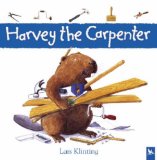

Harvey the Carpenter by Lars Klinting

A fantastic series of books that teach children all about different jobs. If you’re child is a fan of DIY then this is for you!
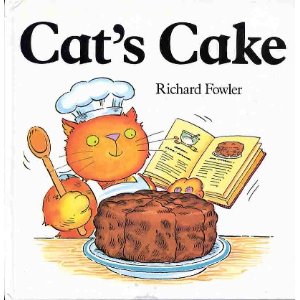
Cat’s Cake by Richard Fowler
Cat bakes a cake, but all the other animals keep adding their favourite food to the mixture, resulting in a disgusting cake that only goat will eat! Children find this one really funny and it helps to teach them about which foods do taste nice together.
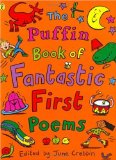

The Puffin Book of Fantastic First Poems

Lots of silly rhymes and poems to entertain young children. I guarantee they will be repeating them to you after a few days.
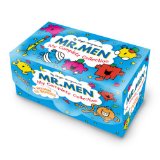
Mr. Men: My Complete Collection by Roger Hargreaves

Four-year-olds are just old enough to begin appreciating the Mr. Men stories. Some of the more complex ideas go over their heads, but I think it is worth investing in this classic series now, before they become too old – you wouldn’t want to miss out on reading these wonderful stories to your children.

Can you recommend any other books I’ve missed?

Which of these does your 4-year-old enjoy most?
Categories
2009 Audio Book

The School of Essential Ingredients – Erica Bauermeister (Audio Book)

Note: This book is called The Monday Night Cooking School in the UK, but is only available as an audio book under the title The School of Essential Ingredients.

I bought a copy of this book after Sandy raved about it and then included it in her top ten of the year. Good audio books are very hard to find, but Sandy listens to a lot of them and so if she raves about one then I know I’m in safe hands.

The School of Essential Ingredients is a weekly cookery class run by Lillian, a restaurant owner who taught herself to cook as a child in order to connect with her mother, a woman who had become depressed after her husband left her.

Each week the book focuses on a different one of the eight cookery students; we learn a bit about their lives and Lillian uses food to help them through their various problems.

Warning: This book will make you hungry!

The book is packed with amazing descriptions of food preparation – I could almost taste each dish as it was described and in many cases I wanted to rush out and make it. I think this is mainly down to the wonderful narration provided by Cassandra Campbell – she made the book come alive! I can’t imagine enjoying the print version of this book – I think I’d have found the recipes tedious and the lack of momentum would have led me to give up.

I’m not a fan of short stories and I’m afraid this book suffered from being more like a selection of short stories than a novel. The stories of each cookery student were very different and I had hoped everything would be brought together in the end, but I’m afraid they failed to link up and the book seemed to end quite abruptly.

I also found the book to be a bit overly sentimental and there were a few too many metaphors for my liking:

What did she do that made her happy? The question implied action, a conscious purpose. She did many things in a day, and many things made her happy, but that, Claire could tell, wasn’t the issue. Nor the only one, Claire realized. Because in order to consciously do something that made you happy, you’d have to know who you were. Trying to figure that out these days was like fishing on a lake on a moonless night–you had no idea what you would get.

Note: Trying to get a quote from an audio book is very hard, so I copied this quote from this wonderful quotes and passages blog.

A slightly amusing problem was caused by the fact this is an American book. Many foods have different names and although I knew most of them, there was a point when I wondered why she was decorating a cake with okra. It took me a few minutes to realise that Lady’s Fingers are something very different in America!!

Despite these criticisms it did inspire me to cook and on the whole I enjoyed listening to it.

Recommended to those interested in cookery.

I couldn’t find a negative review for this book:

I absolutely adored this book, and I’m going to be recommending it to everyone. Booking Mama

…if you’ve never read a food-related novel, this is where to start. A Reader’s Respite

Don’t read this book when you are hungry; it will probably be unbearable. S. Krishna’s Books

Categories
2010 Richard and Judy Book Club

The Crying Tree – Naseem Rakha

 Richard and Judy Winter Reads 2010

The Crying Tree is all about forgiveness. The book follows an American family as they come to terms with the murder of their teenage son. The murderer, Daniel Robbins, is on death row and the family exhibit a range of different reactions to his imminent execution. Set over several decades, we see the family before and after their son’s murder and the difficult spectrum of emotions they go through in trying to continue life without him.

I loved the first half of the book – it was fast paced and totally gripping. There were several touching sections and I did find myself genuinely sad about Shep’s death.

Shep was rolling a ball back and forth between his legs. He was crying because up beyond the trees the moon was all broken. He was tucked beside her as she read and laughing as she sang. He was riding his bike, and going to his first day of school, and playing the piano and the horn. Shep was smiling and laughing. Shep was her boy, he was just her little boy….

Unfortunately the book became increasingly sentimental and the theme of forgiveness became overbearing. By the half way point I was bored.

The characters were stereotypical and as I learned more about them I became increasingly annoyed by them. The twist in the end was the final straw. I won’t give anything away, but it ruined the entire book for me. The twist was unnecessary and took away from the message that the book was trying to deliver.

Recommended to those who like light, sentimental reads. 

Literary fiction lovers seem to have the biggest problem with this book:

Rakha is a bit heavyhanded with the message at times…. The Book Lady’s Blog

Naseem Rakha writes beautifully and with such depth of emotion at times I felt the suffocation that such pain and grief brings. The Eclectic Reader

The writing was so vivid that I felt as though this family was going through a real trauma, that this novel was in fact a true story. Book Addiction

I couldn’t quite bring myself to care about the people in this book because they felt less like people and more like representatives of various points of view. Shelf Love