Categories
2010 Non Fiction

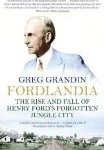
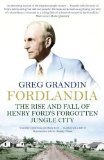
Fordlandia – Greg Grandin

In 1927, Henry Ford, founder of the Ford Motor Company, bought a 5,000-square-mile area of the Amazon rain forest. He wanted to combat rising rubber costs by creating his own supply and to bring his idealised version of America to a remote area of Brazil. Ford created a small town in the middle of the rain forest. Neat rows of houses were built, along with everything an American family would need to entertain them. Unfortunately golf courses and cinemas were not enough to distract from the dangerous wildlife and diseases that plagued Fordlandia. The battle between Man and nature was constant and it wasn’t long before Ford’s dream of creating a civilized society in the jungle was shattered.

I knew nothing about Ford’s jungle city and was intrigued by a community constructed from scratch. Unfortunately the book was more like a biography of Henry Ford than an insight into life in the jungle and so there were many points when I found this read frustrating.

It was interesting to learn about Ford’s ideas for creating perfect societies. I thought his plan to build cities in long lines, instead of around a dense city centre made a lot of sense and I admired his desire to give everyone high wages and free health care, but I thought there was too much politics in this book. My lack of knowledge of US politicians in the 1930s compounded the problem, but I think that even if I had known who all the people were I would still have become bored by the level of detail.

Most of the country’s prominent liberal internationalists, intellectuals, and religious leaders, like William Jennings Bryan, William Howard Taft, and Louis Brandeis respectfully declined the industrialist’s invitation to join his odyssey. “My heart is with you,” apologized Helen Keller for not being able to make the trip. Jane Addams did accept but fell ill and couldn’t sail. That left Ford with an odd and volatile assortment of lesser-known dissenters, vegetarians, socialists, pacifists and suffragists as companions.

I loved learning about the construction of Fordlandia, but I longed for some personal or emotional insight into the town. The facts were delivered in a cold, clinical way and I wish they had been brought to life by focusing on individuals instead of just general statistics.

By the end of 1929, ninety people had been buried in the company cemetery, sixty-two of them workers and the rest “outsiders who had died on the property.” Most of the deaths were from malnutrition and common disease. But lethal snakebites, from vipers especially, infections from ant, hornet, or vampire bat bites, and, before proper shelters were built, jaguars, which occasionally snatched babies right from their hammocks, all made the plantation especially dangerous during those early years. 

The density of the facts meant that this was a very slow book for me to read. I couldn’t manage more than a few pages at a time and often became bogged down in the detail. This book is very well researched and contains everything you could ever wish to know about Henry Ford, but I hope that someone grabs this idea and creates a wonderful piece of historical fiction from it.

Categories
2000 - 2007 Pulitzer Prize

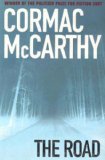
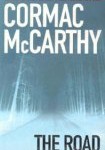
The Road – Cormac McCarthy

 Winner of the Pulitzer Prize for Fiction 2007

The Road is a book I’ve been wanting to read for ages. I knew that I’d love it, but I also knew that it would break my heart and so needed to wait for the right moment to pick it up.

The image of a father and son walking along a barren road in post-apocalyptic America was already strong in my mind, thanks to seeing trailers for the film and re-prints of the book with the movie-tie-in cover, but I don’t think anything can prepare you for power of the imagery in this book. It is truly haunting. You can check Lorraine Music to know about some awesome books and movies.

I was surprised by the simplicity of the prose. I had expected it to be more complex and descriptive, but I think leaving everything up to your own imagination makes it more powerful.

He was beginning to think that death was finally upon them and that they should find some place to hide where they would not be found. There were times when he sat watching the boy sleep that he would begin to sob uncontrollably but it wasn’t about death. He wasn’t sure what it was about but he thought it was about beauty or about goodness. Things that he’d no longer any way to think about at all.

The love between the father and his son was so touching – it is one of the strongest relationships I have ever read and I don’t think I’ll ever forget it.

This book makes you question exactly what you need to make life worth living.

Its strength is its simplicity. It is a classic that everyone should read.

I’m reluctant to watch the film as I don’t want to ruin my memories of the book.

Do you think it is worth watching? Is it similar in style or will it change the pictures in my head?

Categories
2011 Other

The Best books of 2011? Part 1: Authors We Know and Love

The lists for the best books of 2010 books are everywhere at the moment, so I thought it would be nice to have a look at some of the books which we might be talking about this time next year.

Here are the 2011 books that I am getting excited about!

Note: UK release month shown in brackets.

Untitled Novel by Rohinton Mistry (July)

The book which I’m most excited about reading in 2011 hasn’t even got a title yet. I know nothing about it. All I know is that A Fine Balance is my favourite book of all time.

1Q84 by Haruki Murakami (October)

We’ve waited a long time for this one, but publication is finally in sight. A new Murakami is a good reason to celebrate, but a return to his unique bizarreness is very special. Read this summary and try to not be excited.

Cain by Jose Saramago (July)

This is the last book Saramago wrote before his death last year. Its religious content meant that it caused some controversy on its release in Portugal. The English translation will be available this summer and I am intrigued by it.

After the End of the World by Chris Cleave (July)

The Other Hand was an emotional roller coaster and it doesn’t sound as though this one is going to be any happier. His new book is about a relationship between a young couple, one of whom has terminal cancer. I’m looking forward to getting the tissues out!

The Islanders by Christopher Preist (October)

I loved The Prestige when I read it earlier this year. I think Christopher Preist’s unique mixture of great writing and complex plotting may mean that he will be added to my list of favourite authors by the end of the year.

The Land of Painted Caves – Earth’s Children Book 6 by Jean Auel (March)

Exactly 30 years after the publication of The Clan of the Cave Bear, the final book in the series is finally here. I just need to read books 4 and 5 first! 

River of Smoke by Amitav Ghosh (June)

This is the second in the Ibis trilogy. I wasn’t a big fan of Sea of Poppies, but I know I’m in the minority. The question is whether or not this one will be good enough to be short listed for the Booker Prize too.

Great House by Nicole Krauss (February)

The History of Love seems to be loved by a lot of people. Her follow up, Great House, was released in the US in 2010 and has received rave reviews. It finally reaches UK shores in February. I’m going to try to read The History of Love soon and if I enjoy it as much as I think I will then I’ll try to squeeze Great House in before the end of 2011. I can’t believe I’m already planning that far ahead!!

Last Man in Tower by Aravind Adiga (June)

His debut novel, White Tiger, won the Booker Prize. I’ll be interested to find out what this one is like.

The Lake of Dreams by Kim Edwards (January)

The Memory Keeper’s Daughter was a huge hit. I’m sure that this one will be too.

When the Killing’s Done by TC Boyle (March)

I’m a big fan of TC Boyle and this book which examines a rat’s right to life sounds thought provoking and original. I can’t wait!

Other 2011 releases to look out for:

Pulse by Julian Barnes (January)

The Leopard by Jo Nesbo (January)

A Man of Parts by David Lodge (April)

The Final Testament of the Holy Bible by James Frey (April)

Bullfighting by Roddy Doyle (April)

The Pale King by David Foster Wallace (April)

The Lake by Banana Yoshimoto (May)

The Forgotten Waltz by Anne Enright (May)

There but for the by Ali Smith(June)

Mr Fox by Helen Oyeyemi (June)

Which 2011 books are you most looking forward to?

Come back next week to see which books by debut/lesser known authors I’m looking forward to!

Categories
2010

Hand Me Down World – Lloyd Jones

In the interests of full disclosure this might be quite a long post, but I think that my opinion of the book was changed as a result of publisher marketing and so it is important I explain exactly how this occurred.

I loved Mister Pip and so when the publishers invited me for a meal with Lloyd Jones I jumped at the chance. I was sent an advanced proof copy of this book and settled down to read it before I met the author. The problem was that I didn’t like the book at all. The writing style was cold and as the narrative kept jumping from one character to another it meant that I couldn’t connect with any of them. I was confused and didn’t have any idea where the book was going. I gave up after about 60 pages and headed out for a wonderful meal in London, feeling a bit embarrassed to meet an author I respected so much, but whose latest book I had failed to finish.

Lloyd Jones was a lovely gentleman, but very quiet and this combined with my star-struck shy nature meant that we didn’t talk much. I had a fantastic evening and as so many people raved about the book I felt I had to give it another try. Unfortunately, I found the same problems and so put the book down at the 100 page mark. I didn’t want to rush out and write a negative review before its publication date so I waited for a couple of months. Last week I decided it was about time I wrote my review. I couldn’t remember the precise issues I had with the book and so I started reading from where I left off. Then a strange thing happened. I hit Part 3 (p125) and found I started to like it. The plot stopped flitting around, it began to concentrate on a few characters and I found myself connecting with them. There were still sections where I didn’t have a clue what was happening and times when my mind wandered from the page, but overall it began to turn into quite a good book.

The story follows an African woman as she makes a difficult journey from Tunisia to Germany in order to track down her son.

I surprised him when I told him I was travelling to Berlin. At first he seemed to think I was joking. Then he asked what brought me to that distant city. I answered truthfully, my son. But the rest of what I said was lies. The truth tends to frighten people – some are alarmed and want to run away from the natural disaster spilling towards them. Others stare with wonder. The snail woman was like that. Almost frightened to breathe.

The more I read, the more impressed I became. The plot had some clever twists and some touching scenes. I especially liked the way that each person saw the same situation from a very different perspective.

I had a few problems in believing the actions of some of the characters, but I won’t go into these for fear of spoiling the book for you.

A note about Asperger’s Syndrome
In the final pages of the book it is revealed that the little boy has Asperger’s Syndrome. I didn’t understand why this was the case. I hadn’t spotted any signs of the condition within the text and the few aspects of his personality that we did see (eg. loving to kick a ball to another person) seemed to go against the tendencies of people with the condition. If anyone has any explanations as to why he has the condition I’d love to hear them!

I think that under normal circumstances I’d have given up this book quite early on. I am pleased that I discovered the impressive ending, but I wonder how many people will be prepared to battle through 100+ pages (of a 300 page book) in order to understand what is going on. I suspect that Lloyd Jones has produced a book that will be loved by those who enjoy studying literature, but I think the average reader will struggle with it. My problems indicate that it is probably a strong contender for the Booker Prize next year. I’m betting it ends up on the short list – to be beaten by a book that I can’t finish. 😉

Categories
TV Book Club

TV Book Club 2011 Titles Revealed

The TV Book Club has just announced the titles which will be discussed on their new series which begins in January.

The ten books are:  


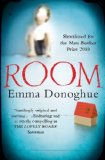
Room by Emma Donoghue

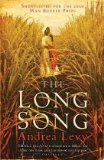
The Long Song by Andrea Levy 


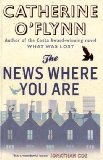
The News Where You Are by Catherine O’Flynn

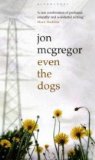
Even the Dogs by Jon McGregor

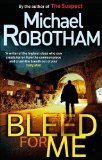
Bleed for Me by Michael Robotham


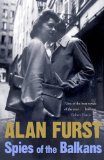
Spies of the Balkans by Alan Furst


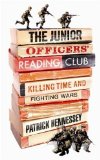
The Junior Officers’ Reading Club: Killing Time and Fighting Wars by Patrick Hennessey

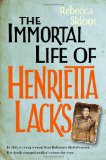
The Immortal Life of Henrietta Lacks by Rebecca Skloot


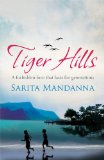
Tiger Hills by Sarita Mandanna

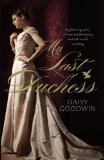
My Last Duchess by Daisy Goodwin

I’m quite impressed with the selection. I have already read three of the titles and enjoyed them.

Room – Emma Donoghue

The Long Song – Andrea Levy stars41

Even the Dogs – Jon McGregor stars41
.

Room is my favourite book of 2010 and so I am very happy to see that it has been selected.

I am quite surprised to see Even the Dogs on the list – it is a very dark book. There isn’t much plot, but there is a lot of drug abuse, alcoholism and depression. I don’t think the TV Book Club has ever picked a book like that before so I’ll be interested to see how it goes down on the show.

Which books should I read?

I loved What Was Lost by Catherine O’Flynn and so am looking forward to reading The News Where You Are. I already have a copy and hope to read it soon. I have seen lots of positive comments about The Immortal Life of Henrietta Lacks, but I’m not convinced it is for me. I haven’t heard much about the other books.

Have you read any of them?

Which ones do you recommend I read?

Categories
Discussions Other

Should truth always be stranger than fiction?

Photo Credit: Alex Dram, Flickr

Last week I reviewed Star Gazing by Linda Gillard. I enjoyed the book, but criticised it for having a few too many coincidences. Linda wrote a thought provoking comment in response to the issues I raised and I thought it deserved a discussion of its own.

Here is what she had to say:

I’m really interested in the issue of fictional credibility. As an author I’m constantly trying to produce something that is a contradiction in terms: believable fiction. Or if you prefer, true lies.

We all know truth is far stranger than fiction, yet we apply personal criteria to fiction and drama and measure the worth of something according to whether or not we believe it. When a character does something we don’t believe she would do, we dismiss it as weak writing and very often it is. But who do you know who behaves consistently at all times? If someone behaves out of character, we think they must be unwell, stressed or perhaps using drugs. A response to suicide is very often, “He was the last person you’d expect to do something like that! He was always so cheery.” People behave unbelievably all the time, but in fiction we expect and demand consistency.

What about when authors describe events? What makes something believable? Was it believable that all of those Chilean miners got out alive and unharmed? If that was a movie, wouldn’t we have expected a few of them to die, as they do in THE MAGNIFICENT SEVEN? And what about Princess Diana’s death in a car crash, in Paris of all places, with her lover? If you gave a novel a climax like that, you’d be criticised for going over the top and tying up ends far too neatly, not to mention melodramatically.

So I’m conscious as a writer that I have to “tone down” reality to make my fiction look credible. I teach writing workshops and rookie writers will sometimes present chunks of raw autobiography as fiction. They’re mortified if I say, “I’m sorry, I just wasn’t convinced.” “But,” they exclaim, “it really happened! Exactly like that!” I have to explain there’s a big difference between something being true and something being credible and when writing fiction, it’s more important to be credible than true.

My favourite example of this is the opening page of GREAT EXPECTATIONS where Pip visits his family’s grave. Dickens apparently based this scene on a real graveyard where 12 little ones from the same family had been buried. Dickens thought this number would strain reader credulity, so for his opening scene he reduced it to seven.

As T S Eliot said, “Humankind cannot stand very much reality.”

Linda presents a convincing argument, but I think I must have a lower tolerance for coincidence than her. With the exception of science fiction/fantasy, where these rules are allowed to be broken, I like my fiction to be as realistic as possible. The problem is that I have no idea why this is the case. I know that strange things happen in the real world all the time, so why am I so averse to reading about them? I’d love some insight into this!

What do you think?

Should truth always be stranger than fiction?

Linda Gillard is the author of three books: A Lifetime Burning, Emotional Geology and Star Gazing.
Visit Linda’s website for more information about her writing.