Categories
2010 Audio Book Non Fiction

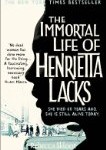
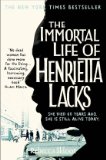
The Immortal Life of Henrietta Lacks – Rebecca Skloot (Audio Book)

I don’t read much non-fiction, but so many people raved about this book that it became impossible to ignore it. Sandy persuaded me to get the audio book version* and I’m so pleased that she did because I think it added an extra dimension to the text – the narration was fantastic and the different accents brought the story to life.

Henrietta Lacks was a poor, black woman who died from cervical cancer in 1951. Shortly before her death a sample of cells was taken from her cervix and then used, without her permission, for scientific research. At the time cell culture was in its infancy and scientists found it very hard to keep cells alive in culture, but for some reason Henrietta’s cells were different – they divided quickly and easily. These cells revolutionised cell research. They became known as the HeLa line and were used by scientists around the world to find cures for a host of different diseases. This book explained how the Lacks family discovered that the cells existed and their search for the truth about how billions of dollars of wealth were created from them without the family receiving a penny.

The book gives a fascinating insight into the life of a family struggling to cope with the loss of their mother, whilst at the same time having to cope with the fact that a part of her lives on in test tubes around the world. I found the initial explanations of events to be gripping, but by disc 6 (out of 10) I was beginning to get a little bored. I felt I knew exactly what was going to happen next and found that things were beginning to be over-explained. The downfall of many non-fiction books is that they include too much unnecessary detail for me and although I appreciate that completeness is sometimes needed I felt that much of the last half of the book could have been left out. I wasn’t interested in the word-for-word transcripts of every phone call that took place between Rebecca Skloot and the family and I also found the detail of what happened to each member of the Lacks family to be unnecessary. I wish that the book had concentrated more on Henrietta and her cells and less on the process of researching a book.

The main benefit of the book is that it raises many important questions about who owns the various parts of our bodies. It is a fantastic discussion starter and I’m sure that almost everyone will find something to enjoy in this book.

The Immortal Life of Henrietta Lacks is an important book and I’m really pleased that Henrietta Lacks is finally receiving the recognition that she deserves, but this book desperately needs an update. I found the ending to be quite abrupt and I would much prefer it to end on a high note, detailing all the wonderful things that are happening to the Lacks family now that this book has been successful.

*Note: The audio version is not available in the UK. I imported a copy from the US.
Categories
Commonwealth Writer's Prize Other

2011 Commonwealth Writers’ Prize Shortlists Announced

I love the Commonwealth Writers’ Prize and so was excited to see the 2011 shortlists revealed earlier this week. The frustrating thing is that most of the books are not available in the UK yet, but hopefully this will change now that they’ve made the shortlist for this book award.

The 2011 Commonwealth Writers’ Prize shortlists are:

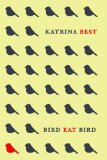
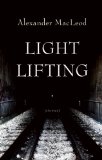
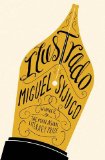
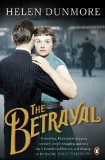
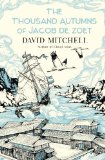
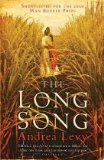
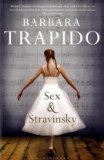
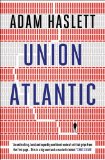
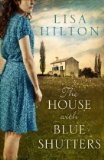
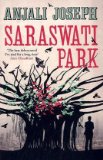
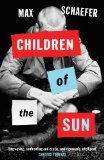
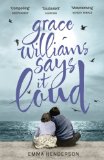
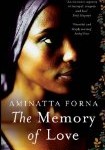
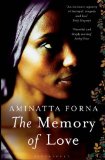
The books pictured are those available in the UK now (or in the very near future)

The shortlisted winners for the Africa Best Book are:
The Memory of Love by Aminatta Forna (Sierra Leone)
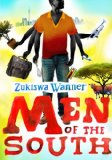
Men of the South by Zukiswa Wanner (South Africa)
The Unseen Leopard by Bridget Pitt (South Africa)
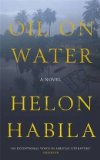
Oil on Water by Helon Habila (Nigeria)
Blood at Bay by Sue Rabie (South Africa)
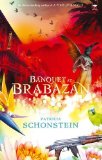
Banquet at Brabazan by Patricia Schonstein (South Africa)

The shortlisted winners for the Africa Best First Book are:
Happiness is a Four Letter Word by Cynthia Jele (South Africa)
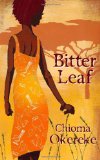
Bitter Leaf by Chioma Okereke (Nigeria)
The Fossil Artist by Graeme Friedman (South Africa)
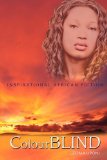
Colour Blind by Uzoma Uponi (Nigeria)
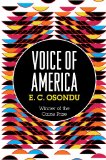
Voice of America by E. C. Osondu (Nigeria)
Wall of Days by Alastair Bruce (South Africa)

The shortlisted writers for the Canada and Caribbean Best Book are:
The Sky is Falling by Caroline Adderson (Canada)
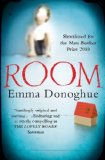
Room by Emma Donoghue (Canada)
The Master of Happy Endings by Jack Hodgins (Canada)
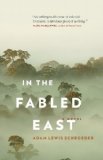
In The Fabled East by Adam Lewis Schroeder (Canada)
The Death of Donna Whalen by Michael Winter (Canada)
Mr. Shakespeare’s Bastard by Richard B. Wright (Canada)

The shortlisted writers for the Canada and Caribbean Best First Book are:
Bird Eat Bird by Katrina Best (Canada)
Doing Dangerously Well by Carole Enahoro (Canada)
Mennonites Don’t Dance by Darcie Friesen Hossack (Canada)
Light Lifting by Alexander MacLeod (Canada)
The Cake is for the Party by Sarah Selecky (Canada)
Illustrado by Miguel Syjuco (Canada)


The shortlisted winners for the South Asia and Europe Best Book are:
Lyrics Alley by Leila Aboulela (UK)
The Betrayal by Helen Dunmore (UK)
The Thousand Autumns of Jacob de Zoet by David Mitchell (UK)
The Long Song by Andrea Levy (UK)
Sex and Stravinsky by Barbara Trapido (UK)
Union Atlantic by Adam Haslett (UK)

The shortlisted winners for the South Asia and Europe Best First Book are:
Serious Men by Manu Joseph (India)
Saraswati Park by Anjali Joseph (India)
The House with the Blue Shutters by Lisa Hilton (UK)
Children of the Sun by Max Shaefer (UK)
Grace Williams says it Loud by Emma Henderson (UK)
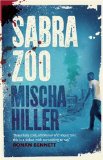
Sabra Zoo by Mischa Hiller (UK)

The shortlisted winners for the South East Asia and Pacific Best Book are:
Reading Madame Bovary by Amanda Lohrey (Australia)
That Deadman Dance by Kim Scott (Australia)
Time’s Long Ruin by Stephen Orr (Australia)
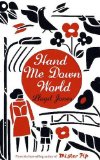
Hand Me Down World by Lloyd Jones (New Zealand)
Notorious by Roberta Lowing (Australia)
Gifted by Patrick Evans (New Zealand)

The shortlisted winners for the South East Asia and Pacific Best First Book are:
21 Immortals by Rozlan Mohd Noor (Malaysia)
A Man Melting by Craig Cliff (New Zealand)
The Graphologist’s Apprentice by Whiti Hereaka (New Zealand)
The Body in the Clouds by Ashley Hay (Australia)
Traitor by Stephen Daisley (Australia/New Zealand)
A Few Right Thinking Men by Sulari Gentill (Australia)

I have read several of the shortlist:

Room by Emma Donoghue 

The Thousand Autumns of Jacob de Zoet by David Mitchell stars41

The Betrayal by Helen Dunmore 

The Long Song by Andrea Levy stars41

Illustrado by Miguel Syjuco 

Hand Me Down World by Lloyd Jones  

Grace Williams says it Loud by Emma Henderson  (not reviewed)

The shortlist is too long for me to attempt to complete it and since half the books aren’t available in this country that isn’t an easy task, but I hope that you can help me.

Have you read any of the books on this list?

Do you think that I’ll particularly enjoy reading any of them?

Who do you think deserves to win?

Categories
2011 Recommended books

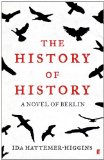
The History of History – Ida Hattemer-Higgins

Five words from the blurb: Berlin, Nazi, ghosts, flesh,  grief

The History of History is an outstanding piece of writing. It is original, moving and thought-provoking. I think it will scoop a host of literary awards this year and I hope you’ll read the rest of this review and decide to give it a try.

The History of History is set in Berlin. The central character, Margaret, is a tour guide in the city and so we learn all about the history of Berlin and its buildings through her. That makes it sound a bit dull, but it isn’t. This book is packed with quirky details that make the city come to life and I learnt an incredible amount about Berlin, especially its uses during WWII.

The primary focus of the book is suicide. The bombing raids and trench fighting of war have been covered in books many times before, but this is the first time I’ve read something which investigates these quiet, almost forgotten deaths. The tragic stories include that of a Jewish family, those who were close to Hitler at the end of the war and also the traumatic decision of mothers to murder their own children. Many parts of the book are devastatingly sad, but the book as a whole manages to avoid being overly tragic as the mood of the text is lifted at regular intervals.

I’m in love in the way I thought only thirteen-year-olds could be and I haven’t felt anything close to it for such a long time and the terrible thing is that I don’t think he loves me back. It’s ridiculous, this kind of full-blown sweet torture, that poets know so well and is so utterly ridiculous, where one vacillates between intense ecstasy and intense agony throughout the day, because one feels as if one were walking a tightrope where falling one way will mean waves of joy unknown to humankind and falling the other will mean the darkest hell. Your mood depends on which possibility you take most seriously at the time. Meanwhile, you attempt to stay on the tightrope, because that way you preserve a chance at the ultimate beauty.

Ida Hattemer-Higgins lived in Japan for a few years and the Japanese influence has clearly entered her work. Be prepared for anything to happen in this book, but don’t be worried because the author makes even the strangest things believable. There are points when the buildings of Berlin turn to flesh and Nazi ghosts haunt Margaret, but somehow it never seems ridiculous.

The book isn’t perfect. There is so much going on that it occasionally fails to merge the scenes together seamlessly, but I’m willing to overlook these minor teething issues as I’m sure that in a few months time I’ll have forgotten about any tiny problems I may have had with this book and only remember the vivid scenes.

The History of History is very well researched and if you have any interest in the way WWII affected different groups of people then this is for you.

I’m sure this will be one of my favourite reads in 2011.

Highly recommended. 

Categories
Books in Translation Novella

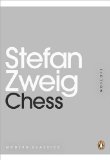
Chess – Stefan Zweig

  Translated from the German by Anthea Bell

Five words from the blurb: chess, stranger, disturbing, obsession, genius

In the 1920s and 30s Stefan Zweig was the most translated novelist in the world. His work is very popular in continental Europe, but few people in the UK have heard of him. I have to admit that I was one of those people until blogging introduced me to his name last year. Since then he has been high on my wish list, so when Penguin offered me a copy of his novella, Chess, (to celebrate the launch of their mini modern classic series) I jumped at the chance. I can see why people love his writing so much – Chess is a wonderful little book.

Chess is set on a cruise ship; on board is an elusive chess grand master who finally agrees to play against a group of passengers. The passengers are easily beaten, but then a mysterious man suggests some moves and the tables are turned. The secret behind this man’s skill at the game is slowly revealed in a shocking, but gripping display of the capabilities of the human mind.

I have always been interested in any kind of monomaniac obsessed by a single idea, for the more a man restricts himself the closer he is, conversely, to infinity; characters like this, apparently remote from reality, are like termites using their own material to build a remarkable and unique small-scale version of the world.

I know how to play chess, but have no special interest in it and so before reading this book I was a little worried about whether or not I’d enjoy a whole book on the subject. I needn’t have worried – this book is beautifully written and no knowledge of the game is required. It is hard to explain the real magic of this book without giving away the entire plot, but I’ll just explain that this book investigates the power of human endurance when faced with some of the atrocities that a war brings.

My only criticism of this book is that the darker elements are all written as reflections, explained to an enquirer many years after the event. This means they aren’t as intense as they would have been if we had experienced them as they were happening. I know a lot of people will find this to be a positive, but I prefer to feel the emotion and fear instead of just having the situation explained.

Recommended to anyone who enjoys reading books that deal with the darker side of human nature.


I couldn’t find a negative review for this one:

….it is difficult to find just the right words to explain the wonder of Stefan Zweig’s words. Fleur Fisher in her World

Zweig’s ability to carry the reader along through summarised lives, stories within stories and long monologues is remarkable….. Asylum

…..the novella is as well-nigh perfect as might be expected.  A Common Reader

Chess is one of the Penguin Mini Modern Classics (a series of 50 books launched on 15th February). They can be bought individually for £3 each or as the beautiful Penguin Mini Modern Classics Box Set

Categories
Other

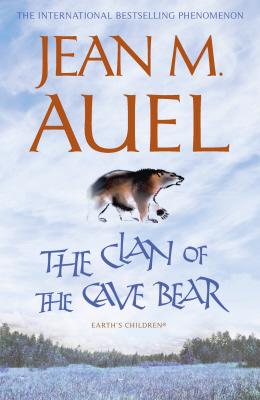
Win a copy of Clan of the Cave Bear!

Next month the final installment of the Earth’s Children series will be released, over thirty years after the first was published. The Clan of the Cave Bear, the first in the series, is one of my favourite books and so I am always happy to bring the title to a wider readership. A few years ago I answered questions about The Clan of the Cave Bear, so if you’d like to know anything about the book you’ll probably find the answer there – if not, then just leave a comment and I’ll try to answer your questions.

I have ten copies of The Clan of the Cave Bear to give away to readers of my blog.

8 copies are available to those in the UK and 2 will be sent internationally.

If you’d like a chance to win a copy, just leave a comment below before midnight GMT on 18th February 2011.

If you live in the UK please let me know so that I can enter you in the UK draw. All those who leave their location blank will be entered in the international draw.

Winners will be selected at random and notified by email shortly after the closing date.

Good luck!!

Jean Auel will be answering questions about the series at a special event at the Natural History Museum on Monday on 28th February 2011. Tickets are on sale now. 

Categories
2010 Fantasy Novella

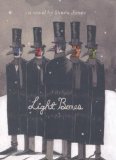
Light Boxes – Shane Jones

Five words from the blurb: Flight, banned, ominous, children, honey

I decided to read Light Boxes when David from Follow the Thread named it as one of his favourite reads in 2010. It is certainly an original book, but I can’t decide whether I like it or not.

The problem is that this book pushes the boundary of the novel so far that it almost becomes art. I read for the excitement/emotion of the plot and this book felt as though I was looking at a series of scenes instead of reading a novel.

The book is half the size of a normal paperback and each page briefly describes a new scene. Many of the pages are written in different formats and font sizes. For example, whispers are always written in a small sized font  and SHOUTING IN LARGE ONES. Lists and drawings are also used to illustrate points. The writing is simple, but packed with vivid imagery. I know that some people love these random scenes, but I think I failed to see the symbolism in it all.

Bianca’s ghost appears in the town. She wears red shorts and a white blouse and has long black hair. I watch her buy mint leaves and talk to shop owners about how soon until we will only experience summer. She walks through the streets passing out tulips whose petals have veins that spell out the word July.

The plot is very bizarre, but it is basically an adult fairytale in which an evil character bans the use of flight. The town has been stuck in a perpetual winter for more than 300 days and then the children start to go missing. It was all over very quickly and I was left wondering what the point of it all was. I think I’m just not the kind of person who appreciates art. If you want to spend an hour immersing yourself in a weird fantasy world then this is for you, but it was a bit too experimental for me.

Everyone else seems to love it:

Light Boxes is enchanting, whimsical and rather brutal in some parts. Mad Bibliophile

I could describe the experience of reading Light Boxes as being like witnessing a beautiful mirage, but that wouldn’t be correct, because a mirage is ultimately insubstantial. Follow the Thread

Light Boxes is almost inhumanly hopeful, offering insights both genuine and relevant, and distant echoes of our world in a war fought with futile tactics against a nebulous enemy. The Rumpus