Categories
Orange Prize Other

Who will be Shortlisted for the 2011 Orange Prize ?

I haven’t quite finished my Orange Prize reading, but I have now sampled at least the first few chapters of each book. The majority haven’t been to my taste, but I can see the quality of the text. Four books jump out at me as being head and shoulders above the rest and I think these will breeze onto the shortlist:

The writing in each of these books is outstanding and I will be very surprised if any of them are missing from the shortlist when it is announced on Tuesday 12th April.

Filling the remaining two spaces on the shortlist is far trickier. I was thinking about going against popular opinion by predicting that Room wouldn’t make the cut. It was my favourite, but it is very different from the others on the list and therefore I have a feeling the judges won’t be the biggest fans of it. My problem is that none of the other books on the longlist are jumping out at me and I can’t get Room out of my head. I’m going to add it to my prediction in the hope they pick my favourite book, but I wouldn’t be at all surprised if it was absent.

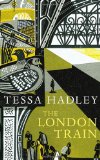
The final spot is almost impossible for me to fill. I wouldn’t be surprised to see The Birth of Love, Swamplandia! or Annabel on the shortlist, but I’m going to plump for The London Train, soley because none of the other selections are from the UK!

My prediction for the 2011 Orange Prize shortlist:

What do you think of my prediction?

Which books do you think will make the 2011 Orange Prize shortlist?

Categories
2010 2011 Orange Prize Other

Five More Disappointing Oranges

I haven’t had much luck with the Orange longlist this year. Rather than depress you with a series of negative review posts I thought I’d squeeze my grievances into one long post. Then next week I’ll be able to move on and tell you about all the wonderful books I’ve been reading in the past few days.

Here are my reasons for not falling in love with five more of the Oranges:

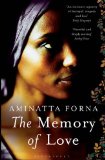
The Memory of Love by Aminatta Forna
Five words from the blurb: Freetown, friendship, life, war, love

The Memory of Love is set in set in Freetown, Sierra Leone, shortly after the civil war. A psychologist from England discovers Elias Cole, an elderly man, in the hospital and through a series of notebooks we discover what life was like for Elias in 1969 – 30 years earlier.

I immediately fell in love with the writing. It was so vivid that I could imagine exactly what it was like to live in the city.

A change in the season. Surreptitious at first. At night the rain tapped on the windowpanes, scores of hesitant fingers. Dawn brought bright skies, washed of the desert dust, and the hard, coppery smell of earth. For the first time in months you had a clear view of the hills from the city.

I bonded with all the characters and felt I understood their emotions and motivations. Basically I was in love with this book, thinking I could easily award it five stars. But then everything began to unravel. Nothing happened and I became frustrated by the lack of action. This book was so packed with detail that it takes a long time to read each page and so by the time I got to around the 80 page mark I had already been reading it for almost three hours. This slowness meant I felt the boredom even more and so the next hour of reading was very tedious. After about 120 pages I gave up and started skimming. Occasional sections grabbed my interest, but overall I was shocked by how little actually happened in the remaining 300 pages – I could summarise the entire plot in just a couple of lines.

I slowed down to read the ending and was saddened to see how predictable the whole book had been.

This book has the best writing I’ve found on the Orange longlist so far. If it had contained a more complex plot then it could have been fantastic.

DNF


Swamplandia! by Karen Russell
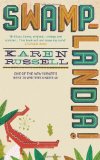
Five words from the blurb: alligator, theme park, family, swamp, mythic

This is another book that started really well and then lost my attention as time went on. I loved the initial descriptions of life in the alligator theme park, but I felt the only real character in the book was the swamp. All the people were flat and most of their reactions were fairly unbelievable. I also struggled with the magical realism present in this book – it felt a bit forced.

On the plus-side the writing was fantastic, but I’m afraid I need a bit more than that to pull me through to the end. I started skimming after about 95 pages and was never pulled back into the story.

DNF


The Invisible Bridge by Julie Orringer
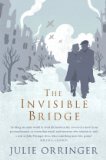
Five words from the blurb: Budapest, Paris, tragedy, Jewish, family

I had high hopes for The Invisible Bridge as I was told it was one of the few Oranges with a plot, but I’m afraid I was disappointed by this one too. I found the characters to be one-dimensional visions of perfection and their relationships were overly sentimental. I started skimming after about 150 pages, but began to read again as the plot focused on the forced-labour camps. The book was well researched, but it was all too contrived and predictable. It might have been better with 300 pages removed, but the simplicity of the plot could not sustain my attention for nearly 600 pages.

DNF


Lyrics Alley by Leila Aboulela
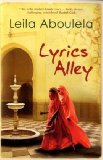
Five words from the blurb: Sudan, household, faith, modernising, future

I think my disappointment with this book began with the comparison to Naguib Mahfouz on the cover. Apart from the setting (and the confusing number of characters in the beginning!)  these books have little in common. Lyrics Alley is a much simpler book that lacks the depth and atmosphere of Mahfouz’s work. It was quick and easy to read, but it lacked that magic spark. I did read all the way to the end, but never felt connected to any of the characters on an emotional level.


Jamrach’s Menagerie by Carol Birch
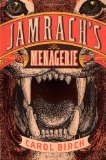
Five words from the blurb: London, circus, collector, animals, journey

This was another book that began really well. I was instantly drawn into the story of a little boy coming face-to-face with an escaped tiger. The depiction of life in a circus was wonderful, but after that things went downhill. They set sail on a journey to look for a komodo dragon and life aboard the ship was dull. It dragged for far too many pages before finally reaching a good climax. Unfortunately it was too little, too late for me as the majority of the book was disappointing.

.D

Did you love any of these books?
Categories
Other

Sorry for the Absence…..

Many apologies for my online absence – my computer broke on Tuesday and so I have been unable to do any blogging. My television was also broken for the duration and so I enjoyed several technology-free days. I highly recommend that you indulge in short breaks from the media as it is amazing how much more can be fitted into each day.

Normal service will resume shortly.

Categories
2010 Recommended books

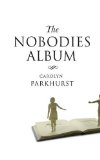
The Nobodies Album – Carolyn Parkhurst

The Nobodies Album is described as a murder mystery, but it is so much more than that. It is an insightful look into the relationship between a mother and her grown-up child, but it is also a clever piece of meta-fiction – questioning whether a story ever really ends and what rights an author has to a book once it has been published.

The Nobodies Album begins with Octavia Frost, a famous novelist, discovering that her son has been arrested for murdering his girlfriend. She dashes across the country to be with him, despite the fact that they haven’t seen each other for years. Scared and emotional she waits to see if she will be accepted back into his life and begins the painful process of discovering whether or not he is guilty of the crime. I thought that the book perfectly captured the emotions of parenthood – covering the nature versus nurture debate as well as the guilt experienced when a child behaves inappropriately. The meta-fictional style made these emotions seem all the more honest and realistic.

Now that the moment is here, it’s not what I expected at all. That’s the fundamental flaw in the illusion that writers like to maintain, the idea that we can craft anything approaching truth. No matter how richly we imagine, no matter how vividly we set the scene, we never come close to the unambiguous realness of the moment itself.

Interwoven with the narrative are snippets from Octavia Frost’s novels. Life experiences have altered the way she views the world and so she has decided to create a new book in which she rewrites the ending to all her previous novels. The snippets didn’t come across as realistic endings as each contained the sort of information that normally begins a novel, but I’m willing to forgive this because each of the stories was so interesting in its own right. I could easily have read full-length versions of most of them – especially the one in which people forget everything that is too traumatic.

It is difficult to explain just how clever this novel is. There is so much going on, but Carolyn Parkhurst’s skill as a writer ensures that the reader is never lost. It could easily have felt gimmicky, but the emotional rawness of the text lent an authenticity to it.

I highly recommend this book to anyone interested in parental responsibilty or how the writing process changes with experience, but also to anyone looking for a gripping narrative with an original, thought provoking style.

.

The thoughts of other bloggers:

….the writing is stellar. It is smart, insightful, and real. You’ve Gotta Read This!

….an incredibly creative novel that I definitely recommend. S. Krishna’s Books

……accessible and thoughtful. The Literate Housewife

I think I may have discovered a new favourite novelist!

Have you read any of Carolyn Parkhurst’s earlier books?

Categories
2010

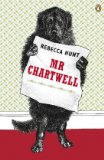
Mr Chartwell – Rebecca Hunt

William Churchill often spoke of his “black dog” of depression. Mr Chartwell imagines what might have happened if that black dog had been real.

Black Pat is the man-sized Labrador responsible for Churchill’s depression.

‘Sometimes I drape across his chest. That slows him down for a bit. And then I like to lie around in the corner of the room, crying out like I have terrible injuries. Sometimes I’ll burst out at him from behind some furniture and bark in his face. During meals I’ll squat near his plate and breathe over his food. I might lean on him too when he’s standing up, or hang off him in some way. I also make an effort to block out the sunlight whenever I can.’

The book begins with Black Pat replying to an advertisement for a room to rent – surprising the landlady, Esther. Bemused, she offers him a room and begins a difficult relationship with the over-sized dog.

Black Pat has to be one of the best characters I’ve come across recently – I loved the originality of the talking, giant dog and enjoyed his attempts at fitting into human society. Some of his scenes had me crying with laughter (especially the one where he tried to barbecue a coot), but despite the comedy of several sections I found this book to be unsatisfying overall. I thought that the book contained a series of fantastic scenes, but thought that the plot was quite weak and some of the connecting sections failed to grab my attention.

Mr Chartwell was short and easy to read and so I flew through it in a couple of sittings, but I felt that the lightness and humour took something away from the subject matter. I never felt Churchill’s depression or saw Black Pat as anything more than a giant mischievous animal. This book should have had darker undercurrents and some insight into depression, but instead it just skirted around the real issues.

Overall this book had a fantastic premise and some sparks of genius, but it didn’t quite work for me.

.

The thoughts of other bloggers:

I loved the opening chapters of this book but started to lose interest a little bit as I got further into the story. She Reads Novels

I completely fell for this book; it was a single sitting read. It’s original, compelling, poignant, witty and rather dark too – a perfect mixture. Savidge Reads

I came away from Mr Chartwell feeling that it hadn’t quite achieved what it seemed to be aiming for. Follow the Thread

Categories
Other

Fact or Fool?

It’s April Fools’ Day so I thought I’d test your ability to spot the facts from the fools.

Five of the following statements are true, five have been invented by me.

EDITED 2nd April: I’ve now included the answers. How many did you get right?

Charles Dickens once had his clothes ripped off by fans.

TRUE! He is apparently the only author who has had his clothes ripped off by fans!

David Mitchell spent one month shearing sheep in Australia.

FALSE! He has travelled around a lot, but I invented this one.

Haruki Murakami used to run a jazz club.

TRUE! Murakami ran a jazz club until 1981 – it was called Peter Cat. This page contains many more Murakami facts that are well worth browsing.

D.H. Lawrence could play the trombone

FALSE!

H.G. Wells married his grandmother.

FALSE! He actually married his cousin!

Marilynne Robinson has a pet snake called Jake.

FALSE!

Chris Cleave grew up in Cameroon.

TRUE! He went to a French school in Cameroon.

Stephanie Meyer has a black belt in karate.

FALSE!

The man who registered José Saramago’s birth was drunk and so wrote his name and date of birth down incorrectly.

TRUE! I discovered this when researching a blog post about him last year. He is a fascinating man!

J.K Rowling once taught English in Portugal.

TRUE! She moved there and in 1992, she married Jorge Arantes, a Portuguese television journalist.


Happy April Fools’ Day!