Categories
2010 2011 Books in Translation Chick Lit Mystery

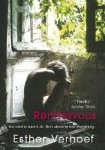
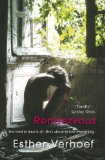
Rendezvous – Esther Verhoef

Rendezvous Translated from the Dutch by Alexander Smith

Five words from the blurb: mother, life, unravels, tension, twists

Iris is holding A Month of Dutch Literature on her blog. I wanted to join in, but had nothing to hand. I then spotted this book in a little independent book shop and was drawn towards the following sentence in the blurb:

Rendezvous is an emotional rollercoaster from start to finish and an extremely powerful story about how dangerous getting what you want can be.

That is a bit of an exaggeration, but it was a gripping read with some degree of emotional tension throughout.

The book begins with Simone, a young mother, being arrested. Over the course of the book we see how she goes from being a caring wife and mother, to being at risk of losing everything.

Simone and her family move from Holland to a rural village in the south of France. They have to cope with living in the confines of a caravan whilst their house is being renovated, but also learn the numerous differences between their culture and French etiquette.

Simone’s character is very well developed and I had a great deal of sympathy for her, despite her flaws.

Unbelievable how I was able to lie to everyone, how naturally and easily it came to me. All my life I’ve hated that so intensely, that scheming, lying and deceit. Women who cheat on their husbands with their best friends, men who say they have to work late and are actually carrying on with their secretaries – there’s a reason those kinds of clichés are clichés; they’re far too commonplace, they seem to make the world go round.

This book could almost be described as chick-lit, but the mystery surrounding Simone’s imprisonment also gives it a crime/thriller edge.

I found the entire book to be very entertaining. It isn’t groundbreaking or particularly original, but it is perfect for when you need to read something a bit lighter.

.
Categories
2011 Memoirs

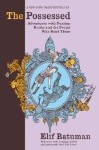
The Possessed – Elif Batuman

Five words from the blurb: funny, thoughtful, Russian, writers, travels

I love the idea of Russian literature, but I have to admit that it scares me and so I have yet to try any (apart from The Master And Margarita, which scared me even more!) This book appealed to me because it allows the reader to glimpse into the world of Russian literature in an entertaining and less imposing way.

The Possessed is part memoir, part travelogue and follows Batuman through her Russian studies at Stanford University, to her adventures travelling through California, Turkey, Uzbekistan, Hungary and Russia. The book is littered with interesting little snippets of information about Russian authors and their texts.

On the third day of the Tolstoy conference, a professor from Yale read a paper on tennis. In Anna Karenina, he began, Tolstoy represents tennis in a very negative light. Anna and Vronsky swat futilely at the tiny ball, poised on the edge of a vast spiritual and moral abyss. When he wrote that scene, Tolstoy himself had never played tennis, which he only knew as an English fad. At the age of sixty-eight, Tolstoy was given a tennis racket and taught the rules of the game. He became an instant tennis addict.

But unfortunately I was less keen on the travelogue aspects of the book and frequently found my mind drifting from the page. There were too many unnecessary details and I felt that these detracted from the more insightful sections about Russian literature.

A few days after visiting Gur-i-Amir, we went to the old Soviet department store in the Russian part of the city to buy Eric some pants.

I’m pleased that I read The Possessed because it has inspired me to pick up some of the Russian classics, but I wish that the book had concentrated on the books rather than the travelling. check this out for more about travelling.

.

Categories
Orange Prize Other

Who will win the 2011 Orange Prize?

The winner of the 2011 Orange prize will be announced next Wednesday, but who will pick up the trophy?

I think that the shortlist is very strong and, unlike previous years, there is no obvious front runner.

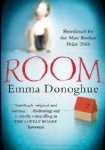
My personal favourite is Room, but the long list selection proved that the judges favor more literary novels and so I’d be surprised if it won.

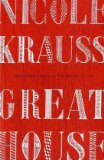
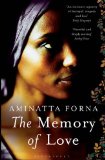
I think the real discussion in the judge’s secret chamber will come down to whether The Memory of Love or Great House should win. The Memory of Love has recently won The Commonwealth Writers’ Prize and so many people are tipping it to win the Orange, but whilst I admired the writing I found the plot so slow that it was almost non-existent. Great House has a complexity not present in The Memory of Love and this will mean that the re-reading the judges must do will reveal many extra qualities missed on a first reading. This won’t be so true for The Memory of Love. It is a tough call and I’m sure the judges will spend a long time agonising over the decision, but I think in the end they will decide that Great House should win the Orange prize.

The bookies don’t agree with me. William Hill currently have Room as the favourite:

Book

Odds of Winning Orange Prize

Room 2/1
The Memory of Love 3/1
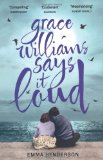
Grace Williams Says it Loud 5/1
Great House 5/1
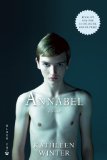
Annabel 6/1
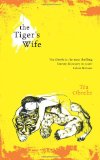
The Tiger’s Wife 6/1

This is probably due the fact that the other titles aren’t as well known as Room, rather than an indication of the relative quality of the books.

Who do you think will win the Orange Prize on 8th June?

Categories
Other

May Summary and Plans for June

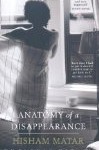
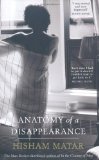
May was a slow month reading-wise. This was mainly caused by reading several average books in a row. I didn’t want to inundate you with negative reviews so will spread them out over the coming weeks. The good news is that my run of unenjoyable books seems to have come to an end – first with the wonderful  Anatomy of a Disappearance and then with Night Waking (review coming soon). I’ll keep my fingers crossed that my June reading will be more to my liking.

Book of the Month

Anatomy of a Disappearance

Books Reviewed in May

Anatomy of a Disappearance – Hisham Matar 

The Illumination – Kevin Brockmeier 

Piercing – Ryu Murakami 

Empire of the Sun – JG Ballard 

Monster Love by Carol Topolski 

The Periodic Table – Primo Levi 

Pigeon English – Stephen Kelman 

The Whisperer – Donato Carrisi 

King of the Badgers – Philip Hensher 

Plans for June

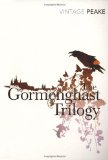
Gormenghast

The Gormenghast Trilogy

My Gormenghast read-along starts at the beginning of June and I’m really looking forward to discussing it all with you. I have to admit that I couldn’t wait and read the first 50 pages over the weekend. The first few pages were hard going, but after about 5 pages I was hooked. The imagery is fantastic and it is quickly becoming one of the most atmospheric books I’ve ever read. It isn’t too late to join in. I’m sure your library has a copy – go and grab it and read along with us!

I’m hoping to get several guest posts from Gormenghast fans who have a deeper insight into the book than me – it should be really interesting.

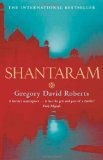
Shantaram

Shantaram

I don’t do a read-along for months and then suddenly two come along at once! I have been wanting to read Shantaram for ages and so couldn’t resist when I saw Aths from Reading on a Rainy Day  and Helen from Helen’s Book Blog were planning to read it.

These two chunksters will occupy the majority of my reading time for the next few months, so I won’t be able to read as many other books as usual. The good news is that I have a backlog of six books that I haven’t reviewed yet so hopefully I’ll be able to continue reviewing books at the same pace as usual.

In between the read-alongs I also hope to read some of these books:

Girl With a Pearl Earring by Tracy Chevalier
Family Matters by Rohinton Mistry
When the Killing’s Done by TC Boyle
The Forgotten Waltz by Anne Enright

Have a wonderful June!

Categories
2011

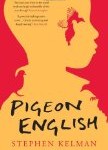
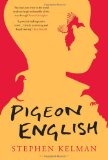
Pigeon English – Stephen Kelman

Pigeon English

Pigeon English was selected as one of the Waterstone’s 11 and I loved the sample section that I tried.

The book is set in London where 11-year-old Harri has recently arrived from Ghana with his mother and older sister. A boy is stabbed to death on their estate, but police enquiries meet a wall of silence so Harri decides to start his own investigation into the murder.

Pigeon English has been compared to Room, but the only similarity is that they both have a child narrator. The difference between the innocence of a five-year-old and the insecurities of a pre-teen means that the two narrators are worlds apart.

Harri was an engaing character and I loved some of his observations about our society, but unfortunately the writing style began to grate on me as I progressed further into the book. The play-like layout of the text ruined the flow of the narrative for me, giving it a jumpy feel.

I also found that the mind of an eleven-year-old boy held little interest for me. I’m sure that it is all very realistic, but the immature banter made me cringe.

Connor Green: ‘Have you got happiness?’
Me: ‘Yes.’
Connor Green: ‘But are you really sure?’
Me: ‘I think so.’ He kept asking me if I had happiness. He wouldn’t stop. In the end it just vexed me. Then I wasn’t sure. Connor Green was laughing, I didn’t even know why. Then Manik told me it was a trick.
Manik: ‘He’s not asking if you’ve got happiness, he’s asking if you’ve got a penis. He says it to everyone. It’s just a trick.’
It only sounds like happiness but really it means a penis.
Ha-penis.
Connor Green: ‘Got ya! Hook, line and sinker!’
Connor Green is always making tricks. He’s just a confusionist. That’s the first thing you learn about him. At least I didn’t lose. I do have a penis. The trick doesn’t work if it’s true.

I’m afraid that the book went even further downhill with the introduction of the talking pigeon. I’m sure that fans of magical realism will love this touch, but I’m afraid that it didn’t work for me.

Pigeon English is a realistic portrayal of a confused young boy learning to live in a new country. It’s an original take on the usual tales of immigration and I loved some of the comic elements, but I’m afraid that the negatives outweighed the positives on this occasion.

.

The thoughts of other bloggers:

…a decent, contemporary and original report on innocence and its loss. Asylum

…as the story advanced it became more confused, and it became difficult to pick out the important things from the more mundane. Fleur Fisher in her World

I just found it unrealistic for him to be so repetitive, simple-minded and was often frustrated by the lack of direction in the story. Monniblog

Categories
2011

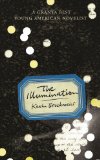
The Illumination – Kevin Brockmeier

The Illumination

Five words from the blurb: pain, manifesting, light, human, phenomenon

The Illumination has a fantastically original premise: What would happen if we could see pain? Would our interactions with other people change if we could see exactly how painful our colleague’s toothache was, spot tumors inside strangers on the street, or see the continual suffering of the elderly?

The book is set in the present day, but the world has been changed by the arrival of a new phenomenon in which all pain and suffering, both physical and emotional, manifests itself as light.

A moment later, when she saw the light shining out of her incision, she thought she was hallucinating. It was steady and uniform, a silvery-white disk that showed even through her thumbnail, as bright and finely edged as the light in a Hopper painting. Through the haze of drugs, it seemed to her that the light was not falling over her wound or even infusing it from the inside but radiating through it from another world.

This simple change alters many aspects of life and I found myself thinking about the way our society tends to hide its suffering, particularly the emotional kind. It made me wish that we could see the pain of others, and be able to offer support and help to those who need it.

My only problem with this book was that it didn’t contain a compelling plot. It was more like a series of short stories, moving from one character the next in a random, unpredictable fashion. It was impossible to know whether the character you’d just been introduced to would appear again, or would go on to play a more dominant role in the next chapter. Questions were left unanswered and wonderful plot snippets were left dangling without any conclusion. This fractured style frustrated me on one level, but on another it allowed me to think clearly about attitudes to pain without being distracted by character and plot.

The writing quality was excellent and I’m sure I’ll remember scenes from this book for a long time to come. It is a wonderfully unique novel. Recommended.

.

The thoughts of other bloggers:

… a beautifully rendered and deeply touching meditation on pain. The Book Lady’s Blog

…it was uneven and there were times when I just wanted to put the book down and walk away. Amy’s Book Obsession

 It is one of those novels with a simple concept like Saramago’s Blindness where a universal change to human experience suddenly appears and alters perception. Just William’s Luck