Categories
2009 Chunkster Orange Prize

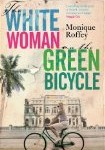
The White Woman on the Green Bicycle – Monique Roffey

 Short listed for the Orange Prize 2010

The White Woman on the Green Bicycle is set on the island of Trinidad. George Harwood is given a three-year contract to work on the island and so moves from England, with his wife Sabine, to take up the post. George quickly falls in love with his new surroundings, but Sabine is home sick and longs to return to England. This causes friction within their marriage, but Sabine comforts herself with a fixation on Trinidad’s new leader, Eric Williams. She explains all her problems in detailed letters to him, but can never bring herself to post them. One day George discovers these letters and realises how many of his wife’s problems had been kept hidden from him. He decides that he needs to prove how much he loves her, but things go very wrong…

There was some fantastic imagery in the book. This section is taken from the very beginning, but it sets the scene perfectly:

Every afternoon, around four, the iguana fell out of the coconut tree. Bdup! While sunbathing, it had fallen asleep, relaxing its grip, dropping from a considerable height. It always landed like a cat, on all fours, ready to fight. The dogs always went berserk, gnashing and chasing after the creature as it fled, scuttling across the grass, a streak of lime green disappearing off into the undergrowth.

There was quite a lot of dialect and this was occasionally difficult to follow, but I didn’t mind as it added to the atmosphere.

My main problem was that the book had no forward momentum and so I often found myself with no desire to read on. With a book of this length (my copy has 437 pages) this isn’t an ideal situation. If I put the effort into reading it then I was often rewarded, but there were times when I considered giving up as reading was a chore.

With hindsight it was a fantastic story, but the pace was too slow for me. I would have preferred it to have been much shorter, but I can see why it was short listed for the Orange prize.

Recommended to those who enjoy slow, character driven novels.

Not many people have read this one, but opinions seem mixed:

I was bowled over by this book.  Other Stories

 …didn’t have the star quality in terms of either plot or writing that my favourites from the Orange longlist have had. The B Files

I think this one will be nestling into my list of favourite reads for 2010. Buried in Print
Categories
2009 Fantasy Other Prizes Science Fiction

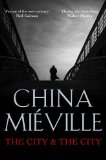
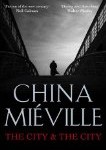
The City & The City – China Miéville


Winner of the 2010 Arthur C. Clarke Award, Short listed for 2010 Hugo Award

Last year I read Perdido Street Station and although I wasn’t a massive fan of his epic science fiction novel I was impressed enough to give Miéville a second try. I am really pleased that I did – The City & The City is one of the most original books I have ever read!

The City & The City begins like a typical police procedural crime novel, with the discovery of a dead body on waste ground. The book initially appears to be set in an Eastern European country, but we slowly realise that all is not as it first seems – it is set in a place where two cities co-exist. People in one city have to deliberately “unsee” the buildings and people from the other. There are special places where it is possible to step from one city into the other, but this is illegal and “breaching” these boundaries causes severe punishment. It can be hard to get your head around these metaphysical rules, but I loved trying!

It was true. A political irony. Those most dedicated to the perforation of the boundary between Beszel and Ul Qoma had to observe it most carefully. If I or one of my friends were to have a moments failure of unseeing (and who did not do that? who failed to fail to see, sometimes?), so long as it was not flaunted or indulged in, we should not be in danger. If I were to glance a second or two on some attractive passerby in Ul Qoma, if I were to silently enjoy the skyline of the two cities together, be irritated by the noise of an Ul Qoman train, I would not be taken. 

The descriptions of the cities were so vivid that I could picture them, despite the complexity of the physical world. It tested my spatial awareness, but it added a whole new dimension to the typical crime novel.

The book worked perfectly – it was fast paced, intelligent and gripping. I think it might be a bit bizarre for some, but if you are after something a bit different I encourage you to give it a try.

Highly recommended.

Everyone seems to love this book!

…this is one of the most powerful SFF books I have ever read. Floor to Ceiling Books

One thing that really impressed me about Miéville’s writing was the amount of emotional empathy he creates….  The Boston Bibliophile

I was dazzled by Miéville’s skill in creating such a realistic world… Ms. Bookish

Are you tempted to try something out of the ordinary?

Have you read anything written by China Miéville?

Categories
2009 Chick Lit Orange Prize

The Very Thought of You – Rosie Alison


Short listed for Orange Prize 2010, Short listed for Amazon’s Rising Stars award 2009, Long listed for the RNA Romantic novel of the year 2010, Long listed for the Le Prince Maurice Prize for Literary Love Stories 2010

The Very Thought of You is set during WWII and follows eight-year-old Anna as she is evacuated to a large country house in Yorkshire. The house belongs to a childless couple, Thomas and Elizabeth Ashton, who decided to covert their home into a school in the hope that children will bring some happiness back into their lives. Unfortunately the children only seem to exacerbate their problems and their marriage falls apart.

The theme of the book appears to be loving someone that you can’t have. All the characters seem to be in love with someone that they cannot be with; whether that is due to being separated by war or yearning to be with someone already in a relationship.

The Very Thought of You was very readable and I finished it quite quickly, but it left no lasting impression on me. There were too many characters and so each one failed to develop its own identity, all seeming to have the same voice.

The book also lacked atmosphere – I couldn’t picture the places mentioned or feel the emotions each character experienced.

Overall I’d describe it as a light romance book, similar in style to The Morning Gift by Eva Ibbotson.  I have no idea why it was short listed for the Orange prize.

Opinions seem to be divided on this one:

…it is intelligently written with an eye for detail… The Truth About Lies

It is the narratorial voice that kills it stone-dead for me. Eve’s Alexandria

This is an impressive book, particularly as a debut novel. Pursewarden

Categories
2009 Crime Thriller

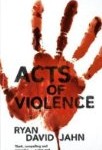
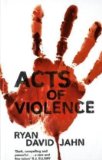
Acts of Violence – Ryan David Jahn

I am always on the look out for a good new crime book so when @crimeficreader described Acts of Violence as the best debut of 2009, during a twitter conversation, I decided to read a copy. It’s a Crime! is one of my favourite crime fiction blogs, so if you’re after some more recommendations then head over there!

Acts of Violence is based on the 1964 murder of Kitty Genovese; a crime which over 30 people witnessed, but not one acted to save her life. This crime prompted an investigation into the social psychological phenomenon which became known as the bystander effect and this book takes a look at the reasons behind their inaction – why did so many people ignore her cries for help?

The book begins by focusing on Katrina (the fictional character based on Kitty). We follow her journey home and witness the attack:

It –  he – seems to be pulled toward her, like a yo-yo on a string, seems to glide toward her rather than walk. She doesn’t notice the sort of lumbering broken-machine flump-flump-flump a man walking normally has when he shuffles from one place to another. He just floats toward her menacingly.

The book then flipped between various characters living in the surrounding appartments. We hear of their problems (ranging from a woman who thinks she has just run over a baby, to a suicidal Vietnam draftee and a man looking after his dying mother), but I struggled to believe that so many people in such a small area were all facing critical points in their lives at exactly the same moment. The number of violent acts taking place also seemed unrealistic to me.

The large number of characters meant that we could only glimpse into their lives, never having the chance to really get to know them. It was an interesting explanation of the bystander effect, but I would have found it more realistic if the characters had been normal people who were simply too tired or confused to phone the police.

The book was fast paced and gripping throughout, but the numerous story threads meant that the book felt disjointed to me. It was a glimpse into a few hours of their lives, but I was left wanting to know more – how they felt once they’d heard of the crime and whether they really knew what was going on.

I’d recommend this to fans of crime fiction who don’t mind books without a mystery to solve.

The thoughts of other bloggers

…the most outstanding novel I have read this year. It’s a Crime!

…doesn’t leave enough room to truly explore all the issues it raises. Follow The Thread

This is an excellent, thought provoking novel… Hack Writers

Categories
2008 Non Fiction

The Weight of a Mustard Seed – Wendell Steavenson

The Weight of a Mustard Seed attempts to discover why ordinary people were driven to commit evil acts under the orders of Saddam Hussein. The author,  Wendell Steavenson, is a journalist who travelled to Iraq many times between 2002 and 2005 interviewing the friends and family of General Kamel Sachet; a decorated hero of the Iran-Iraq war and a man favoured by Saddam Hussein. She tried to discover what motivated Sachet and his colleagues and how his actions affected his family.  

The book is a fascinating insight into the lives of both ordinary Iraqis and members of the military. All the people were brought to life and I found myself having great sympathy for everyone in the book, despite the horrendous acts many of them committed. Wendell’s ability to make me see things from their perspective was impressive.

‘You chose to be a part of it,’ I told him. ‘You could have resigned, you could have gone to live in the country like your cousin.’
‘One of my American debriefers asked me the same question. He asked me why I continued to fight against the Americans. I told him it had nothing to do with Saddam Hussein. It’s hard for you to understand, but it was a matter of military honour, being part of a country and within that comes your loyalty to your high command.

The Weight of a Mustard Seed was very readable and although there were some descriptions of violence I never felt that it went over the top. The modern history of Iraq was well described, although as the book wasn’t written in chronological order I got a bit confused occasionally.

The book contained many examples of psychological experiments which explained why people behave as they do under the pressure of war. Unfortunately I was already aware of all of these and so these sections were irrelevant for me. If you are interested in finding out about them then some of the experiments are summarised in this post: The Ten Most Revealing Psych Experiments

I highly recommend this book as an introduction to the psychology of war, but if you have read a lot of books on the subject you may find it too basic.

Everyone seemed to enjoy this one:

…one of the most interesting, engaging, horrifying and moving non fiction books that I have ever read. Savidge Reads

…an accessible book for those wanting to read a factual book about Iraq. Novel Insights

This is a powerful, well-written and moving account… Reading Matters


Categories
2010 Crime

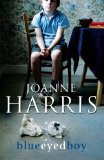
Blueeyedboy – Joanne Harris

I have been wanting to read a Joanne Harris book for a long time – I own almost all of them! For some inexplicable reason they never seem to make it to the top of the TBR pile. I then spotted that Blueeyedboy was going to be the first bookclub choice on The Wright Stuff (a morning UK magazine show) and so made the effort to read it in time for programme on Friday 14th May.

Blueeyedboy is written in the form of blog entries with each chapter ending in the comments the post received. The posts are written on a site called badboysrock which encourages people with murderous fantasies to engage with one another.

Initially I loved the descriptions of the little boy growing up; the insecurities he felt and the pressure of being the only one of his siblings to still be alive. Unfortunately, about 150 pages in, everything began to fall about. The book began to concentrate on his murderous fantasies and the line between what he’d made up and what had happened became increasingly blurred. I’m sure this was deliberate, but it confused me.

I think the message of the book was that we can’t trust what we read online, that we can all pretend to be whoever we want to be; but as a reader I’d have liked to know which bits were supposed to be true. The further into the book I got the more muddled everything became and the plot just seemed to disappear into increasingly dark areas. This confusion made it almost impossible for me to engage with the characters, most of whom I already disliked.

The comments at the end of each chapter ruined the flow of the book for me and I didn’t find them very realistic. I also found the big reveal at the end to be a disappointment.

It was an interesting premise, but I’m afraid it didn’t work for me.

Opinions seem to be very mixed….

I loved the whole unsettling process! Lovely Treez Reads

….it felt too chaotic… The Book Whisperer

…difficult to really care about what happens to any of the characters in the book Euro Crime

Joanne Harris is clearly a very skilled writer and I have heard wonderful things about her other books, so I plan to try another one soon.

Which Joanne Harris book should I try next?

I think the mixed opinions make this a fantastic book club choice. I am really looking forward to seeing the discussion on The Wright Stuff tomorrow morning.

Updated 14th May

I’ve just watched The Wright Stuff and was very impressed by the discussion of this book. It was quite sad that they didn’t manage to find someone who loved it as that would have added to the debate, but I admired their honesty, their professionalism and their ability to focus on the book. I thought it was a much better discussion than the TV Book Club and look forward to following the rest of the series.

Did you watch the show?