Categories
2012

Half-Sick of Shadows by David Logan

Half-Sick Of Shadows

Five words from the blurb: twins, cemetery, tragedy, disturbing, childhood

I hadn’t heard of this book until an unsolicited review copy popped through my letter box, but the fact it had won the inaugural Terry Pratchett Prize grabbed my attention. I’m pleased that I gave it a try as it was an entertaining read.

Half-Sick of Shadows is set in a remote house which has a cemetery as a back garden. Edward, the central character, lives here with his family, but nothing is quite as it seems. It quickly becomes obvious that things don’t always occur as they do in our world and certain physical laws can be broken. Having completed the book I’m still not entirely sure what could happen in this strange, but familiar world, but I enjoyed being taken along for the ride.

The book begins with the death of the children’s grandmother. The death changes the balance of things in the house and nothing is the same as it was before.

When we lost interest in bouncing rubber balls off the wall, and in reading books that didn’t tell stories, we played hide-and-seek in the cemetery – when the rain stayed away – and built very small snowmen in the cemetery when too little snow fell to build tall ones.
‘I think Franny Hazel has it in for us,’ whispered Sophia as we lay in our beds, the cemetery through the window in the Dark and the curtains drawn open. ‘I dreamed she burned us down.’

The first part of the book reminded me of The Wasp Factory. The books share a creepy atmosphere that results from the isolation of the characters and their bizarre, cruel actions.

When Edward starts school the atmosphere changed to mimic that of Never Let Me Go. Almost everything was normal, but there was that underlying sense that things weren’t quite right. It was impossible to put your finger on exactly what was going on, but I loved the strange sense of foreboding that it created.

As the book progressed the reader discovers more about the world these characters live in and the pace of the plot increases until it reaches a dramatic conclusion.

This is quite a subtle book. The joy is in trying to work out what is going on in this dark, creepy world. Many aspects of the plot could be perceived as disturbing (murder, incest, rape) but the author somehow manages to inject a light humor that prevents anything from becoming too traumatic.

My only complaint is that the book lacked the thought-provoking aspects of the other two books I mentioned. Half-Sick of Shadows is purely for entertainment and although there is nothing wrong with that it means that it doesn’t stand out in the same way.

Recommended to anyone who enjoyed The Wasp Factory.

.


Categories
2012 Chunkster Recommended books

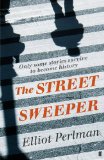
The Street Sweeper by Elliot Perlman

The Street Sweeper

Five words from the blurb: history, Holocaust, relationship, civil-rights, New York

The Street Sweeper is my favourite book of the year so far. It contains everything I love to see in a book: fantastic characters, new information, thought-provoking questions, lots of emotion, and a satisfying plot.

The book begins with Lamont Williams leaving prison after serving a sentence for a crime he didn’t commit. He finds work as a hospital cleaner in New York and befriends an old man on the cancer ward. Lamont discovers this man is a Holocaust survivor and through numerous conversations he learns about what he went through all those years ago.

Inter-weaved with this story is that of Adam Zignelli, a history professor, who is looking for a new field of research. He decides to find out whether or not black Americans soldiers were present during the liberation of Dachau. This leads to some interesting comparisons between the black Americans seeking racial equality and the Jews persecuted in Europe. 

The Street Sweeper covers many different subjects, but the overriding theme is that of history and how easily it can be forgotten.

‘History can provide comfort in difficult or even turbulent and traumatic times. It shows us what our species has been through before and that we survived it. It can help to know we’ve made it through more than one dark age. And history is vitally important because perhaps as much as, if not more than biology, the past owns us and however much we think we can, we cannot escape it. If you only knew how close you are to people who seem so far from you…it would astonish you.’

It also makes important points about how we remember the biggest events, but smaller ones are no less important, especially to those personally involved.

This book isn’t perfect. I occasionally felt that these messages lacked subtlety and key points were repeated too often, but I’m willing to forgive these as the rest of the book was so impressive.

I should warn readers that some of the Holocaust scenes were very disturbing, but I think it is important to fully understand what happened. Despite having read a number of books on the Holocaust, The Street Sweeper, looks at things from a slightly different angle (that of the Sonderkommando) and I found that most of the information was new to me.

At 550 pages long this book isn’t a quick read, but I never became bored – I was captivated from beginning to end. I was concerned about how all the different threads of the story would tie up at the end, but I shouldn’t have worried – the ending was perfect.

This book flies straight onto my list of all-time favourites. The world would be a better place if everyone read this book and understood its important message.

Highly recommended.

.

The thoughts of other bloggers:

I have learnt so much from this novel, and I already know I’ll never forget it. Book Monkey

This is a book which requires, almost demands, rereading, both for an understanding of its dense subject matter and to fully understand the intricate plotting of a novel which is almost Victorian in scope.  Tony’s Reading List

Elliot Perlman’s latest novel had me so absorbed, I just didn’t want to stop reading. ANZ Litlovers Litblog

Categories
2012 Other

Three Mini Reviews

Running the Rift

Running the Rift by Naomi Benaron

This book first came to my attention when it won the 2010 Bellweather Prize for addressing issues of social injustice. The book is set in Rwanda and follows the lives of one family as tension in the country builds in the run up to the genocide of 1994.

The book was very easy to read. The story flowed quickly, but I failed to engage with it. I can’t quite put my finger on what was wrong, but several factors combined to produce an unconvincing read.

  • The book was packed with African details, but they didn’t gel to form an African atmosphere.
  • The characters acted in a Western manner and I became increasingly annoyed by the light treatment of the violence.
  • I felt as though everything had been toned down for a younger audience instead of revealing the true horrors of the genocide.

I abandoned the book after 100 pages, but skim read to the end. This book is a good way to introduce Rwandan history to a younger audience, but it was too gentle for me.

DNF

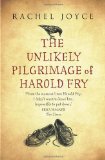
The Unlikely Pilgrimage Of Harold Fry

The Unlikely Pilgrimage of Harold Fry by Rachel Joyce

This book has been receiving rave reviews and has recently been shortlisted for the Desmond Elliott prize, but I’m afraid it didn’t live up to the hype for me. It is a simple story about one man who decides to walk across England to visit an old friend who is dying from cancer.

It was engaging and I zipped through it in a couple of sittings, but I found it overly sentimental. I’m not a fan of charming books and this oozed charm. I know that lots of people will love the readability and the many emotional topics raised along the way, but I found it all a bit contrived.

Recommended to anyone looking for a light, charming read.

 .

Love Virtually 

Translated from the German by Katharina Bielenberg and Jamie Bulloch

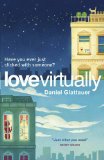
Love Virtually by Daniel Glattauer

I love the German sense of humor and picked this one up in the hope of some light relief from the darker books I’ve been reading recently. It did provide me with a few laughs, but overall this was just an averagely entertaining read.

The entire book is written as a series of emails between two people who have never met, but form a relationship online. It was fast paced and engaged me throughout, but lacked that magical spark I was looking for.

If you enjoy modern romance novels then this will provide you with a few enjoyable hours, but I recommend you try Bad Karma first. 

.

Have you read any of these books?

Did you enjoy them more than I did?

Categories
1990s Recommended books

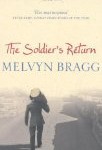
The Soldier’s Return by Melvyn Bragg

The Soldier's Return

Five words from the blurb: returns, war, Burma, Cumbria, changed

Last month I read A Division of the Light which had endorsements on the cover from both Kazuo Ishiguro and Melvyn Bragg. I’m already a big fan of Ishiguro, but despite my love for Cumbrian books I hadn’t tried any Bragg before. David, a regular commenter on this blog, recommended The Soldier’s Return trilogy, so I reserved a copy from my local library. I’m so pleased I did as Melvyn Bragg has just gone onto my “must read everything they’ve ever written” list.

The Soldier’s Return begins in 1946 with Sam returning to his hometown after witnessing horrific events in the war in Burma. Wigton, Cumbria is exactly as he left it four years earlier, but his six-year-old son doesn’t know him and his wife has developed an independence that he finds difficult to deal with. This absorbing book shows how Sam adjusts back into civilian life and how a family copes when no one is the same as they once were.

This book is amazingly well written. The intense emotions were beautifully described and I could sympathise with every character in the book.

Sam hesitated, trying to settle in himself the disturbing confusions of his return. The dreams of home were tinged with dread. The place below could suck him in, the old world close over him. Nothing had changed in the town that he could see. Yet his whole world had changed.

The descriptions of Cumbria were wonderfully accurate. I don’t know Wigton very well, but Carlisle was frequently mentioned and many of the landmarks were familiar to me. This historic nostalgia will be an added bonus for anyone familiar with these northern towns, but aren’t essential for loving this book.

I can’t fault The Soldier’s Return at all. My only reason for not awarding 5 stars is because the plot was a bit quiet for me. It is a perfect character study and I don’t think I’ve read a book where each person is so fully developed that I can predict the conversations they’d have and the likely outcomes. I don’t understand why this book isn’t that well known. It deserves to be a modern classic, studied in schools and read by everyone.

I’ve read lots of books about the horrors of war, but this quiet, reflective book brings home a message that is just as important. Survivors have to live with their emotional scars for the rest of their lives and once you’ve seen the terrible way in which humans can treat each other nothing is the same again.

Highly recommended.

.

Have you read any of Melvyn Bragg’s books?

Categories
2010 Graphic Novel

The Master and Margarita: The Graphic Novel

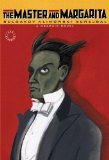
The Master and Margarita: A Graphic Novel (Eye Classics)

A few years ago I read The Master and Margarita, but although I enjoyed it, I felt as though a lot went over my head. When I saw the graphic novel version I decided to read it in the hope it would shed light on some of the more bizarre aspects of the book. I think it did a great job of summarising the plot, but as it can be read in less than an hour it didn’t delve into any of the more complex areas of the book.

The graphic novel is made up of both colour and black and white drawings. The style was simple, but effective:


The pictures also managed to convey Bulgakov’s satirical humor and I found myself smiling at more scenes from the graphic novel than from the original.

I think it works well as an introduction to the book. Having a brief over-view of the story will help readers to understand more of Bulgakov’s complex book – or give those who are too intimidated to try a brief glimpse into this weird world. But anyone really wanting to gain a deep insight into The Master and Margarita probably needs to study it for years.

.

Categories
2012

The Lifeboat by Charlotte Rogan

The Lifeboat

Five words from the blurb: castaways, patience, survival, dilemmas, humanity

In 1914 an ocean liner sinks and it quickly becomes obvious that there aren’t enough lifeboats for everyone. The passengers must battle for survival, pushing all thoughts of others aside in order to have a chance of living. Those lucky enough to gain a place on the lifeboat must then wait patiently to be rescued, enduring numerous problems as the days turn into weeks.

The first few chapters of this book were fantastic. The adrenaline fueled escape from the sinking ship made compelling reading and I loved the vivid descriptions of the open ocean. Unfortunately everything went downhill after that and as the plot became quieter I began to lose interest. It could have been a emotionally tense situation in which everyone worried about the future, but instead no-one really seemed to care if they lived or died. Most of the people on the lifeboat had lost friends and family and yet none of them seemed overly grief-stricken. It was all weirdly void of emotion and apart from the occasional prayer there was an overriding feeling of indifference to every event that took place.

Soon after I had returned to my seat, Mr Hardie opened one of the tins and introduced us to hardtack, which were rock-hard wafers approximately two inches square that could not be swallowed unless first softened with saliva or water. I held the biscuit between my lips until pieces of it began to dissolve and looked off into the not-quite-dark sky at the myriad stars that pricked the heavens, at the endlessness of the atmosphere that was the only thing vaster than the sea, and sent a prayer to whatever force of nature had arranged events thus far and asked it to preserve my Henry.

With the exception of the self-appointed lifeboat captain the rest of the characters all seemed to blur into one another. I can see that from a survival point of view it was probably helpful for the narrator, Grace, to distance herself from the competition, but it would have helped if a few of them had been brought to life. I’d heard lots about the moral dilemmas present in this book, but I’m afraid I was a little disappointed by these. Everything was a little too black/white and I didn’t have to challenge any of my preconceptions – each decision seemed obvious to me, despite the harsh outcome.

The writing was simple and flowed well, creating a light read that I whizzed through in a couple of sittings. It was compelling enough for me to keep reading and I wanted to know what happened to them, but when I reached the end I was disappointed. It was all a bit of an anti-climax.

Overall this was a fast, engaging read, but I was left craving a real survival story. This book has endorsements from both Hilary Mantel and Emma Donoghue, but it is dividing opinion. I think this makes it the perfect book club read – whether you love it or not you’ll find a lot to talk about.

Recommended to anyone who a enjoys lighter read, without dark emotions.

.

The thoughts of other bloggers:

It’s one of the best books I’ve read so far this year! Rea’s Reading and Reviews

One of my biggest reading disappointments of the year. Clear Eyes, Full Shelves

This is a fascinating study in human behavior under the most challenging circumstances…  Rhapsody in Books