Categories
Commonwealth Writer's Prize Other

The 2012 Commonwealth Writers’ Prize Shortlist

Yesterday the 2012 Commonwealth Writers’ Prize shortlist was announced.

The prize is

Awarded for best first book and is open to writers from the Commonwealth who have had their first novel (full length work of fiction) published between 1 January and 31 December 2011.

The shortlisted books are:

Asia

Rebirth by Jahnavi Barua (India)

The Wandering Falcon by Jamil Ahmad (Pakistan)

The Sly Company of People Who Care by Rahul Bhattacharya (India)

The Book of Answers by C.Y. Gopinath (India) (eBook only)

Chinaman by Shehan Karunatilaka (Sri Lanka)

Africa

Patchwork by Ellen Banda-Aaku (Zambia)

Jubilee by Shelley Harris (South Africa)

The Dubious Salvation Of Jack V. by Jacques Strauss (South Africa)

Canada and Europe

A Cupboard Full of Coats by Yvvette Edwards (UK)

The Town that Drowned by Riel Nason (Canada)

Dancing Lessons by Olive Senior (Canada)

The Sentimentalists by Johanna Skibsrud (Canada)

The Dancing and the Death on Lemon Street by Denis Hirson (UK)

Pao by Kerry Young (UK)

The Caribbean

Sweetheart by Alecia McKenzie  (Jamaica)

The Pacific

The Ottoman Motel by Christopher Currie (Australia)

The Vanishing Act by Mette Jakobsen (Australia)

Purple Threads by Jeanine Leane (Australia)

Me and Mr Booker by Cory Taylor (Australia)

The New Commonwealth Writers’ Prize

The Commonwealth Writers’ Prize is my favourite book award – I seem to love more of their winners than any other book prize. This year the format has changed slightly in that the prize is now only for debut authors and shortlists are not given for each region (I divided the above shortlist into regions out of curiosity)

The only problem with the award is that most of the books are not available globally. Only 11 are available in the UK (the ones in the above list with links to Amazon).

I’ve read 4 of the shortlist already:

The Wandering Falcon by Jamil Ahmad

Important, powerful book about the loss of a traditional way of life.

The Sentimentalists by Johanna Skibsrud

Beautifully written, but bizarre look at memory and loss.

The Dubious Salvation Of Jack V. by Jacques Strauss

Entertaining story from POV of an 11-year-old boy, unfortunately ending isn’t as good as first half.

A Cupboard Full of Coats by Yvvette Edwards

Moving story about a difficult relationship between a mother and her son.

Two of the other books available to the UK are about cricket (The Sly Company of People Who Care by Rahul Bhattacharya and Chinaman by Shehan Karunatilaka) and so as I have an aversion to the sport I’m reluctant to try them. That only leaves a few, so I should be able to read them before the winner is announced on 8th June.

Have you read any of the shortlist?

Which book would you like to win?


Categories
2012

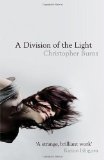
A Division of the Light by Christopher Burns

A Division of the Light

Five words from the blurb: woman, robbed, witnessed, camera, changed

I am heavily influenced by endorsements from certain authors and I’d probably have avoided this book if it hadn’t received a rare endorsement from Kazuo Ishiguro. A story about an obsessive photographer didn’t appeal to me, but having read it I have to agree with Ishiguro – A Division of the Light is

A strange, brilliant work

The book begins with a woman being mugged on a quiet street. The event is witnessed by Gregory, a successful photographer. Instinctively Gregory takes several photographs of the crime and becomes obsessed by the photogenic nature of this ordinary woman. He persuades her to meet him again and over several months the pair form an awkward, but realistic relationship.

The story is quite simple, but I was captivated by the vivid imagery. 

It is not the crime that excites the photographer’s attention, but a chance configuration of shape and texture – the smooth opacity of the lenses, the knotty tension in the victim’s hands, the summer clothing rubbed along the ground. These, and the dishevelled hair that screens a face he cannot quite see and that could so easily have smashed into the pavement.

Describing individual photographs is a difficult task for a novelist, but Burns made the images come to life. I could picture the beauty of Gregory’s work and grew to admire his obsessive search for the perfect image.

The author lives in West Cumbria and mentions places like Sampson’s Bratfull. I used to live in the same area and so appreciated the descriptions of the rugged countryside. But although the author is English this book doesn’t feel as though it originates from this country, it has a universal feel that is hard to explain. If pushed I’d say this book has a Japanese outlook mixed with cosmopolitan European influences. If that sounds strange, that is because it is! I haven’t read anything quite like it. This is one of those special books that is gripping and easy to read, yet stands up to deep scrutiny.

My only criticism is that all the passion revolved around the photography – I longed for the people to come alive in the same way. I was interested in what happened to the characters, but never really cared about them. In the end this was a minor problem and I thoroughly enjoyed reading this book. 

The quiet, simple plot won’t be for everyone, but if you appreciate vivid writing you’ll find a lot to admire. If I was a Booker judge, I’d put this on the longlist.

.

Categories
1960s Classics Crime Non Fiction

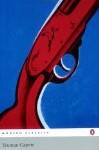
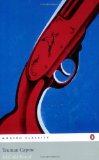
In Cold Blood by Truman Capote

In Cold Blood : A True Account of a Multiple Murder and Its Consequences (Penguin Modern Classics)

Five words from the blurb: American, family, murdered, crime, killers

In Cold Blood is a modern classic. I’d heard so many positive comments about this true crime book that I was convinced I’d fall in love with it. Unfortunately, although I can see why it played an important role in the development of the genre, I’m afraid it didn’t bowl me over.

In 1959 an American family were brutally murdered in their home. In Cold Blood describes what happened by explaining the movements of both the victims and their killers.

I’d been warned about the powerful nature of this book and so ensured that I only read it during daylight hours, but I was surprised by how little emotional impact this book had on me. The actual murder was described only briefly and never through the eyes of the victims. I was relieved that I didn’t have to witness their fear, but a part of me wished that there were more details of the murder from the perpetrator’s point of view.  It might have helped me to understand how it is possible to murder an entire family and whether they had doubts and fears about being caught. Although the motivation for the murder was eventually revealed I wished that we’d learnt more about what caused them to begin their criminal career.

The book was very well written and engaging throughout, but the fact the reader knows everything from the beginning means that there is no mystery or intrigue to move the narrative forward.

The journalistic nature of the writing style meant the reader remained detached from events. I longed to get inside the heads of the people, instead of just witnessing their actions.

Next they were interested in rope. Perry studied the stock, tested it. Having once served in the Merchant Marine, he understood rope and was clever with knots. He chose a white nylon cord, as strong as wire and not much thicker. They discussed how many yards of it they required. The question irritated Dick, for it was part of a greater quandary, and he could not, despite the alleged perfection of his over-all design, be certain of the answer.

I think my main problem is that I’ve read so many similar books. If I’d read this when it was originally published then I’m sure I’d have been impressed by creation of this new genre, but the fact that this book’s successful formula has spawned hundreds of replicas means that it doesn’t have the same impact now. This simple investigation of an individual crime, whilst shocking in its nature, failed to teach me anything new. I wanted some insight into the criminal mind or some thought-provoking questions to be raised. The sad fact is that this crime is quite ordinary nowadays. I’m not shocked by it and the tame nature of the descriptions means that I am likely to forget about it quite quickly.

It seems unfair to penalise the original book because people have copied its style so successfully, but it also seems wrong to rave about a book that is no longer the best of its genre. As a compromise I’ll give it four stars. It is a classic.

I know a lot of people love this book. Can you explain why it is so special?

Categories
Orange Prize Other

The 2012 Orange Prize Shortlist

The shortlist for the 2012 Orange Prize has just been announced as:

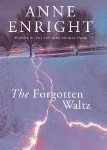
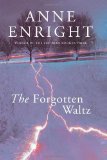
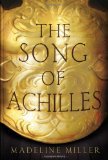
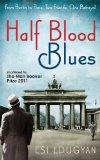
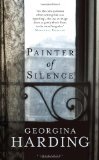
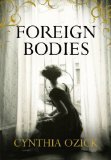
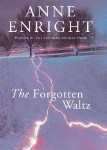
The Forgotten WaltzThe Song of AchillesHalf Blood Blues

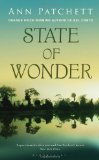
State of WonderPainter of SilenceForeign Bodies

My thoughts on the shortlist

The 2012 Orange shortlist contains an eclectic mix of books. All are well written and none look out of place on a prize shortlist; but whilst I’m not surprised by the inclusion of any single book, the shortlist as a whole is a bit of a shock.

  • I correctly predicted only two of the shortlist (The Forgotten Waltz and State of Wonder).
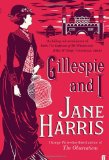
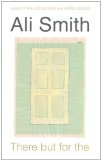
  • The two books that I felt were the strongest contenders (There But For The and Gillespie and I) were both eliminated.
  • The judges don’t seem to need to bond with characters in the same way I do, as (with the possible exception of Half Blood Blues) all the characters are difficult to bond with.
  • The judges don’t seem to appreciate experimental writing as both There But For The and The Blue Book were eliminated.

This surprising shortlist means that guessing an eventual winner is very hard. None of the books stand out above the others and whilst I think The Forgotten Waltz is the best of the group a part of me would like to give some publicity to a lesser known author.

What do you think of the shortlist?


Categories
Orange Prize Other

Who will be shortlisted for the 2012 Orange Prize?

The shortlist for the 2012 Orange Prize will be announced at 9.30am GMT tomorrow. I have tried all the books on the longlist and so, as usual, I will try to predict the judge’s choices.

A Year of Happy Books

This year the judges seem to favour happy books. Darker subject matters were occasionally approached, but when done so it was always at a tangent or through emotionally distanced writing. I didn’t need to get the tissues out at all and never had to confront a disturbing scene. This led to my general apathy towards the longlist as I tend to prefer darker reads.

Decisions, Decisions

I found narrowing down the 20 books to 6 a reasonably easy process. The Forgotten Waltz by Anne Enright, There but for the by Ali Smith and Gillespie and I by Jane Harris cruised through to the final six and I’d be very surprised if any of these were missing tomorrow.

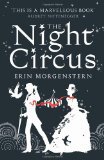
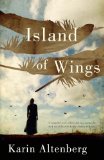
My only dilemma came between State of Wonder by Ann Patchett and Half Blood Blues by Esi Edugyan. I wasn’t a big fan of either, but both have the writing quality to justify a shortlisting. In the end I decided to include State of Wonder, because those who love it are very passionate and it seemed to dominate the top of many “Best of 2011” lists. In many ways Half Blood Blues deserves the place more because it has such an original tone and if I was on the judging panel I’d put it through. I could also see them both being included at the expense of either The Night Circus by Erin Morgenstern or Island of Wings by Karin Altenberg, but as I don’t know the individual tastes of the judges I’ll avoid spending too long debating this with myself!

I also think that The Blue Book by A.L. Kennedy is worthy of a space on the shortlist, but I can’t see them choosing two experimental novels and There but for the by Ali Smith is easily the superior of the two.

This means my prediction for the 2012 Orange shortlist is:

The Forgotten WaltzThe Night CircusGillespie and I.

State of WonderThere but for theIsland of Wings

Who Will Win?

The winner of the Orange prize will be revealed on 30th May. I’d love to see Anne Enright take the prize, but I suspect that Ali Smith will be triumphant this year.

Who do you think will make it onto the Orange shortlist tomorrow?

Categories
2010 Non Fiction

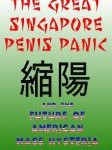
The Great Singapore Penis Panic by Scott Mendelson

The Great Singapore Penis Panic and the Future of American Mass Hysteria

Five words from the blurb: Singapore, terrified, penis, psychiatric, hysteria

Every year The Bookseller award The Diagram Prize for the oddest book title of the year. I always enjoy looking at the shortlist, but normally just marvel at the variety of bizarre books out there. This year one title on the shortlist stood out and I was intrigued enough to try a sample chapter on my kindle. The introduction left me keen to understand why hundreds of men from Singapore thought their penises were shrinking, so I bought a copy.

In 1967 an outbreak of Koro occurred in Singapore. Koro is a frightening condition in which sufferers believe their penises are retracting.

Most often the men arrived at the hospital in a state of panic with their hand, or the hand of a loved one, firmly gripping their penis to prevent it from withdrawing up into the abdomen and killing them. Others came with their penis tightly anchored with ribbon or string.

The condition originates from Chinese folklore and isolated incidents are not uncommon, but it is unusual for so many people to succumb at once. The exact cause of this outbreak cannot be linked to a single event, but a combination of factors joined together to produce this strange reaction. The book describes the history of Singapore and all the important global events that resulted in “penis panic”.

The book goes on to describe similar conditions that arise in other countries around the world and it explains how cultural background has a strong influence on the nature of the problems experienced. Almost all of the conditions were new to me, but there was also a section on America and I was surprised to see that conditions like bulimia are specific to American society, or countries strongly influenced by it.

Unfortunately the book focused on things from a scientific perspective, noting the number of people affected on any given day and the extent of the epidemic. I longed for more personal stories and for some insight into what causes an individual to fear for their life, despite there being no real danger. I’d have prefered to read details about the situation in the hospital waiting rooms, rather than just the briefest details of which drugs the patients were given.

I also found the writing to be nothing special – it could have benefited from some editing as the same few facts were often repeated.

Despite these problems I’m pleased I read this book. It was fascinating to learn about the cultural influences on medical conditions and this final warning was particularly pertinent.

Absurd and dangerous culture bound notions are ever evolving in the United States. The use of the Internet and other lightening fast forms of social media and communication appears to be accelerating this process. There is not the slightest basis for Americans to be smug or condescending in their view of the culture bound syndromes of other societies, including Koro and the Singapore Penis Panic of 1967. In America, the next culture bound epidemic is a mouse click away.

Recommended to anyone interested in the origins of mass hysteria.

.