Categories
1960s Classics

The Spy Who Came in from the Cold – John Le Carré

I had never read a spy novel. I’d assumed they consisted of numerous chase scenes and gun fights –  just like the Bond films my husband loves but I find tedious and repetitive. I’m always willing to confront my prejudices so when Annabel selected The Spy Who Came in from the Cold as her book of the year I decided to give it a try. It was very different from my expectations, but I’m afraid I don’t think I’m a fan of spy stories.

I was immediately struck by the quality of the writing. For some reason I’d expected it to be fast paced and of an average writing quality, but I was wrong. The pace was actually quite slow and contained many descriptive passages. I really enjoyed reading the beginning of the book and getting to know Leamas, the disgraced agent asked to perform one last mission.

Unfortunately the book went downhill as it progressed. Too many characters were introduced and I struggled to follow who they were. I have since discovered that earlier books introduced many of these people and I think knowing their backgrounds would have been hugely beneficial to appreciating this book.

I also came to realise that real spying bares little resemblance to James Bond films. Real spying is quite dull – it involves a lot of time waiting and making complex negotiations with others. I became bored with the lack of action and increasingly reluctant to continue reading.

I thought the last chapter was fantastic, but I’m afraid it was too little too late.

Annabel’s review indicates that she is a big fan of spy novels: she has read many of Le Carré’s other books and has watched the film. I have a feeling that this all contributed to her increased enjoyment of the book as I’m sure it gets better the more you understand the motivations of the numerous characters. I’m pleased that I’ve read this modern classic, but I’m afraid I’m not going to be rushing to read more spy stories.

Categories
Other

Happy Christmas!

I’m taking a short blogging break, to enjoy some time with my family.

I hope that you all have a wonderful Christmas!

Categories
2010

Player One by Douglas Coupland

I loved Generation A so was excited about trying Douglas Coupland’s new book. Unfortunately it wasn’t in the same league, but it still had a lot to recommend itself.

Player One is set in an airport and tells the story of five people who become trapped in the cocktail lounge when high oil prices ground all planes and threaten to cause a global catastrophe.

The book started well. We were introduced to each of the characters and they were all entertaining individuals with unique personalities. I was especially pleased to see that one of the characters happened to have Aspergers and that her realistic presence helped the group on several occasions.

The plot was fast paced and readable and the writing was littered with thought-provoking remarks which added to my enjoyment of the book. 

“The thing about being poor is that it takes up all your time.”

Coincidences are, in fact, so rare that it’s almost as if the universe is engineered solely to keep them at bay.

Take my word for it, a day in which nothing bad happens is a miracle – it’s a day in which all the things that could have gone wrong failed to go wrong.

Unfortunately the frequency of this wisdom increased in the second half of the book until all plot became absorbed in an endless barrage of deep thoughts. I felt as though I was being ranted at and that the characters had been developed soley to deliver Coupland’s philosophical messages.

The story ended quite abruptly and I was frustrated by the lack of any real conclusions.

Newspapers have become quite excited by the dictionary-like appendix in which Coupland invents words to describe modern day situations. There was a lot of truth in these pages, but I thought the back of a novel was a strange place to put them – they deserve to be in a book of their own.

Androsolophila: The state of affairs in which a lonely man is romantically desirable while a lonely woman is not.

Overall, I recommend the first half of this book to anyone and the second half to those who love excesses of philosophy.

I read this with Judith from Leeswammes’ Blog. We had very a similar reaction to the book and I encourage you to read her Player One review.

Categories
2000 - 2007 Commonwealth Writer's Prize Other Prizes

The Harmony Silk Factory – Tash Aw


Winner of 2005 Commonwealth Writers’ Prize (South East Asia and South Pacific Region, Best First Book) and 2005 Whitbread First Novel Award  

The Harmony Silk Factory is set in Malaysia during the early 1940s – a period in which the Japanese began their invasion of the country. The book is divided into three parts, each telling the story of Johnny Lim, a textile merchant with a shady past, from a different perspective.

The book started off really well. The writing was fantastic and I was quickly drawn into the account of Johnny’s early life, as told by his son, Jasper.  Johnny was a fantastic character – I loved seeing the way he got out of various scrapes and rose to become one of the most important men in the area.

Some people are born with a streak of malice running through them. It poisons their blood for ever, swimming in their veins like a mysterious virus. It may lurk unnoticed for many years, surfacing only occasionally. Good times may temporarily suppress these instincts, and the person may even appear well intentioned and honest. Sooner or later, however, the cold hatred wins over. It is an incurable condition.

Unfortunately, the wonderful story telling came to an abrupt end as we reached part 2 (p120). The narrator switched to Snow (Johnny’s wife) and the prose took the form of a diary. The story of how Johnny and Snow came to marry was nowhere near as interesting as part 1 and the diary made the pace slower. Very little happened in this section and my mind wandered from the page at several points.

Part 3 was narrated by Englishman, Peter Wormwood, and repeated many of the events recounted earlier in the book, but from a slightly different perspective. I never warmed to Wormwood and found it a real chore to read most of this section. I recognise that the point is to show how people can view the same person in a different light, but it meant that I struggled to maintain an emotional connection throughout the narrative. I wish that the whole book had been written in the style of the first part and not tried to get too clever.

Overall there was a lot to enjoy in this book, but the frustrating final section left the book on a low note.

Have you read Tash Aw’s latest book, Map of the Invisible World?

Is is better than this one?

Categories
2010 Science Fiction

Finch – Jeff Vandermeer

I loved The City and the City and was craving a book with a similar style. An Internet search led to Finch, another detective story set in an imaginary universe. Its impressive blurb and Vandermeer’s numerous award nominations led me to request the book from the publishers. Unfortunately this book pushed my tolerance of the bizarre to the limit and I ended up being more than a little confused.

Finch is set in a world dominated by fungus. The ‘gray caps’ are fungi with the ability to walk, but the cities are also covered with networks of mushrooms whose spores have the ability to affect people in numerous evil ways. The central character, Finch, is a detective who is asked to investigate the double murder of a gray cap and a human. The research is very different to that of our world and involves everything from seeing the dreams and lives of others by eating their ‘memory bulbs’ to battling with giant mushrooms. It was all too weird for me. I never really understood the physical laws of the universe and my continual confusion meant that I couldn’t connect with the story.

The writing style also took a long time to get used to. The sentences were often clipped and this gave the text a jumpy feel.

When they looked outside, they’d seen a dome-like haze above the north part of the bay. Green-orange discharge like sunspots. They’d just watched it. Watched it and not known what to say. What to do. Barricaded the house. Spent the rest of the night with weapons within reach.

The pace was fast, but the numerous chase scenes held little interest for me. I wish that the plot had been slower so that I’d have a chance to understand the motivations of the characters a little better.

I also think that I was at a disadvantage by not having read Vandermeer’s two previous books set in the same world. Although all three books are independent I’m sure that a greater knowledge of the surroundings would have led me to appreciate the book far more.

Overall this book was too confusing for me – I need my fictional worlds to comply to more basic principles!

Recommended to anyone who wants to read something very different.

Have you found anything similar to The City and the City?

Categories
2011 Other Recommended books

The Best Books of 2011? Part 2: Debut/Lesser Known Authors

Last week I showed you books to look out for in 2011 written by authors you’ve might have heard of. This week it is the turn of ones you probably haven’t.

Here are the books I’m getting excited about!

Note: UK release month shown in brackets.

The Facility by Simon Lelic (January)

Rupture was one of my favourite books of 2010. I’m quite sad that it didn’t receive the recognition it deserved, but I am very excited that his new book comes out in January. I really hope that I’ll be able to persuade lots of people to try Simon Lelic in 2011.

.

.The Tiger’s Wife by Tea Obreht (March)
Tea Obreht was the youngest author on The New Yorker’s Top 20 Writers under 40 List. This story about a tiger escaping from a Balkan zoo during WWII looks like a cross between The Jungle Book and the most harrowing of war novels. I love the sound of it!

.

. The History of History: A Novel of Berlin by Ida Hattemer-Higgins (January)
An American women finds herself in a forest just outside Berlin, clothes torn, with no recollection of what has happened to her. This harrowing story combines the history of Berlin with a bizarre world in which Nazi ghosts manifest themselves as falcons and buildings turn into flesh. If it is as interesting as it sounds then it could well become my book of the year!

.

.The Sentimentalists by Johanna Skibsrud (March)
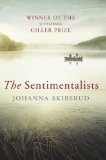
This book came from nowhere to become the surprise winner of the 2010 Giller prize. I think it might be too quiet for me, but I know a lot of other people will be excited about its appearance in the UK.  

.

..
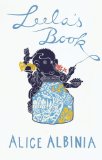
 Leela’s Book by Alice Albinia (June)

This book manages to combine India’s great epic, the Mahabharata, with a modern love story. I love books that defy genre and this sounds different enough to be worth trying.

 .

.
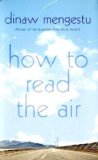
  How to Read the Air by Dinaw Mengestu (30th December, 2010– it is near enougth to 2011 to count, isn’t it?!)

Dinaw Mengestu’s 2007 debut novel, Children of the Revolution, won the Guardian First Book Award. His new novel is a family history that takes place in war-torn Ethiopia and contemporary America. It is a story of identity and belonging that promises to be heart-breaking. I love a story that requires a box of tissues to be on hand!

.
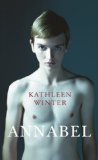
Annabel by Kathleen Winter (March)

Annabel was shortlisted for the 2010 Giller prize  and Canadian readers with a similar taste in books to me are raving about it. I loved Middlesex, the only other book about a hermaphrodite that I’ve read, so I’m intrigued by how this one compares.

.

Waterline by Ross Raisin (July)

Ross Raisin’s last book, God’s Own Country,was nominated for eleven awards including the Guardian First Book Award, the John Llewelyn Rhys Prize and the Impac. Rumors are saying that this one is even better. This sounds like a book worth getting hold of.

The Echo Chamber by Luke Williams (May)

Narrated by a woman called Evie with uncannily keen hearing (she could even hear in the womb) it is the story of a childhood in colonial Nigeria, of travels with a lover across America and of Evie’s present-day efforts to record her life and adventures before her powers of listening fade completely …

The Free World: A Novel by David Bezmozgis  (May)

David Bezmozgis was shortlisted for the Guardian First Book award in 2004 for his short story collection Natasha and other Stories. Free World, his debut novel, was snapped up in a “substantial five-figure deal”. It centres on Russian émigrés living in Italy in the 1970s and promises to be a comic, but tragic tale about the intensity of family relationships.

The End of Everything by Megan Abbott (April)

From the US and UK publishing teams of The Lovely Bones and Room comes a new novel that promises to be just as moving. It is about a thirteen-year-old girl who goes missing and her best friend who uncovers some dark secrets in a quest to uncover the truth.

Other books to keep an eye out for:

Ours are the Streets by Sunjeev Sahota (January)

Caribou Island by David Vann (January)

The Weird Sisters by Eleanor Brown (April)

The Storm at the Door by Stefan Merril Block (May)

Africa Junction by Ginny Baily (June)

Which debut authors are you getting excited about?